Эптон Синклер - Oil!
Здесь есть возможность читать онлайн «Эптон Синклер - Oil!» весь текст электронной книги совершенно бесплатно (целиком полную версию без сокращений). В некоторых случаях можно слушать аудио, скачать через торрент в формате fb2 и присутствует краткое содержание. Год выпуска: 1927, ISBN: 1927, Издательство: Amereon Ltd, Жанр: Проза, на английском языке. Описание произведения, (предисловие) а так же отзывы посетителей доступны на портале библиотеки ЛибКат.
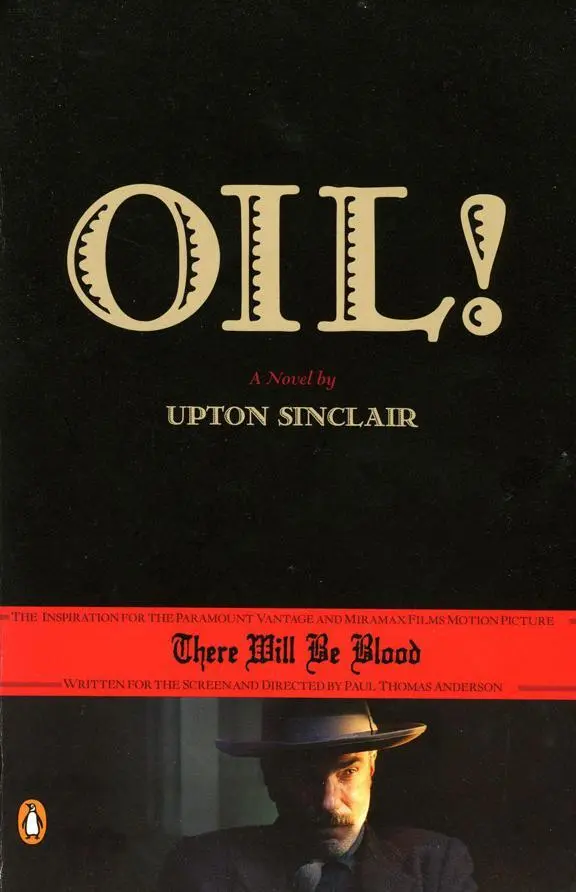
- Название:Oil!
- Автор:
- Издательство:Amereon Ltd
- Жанр:
- Год:1927
- ISBN:9780848823917
- Рейтинг книги:3 / 5. Голосов: 1
-
Избранное:Добавить в избранное
- Отзывы:
-
Ваша оценка:
Oil!: краткое содержание, описание и аннотация
Предлагаем к чтению аннотацию, описание, краткое содержание или предисловие (зависит от того, что написал сам автор книги «Oil!»). Если вы не нашли необходимую информацию о книге — напишите в комментариях, мы постараемся отыскать её.
In Oil! Upton Sinclair fashioned a novel out of the oil scandals of the Harding administration, providing in the process a detailed picture of the development of the oil industry in Southern California. Bribery of public officials, class warfare, and international rivalry over oil production are the context for Sinclair's story of a genial independent oil developer and his son, whose sympathy with the oilfield workers and socialist organizers fuels a running debate with his father. Senators, small investors, oil magnates, a Hollywood film star, and a crusading evangelist people the pages of this lively novel.
Oil! — читать онлайн бесплатно полную книгу (весь текст) целиком
Ниже представлен текст книги, разбитый по страницам. Система сохранения места последней прочитанной страницы, позволяет с удобством читать онлайн бесплатно книгу «Oil!», без необходимости каждый раз заново искать на чём Вы остановились. Поставьте закладку, и сможете в любой момент перейти на страницу, на которой закончили чтение.
Интервал:
Закладка:
Mrs. Groarty was all aglow with pleasure at the delicacy of feeling of the aristocracy; she had quiet fallen in love with this strange little fellow, who was so pretty to look at, with sensitive red lips like a girl’s, and at the same time had the manners of an elderly marquis, or something like that, as Mrs. Groarty had come to know such persons in moving pictures. She refused his money, at the same time thinking what a shame her own fortune had not been made earlier in life, so that her children could have worn such lovely clothes, and learned to express themselves with old-fashioned elegance!
Two or three days later, while Bunny was poking about the “field,” watching the interesting sights, he happened to pass the Groarty home, and saw the future oil-queen feeding her rabbits. “Oh, little boy!” she called; and when Bunny had come near, she said: “I had a letter from Paul.”
“Where is he?” cried Bunny, in excitement.
“The letter was mailed in San Paulo. But he says not to look for him, because he’s hitch-hiking, and he’ll be gone.”
“And how is he?”
“He says he’s all right and not to worry. The poor child, he sent me two-bits in stamps, to pay for that food he took! He says he earned the money—bless him!” Tears ran down the lady’s ample cheeks; and Bunny learned the difficult lesson that human nature is a complicated thing, so that the same fat lady can be at one moment a hyena of greed, and at the next a mater dolorosa.
These two sat down on a rabbit-hutch, and had a good talk. Bunny told Mrs. Groarty just how it had happened, and it was a relief to get it off his conscience. Mrs. Groarty in turn told him about the Watkins family, and how they had moved from Arkansas, traveling in the old fashion, by wagon, when Mrs. Groarty was a girl; before that, she had been driven, as a baby in arms, from the mountains of Tennessee. Their place at Paradise, in the San Elido country, was a goat-ranch, with a spring in a little rocky valley; there was only a couple of acres you could cultivate, and for part of that you had to pump irrigating water by hand. It was a desert country, and she didn’t see how they could possibly get along without Paul’s work; she would send them a little of her oil money, but she didn’t know whether Abel—that was her brother, Paul’s father—would take anything from her, he was so crazy with his religion.
Bunny asked whether he had always been a “roller”; and the other answered no, it was a notion he had taken up, just a few years ago. As for Mrs. Groarty, when she had married her present husband, three years back, she had found her home in the one true faith which had never changed through the ages; it was a comfortable faith, and let you alone, and you weren’t always getting crazy new notions and splitting up into sects. They had a lovely church in Beach City, and Father Patrick had such a kind heart and a big, splendid voice—had Bunny ever been to a Catholic service? Bunny said he hadn’t; and Mrs. Groarty might perhaps have found a handsome and wealthy convert, had it not been that she was just then being so sorely tempted by the powers of this world.
Yes—Satan had brought her there, and set her on a rabbit-hutch, and was showing her all the kingdoms of the earth! Right across the street, at number 5743 Los Robles Boulevard, the Couch Syndicate had set up a big tent, plastered with red signs, and there were automobiles driving up all day, with people to buy “units” at ten dollars each. Mrs. Groarty’s group of “medium lots” had not yet leased, she explained; they had several offers—the best from Sliper and Wilkins, and had Bunny ever heard anything about these operators? And was Dad really quite decided that the best oil prospects lay on the north side? Mrs. Groarty and her husband were thinking of putting their bonus money, when they got it, into some units of “Eureka Pete”—the Eureka Petroleum Company—which was promising a quick drilling on the north slope. And Bunny found himself suddenly recollecting Dad’s warning: “Look out for people who mistake you for an oil-well, and try to put you on the pump!”
Mr. Benzinger had sent two truck-loads of Mexicans and fixed up the roads; and Mr. Ascott had kept his promise and delivered the lumber for the derrick; and Dad’s boss carpenter had got his gang, and they had cut mortise-joints in the sills, and drilled holes through them, and set them with bolts; then stage by stage the towering derrick had come into being, 122 feet high, straight and true and solid. There was a ladder, and a platform halfway up, and another place to stand at the top; it was all nice and clean and new, and Dad would let you climb, and you could see the view, clear over the houses and the trees, to the blue waters of the Pacific—gee, it was great! And then came the fleet of motor-trucks, thundering in just at sunset, dusty and travel-stained, but full of “pep”—judging by the racket they made, tooting a greeting to J. Arnold Ross and his son. The ditch by the roadside had been filled with crushed rock, making a place where they could drive in to the field; and there they stood, twelve of them lined up in a row.
There were bright electric lights on the derrick, and men waiting, the sleeves of their khaki shirts rolled up. They went to it with a will; for they were working under the eye of the “old man,” the master of the pay-roll and of their destinies. They respected this “old man,” because he knew his business, and nobody could fool him. Also they liked him, because he combined a proper amount of kindliness with his sternness; he was simple and unpretentious—when the work was crowded, you would have him eating his beans and coffee on a stool in the “eats” joint alongside you. He was a “real guy”; and with this he combined the glamour of a million dollars. Yes, he had “the stuff,” barrels of it—and what is a magician who pulls rabbits and yards of ribbon out of his sleeves, compared with one who can pull out a couple of dozen oil-derricks, and as many miles of steel casing, and tanks, and fleets of motor-trucks, and roads for them to run on?
Also, they liked the “kid,” because he put on no more airs than his Dad, but was jolly, and interested in what you were doing, and asked sensible questions, and remembered your explanations. Yes, a kid like that would learn the business and carry it on; the old man was teaching him right. He knew all the crew by their first names, and took their joshing, and had a suit of old clothing, duly smeared with grease, which he would put on, and tackle any job where a half-sized pair of hands could get a hold.
But there was no joshing now; this was a time for breaking records. There was a big cement block for the engine, and a wooden block on top of that, to take up the vibration; and now the truck with the engine on was backed into place, and blocked firm, and the skids made solid, and in a jiffy the engine was slid into place and ready for business. At the same time another crew had got the big steam boiler ready. There was a tank of fuel oil at hand, and the feed-pipe was hitched up, and she was ready to make steam. And meantime the next truck was backed into place, and the skids put under the “draw-works”; when Bunny came back the next morning he found the big “drum” bolted into place, and the running tackle up in the derrick, and they were unloading the “drill-stem.” They would fit a steel chain about three of the heavy pipes at once, and a pulley with a steel hook would come down and seize the chain; the engine would start thumping, and the chain and the steel cable would draw tight, and the pipe would slide off the truck. These pipes were twenty feet long, and weighed nineteen pounds to the foot, and when you had your well a mile deep, you could figure it for yourself, there was fifty tons of steel, and your derrick had to carry that weight, and your steel cables had to lift it, and your drum and engine had to stand the strain. People kicked at the price of gasoline, but they never thought about the price of drill-stem and casings!
Читать дальшеИнтервал:
Закладка:
Похожие книги на «Oil!»
Представляем Вашему вниманию похожие книги на «Oil!» списком для выбора. Мы отобрали схожую по названию и смыслу литературу в надежде предоставить читателям больше вариантов отыскать новые, интересные, ещё непрочитанные произведения.







Обсуждение, отзывы о книге «Oil!» и просто собственные мнения читателей. Оставьте ваши комментарии, напишите, что Вы думаете о произведении, его смысле или главных героях. Укажите что конкретно понравилось, а что нет, и почему Вы так считаете.