Эптон Синклер - Oil!
Здесь есть возможность читать онлайн «Эптон Синклер - Oil!» весь текст электронной книги совершенно бесплатно (целиком полную версию без сокращений). В некоторых случаях можно слушать аудио, скачать через торрент в формате fb2 и присутствует краткое содержание. Год выпуска: 1927, ISBN: 1927, Издательство: Amereon Ltd, Жанр: Проза, на английском языке. Описание произведения, (предисловие) а так же отзывы посетителей доступны на портале библиотеки ЛибКат.
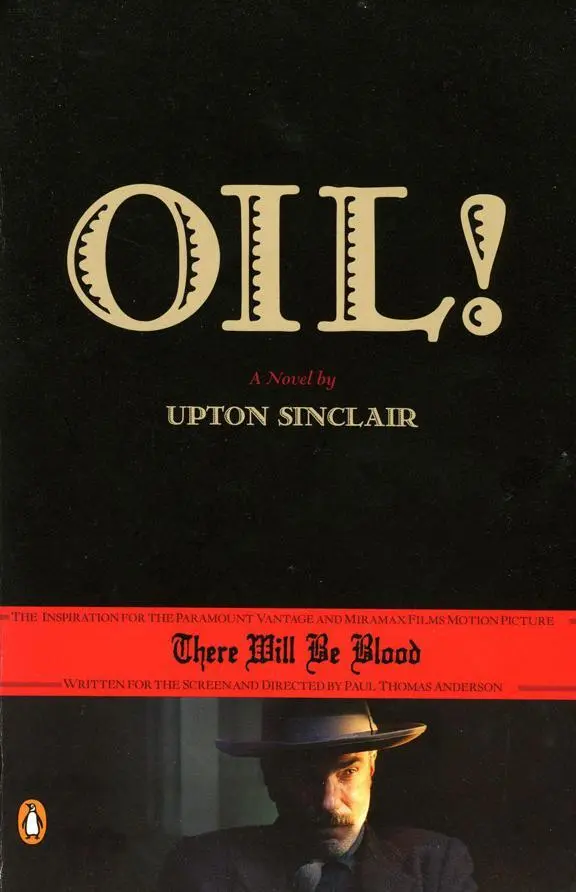
- Название:Oil!
- Автор:
- Издательство:Amereon Ltd
- Жанр:
- Год:1927
- ISBN:9780848823917
- Рейтинг книги:3 / 5. Голосов: 1
-
Избранное:Добавить в избранное
- Отзывы:
-
Ваша оценка:
Oil!: краткое содержание, описание и аннотация
Предлагаем к чтению аннотацию, описание, краткое содержание или предисловие (зависит от того, что написал сам автор книги «Oil!»). Если вы не нашли необходимую информацию о книге — напишите в комментариях, мы постараемся отыскать её.
In Oil! Upton Sinclair fashioned a novel out of the oil scandals of the Harding administration, providing in the process a detailed picture of the development of the oil industry in Southern California. Bribery of public officials, class warfare, and international rivalry over oil production are the context for Sinclair's story of a genial independent oil developer and his son, whose sympathy with the oilfield workers and socialist organizers fuels a running debate with his father. Senators, small investors, oil magnates, a Hollywood film star, and a crusading evangelist people the pages of this lively novel.
Oil! — читать онлайн бесплатно полную книгу (весь текст) целиком
Ниже представлен текст книги, разбитый по страницам. Система сохранения места последней прочитанной страницы, позволяет с удобством читать онлайн бесплатно книгу «Oil!», без необходимости каждый раз заново искать на чём Вы остановились. Поставьте закладку, и сможете в любой момент перейти на страницу, на которой закончили чтение.
Интервал:
Закладка:
Mr. Ascott said they were having a lot of trouble because the roads about Prospect Hill were in such bad condition; and Dad said he knew that, and something would have to be done about it quick, he was jist a-goin’ to see the county superintendent of roads. So then Mr. Ascott said all right, he would do his part; and Dad invited him to come down and look the field over, and let Dad put him onto a few good things down there; and they shook hands, and Bunny had his hair rumpled again—something which in the course of business he had to pretend that he didn’t mind.
So that was that. And as they got into their car and drove away, Dad repeated his maxim that grease is cheaper than steel. Dad meant by that, you must let people have a share of your profits, so they would become a part of your “organization,” and do quickly whatever you said. And meantime they had come to the office of the superintendent of roads, where they had another very special private interview. This official, Mr. Benzinger, a sharp little man with nose-glasses, was not dressed like a man of money, and Bunny knew it by the difference in the tone Dad took. There was no exchanging of gold-foil cigars, and no talk about the weather; but Dad got right down to business. He had come to Beach City to put through a job that would employ hundreds of men, and mean millions of dollars to the community; the question was, would the road authorities co-operate to make this possible.
Mr. Benzinger answered that of course, the authorities wanted to do everything to that end—it was the purpose for which they were in office; the trouble was that this “strike” at Prospect Hill had caught them without any funds for rush work. Dad said that might be, but there must be some way to handle such a situation, everybody’d ought to get together.
Mr. Benzinger hesitated, and asked just what it was that Mr. Ross wanted. So Dad explained that he was jist about to drill on such and such a tract, and he drew a little map showing the streets that he needed to have graded, and the holes filled up with crushed rock, so his sills could be delivered on Thursday night. Mr. Benzinger said that might be arranged, perhaps, and asked his secretary, the only other person in the room, to step out and ask Mr. Jones to come in; Dad caught the meaning of that, and as soon as the secretary was gone, he pulled a little roll of bills out of his pocket, remarking that Mr. Benzinger would have to work overtime on the matter, and be put to extra trouble and expense, and it was only fair that Dad should make it up to him; he hoped Mr. Benzinger would understand that they would have many dealings in future, as Dad believed in taking care of his friends. Mr. Benzinger put the bills quietly into his pocket, and said that he understood fully, and the county authorities wished to give every help to men who came in to build up the community and its industries; Dad might count upon it that the work on those streets would start in the morning.
So then they shook hands, and Dad and Bunny went out, and Dad told Bunny that he must never under any circumstances mention what he had seen in that office, because every public official had enemies who were trying to take his job away, and would try to represent it that Dad had paid him a bribe. But of course it wasn’t anything of the sort; it was the man’s business to keep the roads in repair, and what Dad gave him was jist a little tip, by way of thanks, so to speak. You wouldn’t feel decent not to give him something, because you were going to make a lot of money yourself, and these here poor devils had to live on a beggar’s salary. No doubt Mr. Benzinger had a wife and children at home, and they were in debt; maybe the wife was sick, and they had no way to pay the doctor. The man would have to stay late at his office, and go out tonight and hustle up some men to do that job, and maybe get scolded by his superiors for having acted without authority; the superiors were doubtless in the pay of some of the big companies, which didn’t want roads built except to leases of their own. There was all kinds of wires like that being pulled, said Dad, and you had to be on the watch every minute. Never imagine that you’d be allowed to come into a new place and take out several million dollars worth of wealth from the ground, and not have all kinds of fellers a-tryin’ to get it away from you!
That all sounded reasonable, and Bunny listened while Dad impressed his favorite lesson: take care of your money! Some day an accident might happen to Dad, and then Bunny would have the whole thing on his shoulders; so he could not begin too early to realize that the people he met would be trying, by devices more or less subtle, to get a hold of his money. Bunny, not thinking of opposing his father’s arguments, but merely getting things straight in his own mind, was moved to remark: “But Dad, you remember that boy Paul? He certainly wasn’t trying to get our money, for I offered him some, and he wouldn’t take it; he went away without my seeing him again.”
“Yes, I know,” said Dad; “but he told you his whole family is crazy, and he’s jist crazy a little different, that’s all.”
This was a moral problem which Bunny debated within himself: was Paul Watkins crazy, because of the way he behaved? If so, there must be a crazy streak in Bunny also, for he had been enormously impressed by Paul, and could not help thinking about him. He had paid a tribute to Paul’s sense of honor, by resolving that he, Bunny, would permit himself the luxury of not being a liar—not even in trivial things. Also, the meeting with Paul had caused Bunny to become suddenly aware what an easy time he was having in life. The very next morning, when he opened his eyes, lying in the deep soft mattress of the hotel-bed, with its heavy linen sheets so smooth and white, and its warm blankets, soft as fleece, and striped the color of ripe strawberries—at once his thought was: how had Paul slept that night, without shelter and without cover? Had he lain on the ground? But grandmother, if she saw you even sitting on the ground in the evening, would cry out that you would “catch your death!” And down in the spacious dining-room of the hotel, the thought of Paul without breakfast had quite ruined the taste of grape-fruit in crushed ice, and cereal and thick cream, and bacon and eggs, and wheat-cakes with maple syrup. Paul would be going hungry, because he was too proud to eat food until he had earned it; and some strange perversity caused Bunny, in the midst of comfort, to yearn toward this fierce anchorite who spurned the flesh!
The morning after the meeting at Mrs. Groarty’s, Bunny had sat under a palm-tree in front of the hotel, hoping that Paul would come by. Instead, there had come Mrs. Groarty and her husband, bringing Mr. Dumpery, and followed by Mr. and Mrs. Bromley, with their temporary friends the Jewish tailors. It was a deputation from the “medium lots,” explaining that they had continued their meeting until one o’clock that morning, and had decided to rescind their community agreement, and go each man for himself; now the “medium lots” wanted Dad to take their lease. Bunny told them that Dad was out in the field with the geologist; they might wait for him, but Bunny knew how emphatic Dad was about offset wells, so there was no chance of his taking a small lease.
After which Bunny took a seat on the bench next to Mrs. Groarty, for the purpose of finding out whether Paul had revealed himself to her. Bunny confessed to her that he had done something very wrong the previous evening; he had failed to lock the kitchen door after looking out on the porch. Following his program of telling the exact truth, he stated that somebody had gone into her kitchen and taken some food; Bunny had promised not to tell who it was, but it was someone who was very hungry, and Bunny had felt sorry about it. If Mrs. Groarty would let him—and he hauled out his little purse.
Читать дальшеИнтервал:
Закладка:
Похожие книги на «Oil!»
Представляем Вашему вниманию похожие книги на «Oil!» списком для выбора. Мы отобрали схожую по названию и смыслу литературу в надежде предоставить читателям больше вариантов отыскать новые, интересные, ещё непрочитанные произведения.




Обсуждение, отзывы о книге «Oil!» и просто собственные мнения читателей. Оставьте ваши комментарии, напишите, что Вы думаете о произведении, его смысле или главных героях. Укажите что конкретно понравилось, а что нет, и почему Вы так считаете.