T. Binyon - Pushkin
Здесь есть возможность читать онлайн «T. Binyon - Pushkin» — ознакомительный отрывок электронной книги совершенно бесплатно, а после прочтения отрывка купить полную версию. В некоторых случаях можно слушать аудио, скачать через торрент в формате fb2 и присутствует краткое содержание. Жанр: unrecognised, на английском языке. Описание произведения, (предисловие) а так же отзывы посетителей доступны на портале библиотеки ЛибКат.
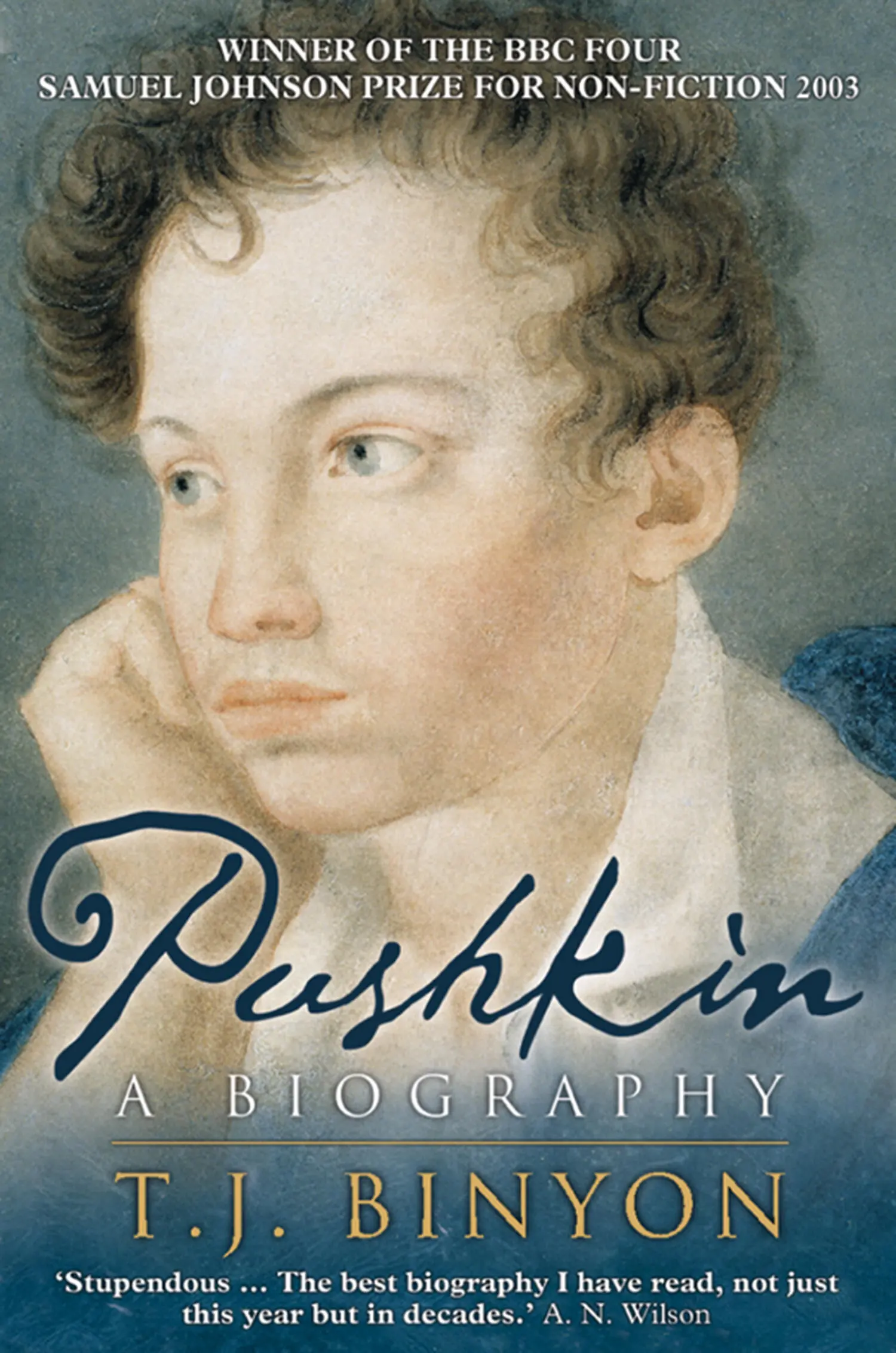
- Название:Pushkin
- Автор:
- Жанр:
- Год:неизвестен
- ISBN:нет данных
- Рейтинг книги:4 / 5. Голосов: 1
-
Избранное:Добавить в избранное
- Отзывы:
-
Ваша оценка:
Pushkin: краткое содержание, описание и аннотация
Предлагаем к чтению аннотацию, описание, краткое содержание или предисловие (зависит от того, что написал сам автор книги «Pushkin»). Если вы не нашли необходимую информацию о книге — напишите в комментариях, мы постараемся отыскать её.
Pushkin — читать онлайн ознакомительный отрывок
Ниже представлен текст книги, разбитый по страницам. Система сохранения места последней прочитанной страницы, позволяет с удобством читать онлайн бесплатно книгу «Pushkin», без необходимости каждый раз заново искать на чём Вы остановились. Поставьте закладку, и сможете в любой момент перейти на страницу, на которой закончили чтение.
Интервал:
Закладка:
Outside Russia the heady days of the revolution in Spain and of Ypsilantiâs Greek revolt, both of which had so aroused Pushkinâs enthusiasm, had passed, and a tide of reaction, encouraged by Alexander I, was sweeping over Europe. At the Congress of Verona France asked to be allowed to march into Spain â as Austria had marched into Naples in 1821 â to restore order in the Peninsula; despite British protests, this was agreed, and in April 1823 the duke of Angoulême, at the head of a powerful army, crossed the Bidassoa. Ferdinand, a prisoner since 1820, was restored to the throne, and, in an orgy of revenge, Colonel Rafael Riego, the leader of the revolution, and many other insurgents were executed. Pushkin, disgusted by this, and disillusioned with the Greeks â âThe Jesuits have stuffed our heads with Themistocles and Pericles, and we have come to imagine that this dirty people, consisting of bandits and shopkeepers, is their legitimate descendant, the heir to their fame in schoolâ 61 â came to the conclusion, like Dostoevskyâs Grand Inquisitor some sixty years later, that man did not deserve freedom. In âOf freedom the solitary sowerâ, âan imitation of a parable by that moderate democrat Jesus Christ (A sower went out to sow his seed)â * he expressed this new cynicism:
Graze, placid peoples!
What good to herds the gift of freedom?
They must be slaughtered or be shorn.
Their inheritance from generation to generation
Is the yoke with bells and the whip. 62
The two-year moratorium on political verse, agreed with Karamzin, had reached its term long ago, and Pushkin relapsed into his former ways with âThe motionless sentinel slumbered on the royal threshold â¦â, a satirical portrait of Alexander after his return from the Congress of Verona. 63
Though poems such as these were not intended for publication, they were known to Pushkinâs friends â âOf freedom the solitary sowerâ was included in a letter to Turgenev â and circulated in manuscript: by writing them he was flirting with danger. He was flirting with danger, too, given the pietistic fervour then in vogue, when he wrote to Küichelbecker: âYou want to know what I am doing â I am writing motley stanzas of a romantic poem â and am taking lessons in pure atheism. There is an Englishman here, a deaf philosopher, the only intelligent atheist I have yet met. He has written over 1,000 pages to prove that no intelligent being, Creator and governor can exist, in passing destroying the weak proofs of the immortality of the soul. His system is not so consoling as is usually thought, but unfortunately is the most plausible.â 64 The deaf English philosopher was William Hutchinson, the Vorontsovsâ personal physician, a proponent of the new, scientific atheism, which Pushkin â hitherto acquainted only with the rational atheism of the eighteenth century â found excitingly original. This letter, like his verse, circulated in manuscript. Learning of this, Vyazemsky wrote to Pushkin in some agitation, sending his letter by a traveller to Odessa and marking it âSecretâ. âPlease be cautious both with your tongue and your pen,â he urged. âDo not risk your future. Your present exile is better than anywhere else.â 65 It was too late. âThanks to the not wholly sensible publicity given to it by Pushkinâs friends and especially by the late Aleksandr Ivanovich Turgenev, who, as we have heard, rushed round his acquaintances with it, the letter came to the knowledge of the administration.â 66 It was to have a decisive influence on his future.
Pushkinâs flirtation with danger extended into his emotional life. From the turn of the year a new face appears among those idly scribbled by his pen while waiting for inspiration. It is that of the governorâs wife, Elizaveta â or, as he called her, Elise â Vorontsova, with whom he was now violently in love. There are more portraits of her in his manuscripts than of anyone else: indeed, one page of the second chapter of Eugene Onegin has no fewer than six sketches of her. She is represented constantly in profile, with and without a bonnet; Pushkin returns over and over again to her graceful shoulders and neck, sometimes encircled by her famous necklace: âPotocki gave balls and evening parties,â Aleksandra Smirnova-Rosset wrote. âAt his house I saw Elizaveta Vorontsova for the first time, in a pink satin dress. Then people wore cordelière necklaces. Hers was made of the largest of diamonds.â 67
At thirty-one, Elise was seven years older than Pushkin. She was not conventionally beautiful, like her friend Olga Naryshkina, but had a vivacity and charm which were enchanting. âWith her innate Polish frivolity and coquetry she desired to please,â commented Wiegel, âand no one succeeded better than her in this. [â¦] She did not have that which is called beauty; but the swift, tender gaze of her sweet small eyes penetrated one completely; I have never seen anything comparable to the smile on her lips, which seemed to demand a kiss.â 68 Count Sollogub, who met her years later, devotes a passage to her in his memoirs: âSmall and plump, with somewhat coarse and irregular features, Elizaveta Ksaverevna was, nonetheless, one of the most attractive women of her time. Her whole being was suffused with such soft, enchanting, feminine grace, such cordiality, such irreproachable elegance, that it was easy to understand why such people as Pushkin [â¦] Raevsky and many, many others fell head over heels in love with Vorontsova.â 69
Pushkin had known her since the previous autumn; in the new year her attractions began to supplant those of Amaliya Riznich; a turning-point in their relationship occurred in February, when Vorontsov was absent in Kishinev. On his manuscripts Pushkin only notes events he considers significant: on 8 February 1824, opposite the first stanza of the third chapter of Eugene Onegin , he jotted down âsoupé chez C.E.Wâ â âhad supper with Countess Elise Woronzofâ. 70 The relationship was to be short, and much interrupted. Pushkin himself was in Kishinev for two weeks in March. When he returned to Odessa he found that Elise had left on a visit to her mother in Belaya Tserkov; she remained there until 20 April. As the weather grew warmer they began to meet at Baron Rainaudâs villa. âRainaud has successfully made use of the cliffs which surround his domain,â wrote a visitor. âIn the midst of the cliffs a bathing-place has been constructed. It is shaped like a large shell, attached to the cliffs.â 71 This was the site of their assignations:
The shelter of love, it is eternally full
With dark, damp cool,
There the constrained wavesâ
Prolonged roar is never silent. 72
The affair brought Pushkin two enemies. Aleksandr Raevsky, who was himself in love with Elise, and who enjoyed her favours during her visits to Belaya Tserkov, had originally encouraged her not to reject his friendâs advances in order to divert attention from their own relationship. But when his cunning overreached itself and pretence became reality, his attitude towards Pushkin changed: the latter was no longer a naive young pupil, but a serious rival in love, and Raevsky, while maintaining a pretence of friendship, lost no opportunity to undermine his position. The second enemy was Vorontsov himself, who, though the injured husband, did not in principle disapprove of his wifeâs infidelity. âCountess Vorontsova is a fashionable lady, very pleasant, who likes to take lovers, to which her husband has no objection whatsoever; on the contrary he patronizes them, because this gives him freedom to take mistresses without constraint,â a contemporary observed. 73 Nevertheless, it went somewhat against the grain to be cuckolded by this self-opinionated young upstart, without a penny to his name and no profession to speak of. âYouâre fond of Pushkin, I think,â he once said to Wiegel; âcanât you persuade him to occupy himself with something sensible; under your guidance?â 74 Matters were made worse when Pushkin succumbed to that common human trait which leads us to dislike those we have injured. He had no notion of preserving the decencies and allowing himself to be patronized by Vorontsov as one of his wifeâs gigolos; on the contrary, he was determined to assert that he was the equal of anyone, even if the other were nearly twice his age, the possessor of immense wealth, and governor-general of New Russia to boot. As usual, he voiced his hostility in an epigram:
Читать дальшеИнтервал:
Закладка:
Похожие книги на «Pushkin»
Представляем Вашему вниманию похожие книги на «Pushkin» списком для выбора. Мы отобрали схожую по названию и смыслу литературу в надежде предоставить читателям больше вариантов отыскать новые, интересные, ещё непрочитанные произведения.








Обсуждение, отзывы о книге «Pushkin» и просто собственные мнения читателей. Оставьте ваши комментарии, напишите, что Вы думаете о произведении, его смысле или главных героях. Укажите что конкретно понравилось, а что нет, и почему Вы так считаете.