T. Binyon - Pushkin
Здесь есть возможность читать онлайн «T. Binyon - Pushkin» — ознакомительный отрывок электронной книги совершенно бесплатно, а после прочтения отрывка купить полную версию. В некоторых случаях можно слушать аудио, скачать через торрент в формате fb2 и присутствует краткое содержание. Жанр: unrecognised, на английском языке. Описание произведения, (предисловие) а так же отзывы посетителей доступны на портале библиотеки ЛибКат.
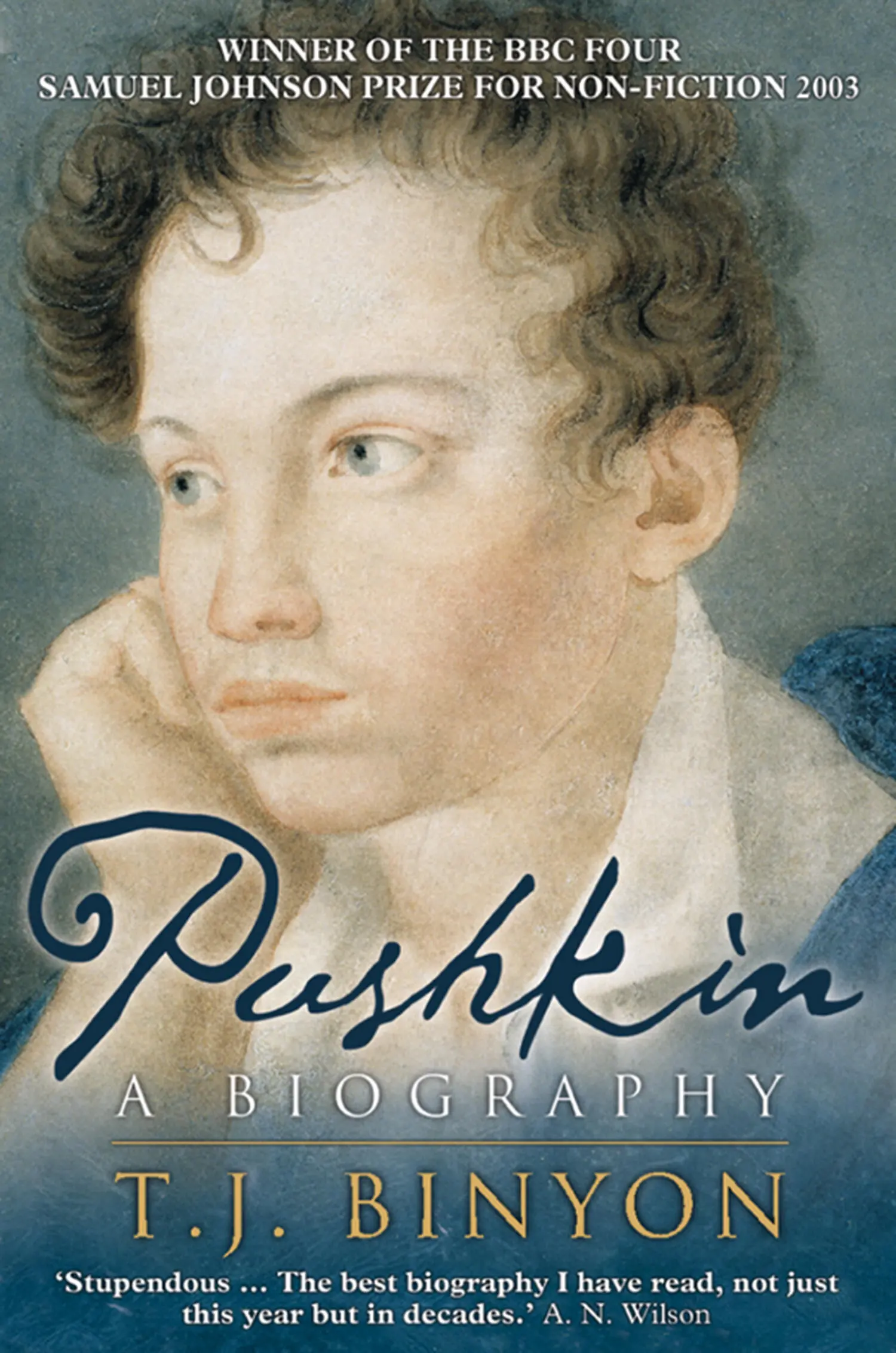
- Название:Pushkin
- Автор:
- Жанр:
- Год:неизвестен
- ISBN:нет данных
- Рейтинг книги:4 / 5. Голосов: 1
-
Избранное:Добавить в избранное
- Отзывы:
-
Ваша оценка:
Pushkin: краткое содержание, описание и аннотация
Предлагаем к чтению аннотацию, описание, краткое содержание или предисловие (зависит от того, что написал сам автор книги «Pushkin»). Если вы не нашли необходимую информацию о книге — напишите в комментариях, мы постараемся отыскать её.
Pushkin — читать онлайн ознакомительный отрывок
Ниже представлен текст книги, разбитый по страницам. Система сохранения места последней прочитанной страницы, позволяет с удобством читать онлайн бесплатно книгу «Pushkin», без необходимости каждый раз заново искать на чём Вы остановились. Поставьте закладку, и сможете в любой момент перейти на страницу, на которой закончили чтение.
Интервал:
Закладка:
Vyazemsky sent a first instalment of the advance in March. Pushkin immediately paid Inzov a debt of 360 roubles which he was âembarrassed and humiliatedâ not to have settled earlier, 47 and dashed off a grateful letter to Vyazemsky: âOne thing troubles me, you sold the entire edition for 3000r., but how much did it cost you to print it? You are still making me a gift, you shameless fellow! For Christâs sake take what is due to you out of the remainder, and send it here. Thereâs no point in letting it grow. It wonât lie around with me for long, although I am really not extravagant. Iâll pay my old debts and sit down to a new poem. Since Iâm not one of our 18th century writers: I write for myself, and publish for money, certainly not for the smiles of the fair sex.â * 48
The Fountain of Bakhchisaray was published on 10 March. Vyazemsky had responded to Pushkinâs plea and had contributed an unsigned introductory article which bore the strange title âInstead of a foreword. A conversation between the publisher and a classicist from the Vyborg Side or Vasilevsky Islandâ. â This had little to do with the poem, but was a provocative attack, from the standpoint of romanticism, on the literary old guard and classicism. An immediate reply appeared in the Herald of Europe; Pushkin came to Vyazemskyâs defence with a short letter to Son of the Fatherland; and, much to Vyazemskyâs delight, a controversy developed which rumbled on in the literary pages for months. Turgenev disapproved: âStop squabbling,â he advised his friend. âIt is unworthy of you and I do not recognize you in all this polemical rubbish.â 49 Onlookers took a similar view: âThere has been a shower of lampoons, epigrams, arguments, gibes, personalities, each more nasty and more stupid than the last,â Yakov Saburov wrote to his brother. 50
Shorter than The Prisoner of the Caucasus, The Fountain of Bakhchisaray has an equally simple plot. Girey, khan of the Crimea, falls in love with the latest captive added to his harem, the Polish princess Mariya. She dies, either of illness or at the hand of Gireyâs previous favourite, Zarema, who is drowned by the khan. He builds a marble fountain in memory of Mariya. For the subject of the poem Pushkin adapted a Crimean legend which he had heard from the Raevskys at Gurzuf, and which Muravev-Apostol recounts in his Journey through Tauris in 1820. An extract from this work, describing the palace at Bakhchisaray, was appended to the poem when it was published. The Fountain was greeted with a general chorus of praise: there was no pedantic carping at detail and little criticism. Pushkinâs own opinion was less favourable. âBetween ourselves,â he had written to Vyazemsky, âthe Fountain of Bakhchisaray is rubbish, but its epigraph is charming.â 51 This, attributed to the thirteenth-century Persian poet Sadi, runs: âMany, similarly to myself, visited this fountain; but some are no more, others are journeying far.â The second half of the saying came to have a political significance: when the critic Polevoy quoted it in an article in the Moscow Telegraph in 1827, he was clearly alluding to the fate of the Decembrists, some of whom had been executed, others exiled to Siberia. Pushkin had not taken the quotation directly from the Persian poet, but from the French translation of a prose passage in Thomas Mooreâs âoriental romanceâ Lalla Rookh (1817), which refers to âa fountain, on which some hand had rudely traced those well-known words from the Garden of Sadi, â âMany, like me, have viewed this fountain, but they are gone, and their eyes are closed forever!ââ 52 Despite this borrowing, he was no admirer of Moore. âThe whole of Lalla Rookh is not worth ten lines of Tristram Shandy,â he exclaimed; and, commenting on the Fountain , told Vyazemsky: âThe eastern style was a model for me, inasmuch as is possible for us rational, cold Europeans. By the by, do you know why I do not like Moore? â because he is excessively eastern. He imitates in a childish and ugly manner the childishness and ugliness of Sadi, Hafiz and Mahomet. â A European, even when in ecstasy over eastern splendour, should retain the taste and eye of a European. That is why Byron is so charming in The Giaour, The Bride of Abydos and so on.â 53 This was the effect at which he aimed, and Byron was undoubtedly his inspiration: in 1830 he remarked: âThe Fountain of Bakhchisaray is weaker than The Prisoner and, like it, reflects my reading of Byron, about whom I then raved.â 54 Pushkin was right: The Fountain of Bakhchisaray is weaker than The Prisoner; is indeed the weakest of all his narrative poems, though the portrayal of the languid, surfeited life of the harem breathes an indolent sensuality, while the scene between Mariya and Zarema has, as he remarked, âdramatic meritâ. 55
But the real significance of the poem for Pushkin â and, indeed, for Russian literature â lay not in its aesthetic, but rather in its commercial value. At the beginning of his stay in Odessa and, as usual, hard-pressed for money, Pushkin had written despairingly to his brother: âExplain to my father that I cannot live without his money. To live by my pen is impossible with the present censorship; I have not studied the carpenterâs trade; I cannot become a teacher; although I know scripture and the four elementary rules â but I am a civil servant against my will â and cannot take retirement. â Everything and everyone deceives me â on whom should I depend, if not on my nearest and dearest. I will not live on Vorontsovâs bounty â I will not and that is all â extremes can lead to extremes â I am pained by my fatherâs indifference to my state â although his letters are very amiable.â 56 The successful sale of The Fountain changed his views in an instant. âI begin to respect our booksellers and to think that our trade is really no worse than any other,â he wrote to Vyazemsky. 57 For the first time financial independence seemed possible; the career of a professional writer beckoned. This new-found self-sufficiency strengthened his belief in his talent, his sense of himself as an artist: it was to affect materially his behaviour during the remaining months in Odessa.
Another chance to exploit his work commercially soon arrived; in June he was offered 2,000 roubles for the right to bring out a second edition of The Prisoner of the Caucasus. But before Lev in St Petersburg could close the deal, he was forestalled. The previous year a German translation of The Prisoner had come out. August Oldekop, the publisher of the St Petersburg Gazette and the Sankt-Peterburgische Zeitung , now brought out this translation again, printing the original Russian text opposite the German. This was a great success and killed Pushkinâs hopes of selling a second edition of the poem. âI will have to petition for redress under the law,â he told Vyazemsky. 58 But the law respecting authorsâ rights was unclear and, though the Censorship Committee put a temporary ban on the sale of the edition, this was soon lifted. In addition, Oldekop muddied the waters by insisting that he had bought the right to publish the edition from Pushkinâs father. When Vyazemsky anxiously enquired whether this was true, and asked Pushkin to send him, if it was not, a power of attorney, giving him the right to act on his friendâs part against Oldekop, Pushkin â who was by this time in Mikhailovskoe â replied: âOldekop stole and lied; my father made no kind of bargain with him. I would send you a power of attorney; but you must wait; stamped paper is only to be had in town; some kind of witnessing has to be done in town â and I am in the depths of the country.â 59 The indictment of Oldekopâs villainy is certainly positive; but is the disinclination to ride into Pskov for a power of attorney prompted by indolence, by a healthy scepticism about the process of law, or by the suspicion that his father â with whom he was on extremely bad terms â had not been wholly honest with him? Six months later, when he was afraid that The Fountain was also being pirated, and was therefore having to turn down offers for it, he wrote to Lev, âSelivanovsky is offering me 12,000 roubles , and I have to turn it down â this way Iâll die of hunger â what with my father and Oldekop. Farewell, Iâm in a rage.â 60
Читать дальшеИнтервал:
Закладка:
Похожие книги на «Pushkin»
Представляем Вашему вниманию похожие книги на «Pushkin» списком для выбора. Мы отобрали схожую по названию и смыслу литературу в надежде предоставить читателям больше вариантов отыскать новые, интересные, ещё непрочитанные произведения.










Обсуждение, отзывы о книге «Pushkin» и просто собственные мнения читателей. Оставьте ваши комментарии, напишите, что Вы думаете о произведении, его смысле или главных героях. Укажите что конкретно понравилось, а что нет, и почему Вы так считаете.