Boris Kolonitskii - Comrade Kerensky
Здесь есть возможность читать онлайн «Boris Kolonitskii - Comrade Kerensky» — ознакомительный отрывок электронной книги совершенно бесплатно, а после прочтения отрывка купить полную версию. В некоторых случаях можно слушать аудио, скачать через торрент в формате fb2 и присутствует краткое содержание. Жанр: unrecognised, на английском языке. Описание произведения, (предисловие) а так же отзывы посетителей доступны на портале библиотеки ЛибКат.
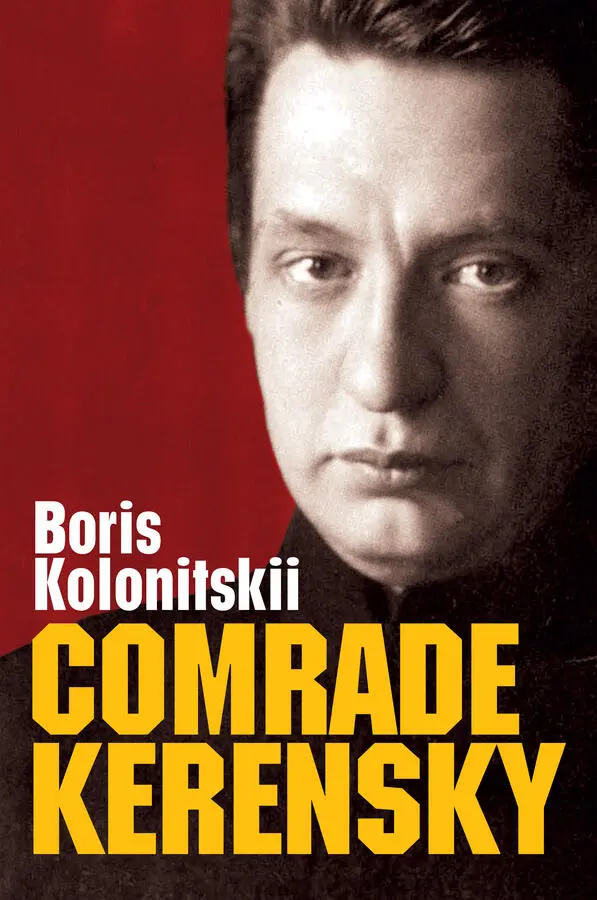
- Название:Comrade Kerensky
- Автор:
- Жанр:
- Год:неизвестен
- ISBN:нет данных
- Рейтинг книги:3 / 5. Голосов: 1
-
Избранное:Добавить в избранное
- Отзывы:
-
Ваша оценка:
Comrade Kerensky: краткое содержание, описание и аннотация
Предлагаем к чтению аннотацию, описание, краткое содержание или предисловие (зависит от того, что написал сам автор книги «Comrade Kerensky»). Если вы не нашли необходимую информацию о книге — напишите в комментариях, мы постараемся отыскать её.
Comrade Kerensky — читать онлайн ознакомительный отрывок
Ниже представлен текст книги, разбитый по страницам. Система сохранения места последней прочитанной страницы, позволяет с удобством читать онлайн бесплатно книгу «Comrade Kerensky», без необходимости каждый раз заново искать на чём Вы остановились. Поставьте закладку, и сможете в любой момент перейти на страницу, на которой закончили чтение.
Интервал:
Закладка:
219 219. S”ezdy i konferentsii Konstitutsionno-demokraticheskoi partii: 1905–1920 gg., 3 vols (Moscow: ROSSPEN, 2000), vol. 3, kn. 1, ‘1915–1917 gg.’, pp. 362, 365.
220 220. Abraham, Alexander Kerensky, p. 50.
221 221. Tan, ‘A. F. Kerenskii’, p. 3.
222 222. Kolonitskii, Simvoly vlasti, pp. 222–3.
223 223. Krasnyi arkhiv, vol. 5 (24) (1927), p. 209.
224 224. Aleksandr Kerenskii, ‘O pamiatnike zhertvam revoliutsii (pis’mo v redaktsiiu “Dela naroda”)’, Delo naroda, 8 April 1917. His contemporaries took great note of this initiative, and the letter was included in publications of his speeches. See, for example, Kerenskii, Rechi A. F. Kerenskogo o revoliutsii, pp. 59–60.
225 225. Dmitrii Merezhkovskii, ‘Perventsy svobody’, Niva, no. 16 (1917), pp. 230–3; no. 17, pp. 245–9; Merezhkovskii, Perventsy svobody: Istoriia vosstaniia 14-go dekabria 1825 g. (Petrograd: Narodnaia vlast’, 1917). On the meeting, see Zinaida Gippius, Siniaia kniga: Peterburgskii dnevnik, 1914–1918 (Belgrade: Radenkovich, 1929), p. 118. For evidence of Gippius’s authorship, see an early version of her ‘diary’: Gippius, Sovremennaia zapis’, OR RNB, fond 481, opis’ 1, delo 3, list 148.
226 226. ‘Zapisnye knizhki polkovnika G. A. Ivanishina’, publication by A. D. Margolis, N. K. Gerasimova and N. S. Tikhonova, Minuvshee: Istoricheskii al’manakh, (Moscow and St Petersburg), vol. 17 (1994), p. 540; Izvestiia Revel’skogo soveta rabochikh i voinskikh deputatov, 15 April 1917.
227 227. Russkii invalid, 9 May 1917.
228 228. Russkii invalid, 10 May 1917. The congress organizers themselves paid obeisance to the revolutionary tradition. The delegates visited the Field of Mars and knelt at the graves of the champions of freedom.
229 229. Krymskii vestnik [Sevastopol’], 18 May 1917; Russkii invalid, 19 May 1917; Prikazy i rechi pervogo russkogo Voennogo i Morskogo Ministra-Sotsialista A. F. Kerenskogo ([No location]: Shtab osoboi armii, 1917), pp. 32–3; A. F. Kerenskii, Ob armii i voine (Petrograd: Narodnaia volia, 1917), p. 12. There is also an Odessa publication of this title with different pagination.
230 230. Kir’iakov, Dedushka i babushka russkoi revoliutsii, p. 3.
231 231. See Babushka i vnuki (Petrograd: Narodnaia vlast’, 1917).
232 232. Partiia sotsialistov-revoliutsionerov: Dokumenty i materialy, pp. 238–9.
233 233. Volia naroda, 6 May 1917.
234 234. ‘Pomoshch’ politicheskim’, Novoe vremia, 25 March 1917.
235 235. E. Breshko-Breshkovskaia, Babushka russkoi revoliutsii, pp. 17, 42, Hoover Institution on War, Revolution and Peace Archives, B. I. Nicolaevsky Collection, box 87, folder 1.
236 236. E. Breshkovskaia, ‘1917-i god’, Novyi zhurnal [New York], vol. 38 (1954), p. 197; Abraham, Alexander Kerensky, p. 244.
237 237. Revel’skoe slovo, 15 April 1917.
238 238. Katerina Breshkovskaia, Hidden Springs of the Russian Revolution (Stanford, CA: Stanford University Press, 1931), p. 347. A photograph of Breshko-Breshkovskaia has survived in Vladimir Zenzinov’s archive, with an inscription which gives us a clear impression of the attitude of the grandmother of the Russian Revolution towards her political grandson. ‘To Alexander Kerensky. You see, I have kept you, whom I fervently love. So that my eye can see how my dear grandson is getting along in life and invariably doing good work. How often I hear him sigh, both because his work is so hard and when he thinks of the suffering his people must bear. May my dear one sense that I share his thinking and gaze far ahead into the future. And that to you, my friend, I bequeath my last sigh, a sigh of the hope and love which always inspired me. Your Gran, Kate Breshkovskaia.’ The inscription is dated 21 February 1921, and has a note added at the end: ‘Always with you, always on your side.’ See Columbia University Library, Bakhmetieff Archive, Zenzinov Papers, box 3. Breshko-Breshkovskaia called Kerensky’s children her grandchildren (communicated to the author by Kerensky’s grandson, Stephen Kerensky).
239 239. Breshko-Breshkovskaia, Babushka russkoi revoliutsii, p. 45.
240 240. Volia naroda, 8 June 1917.
241 241. Volia naroda, 5 September 1917.
Конец ознакомительного фрагмента.
Текст предоставлен ООО «ЛитРес».
Прочитайте эту книгу целиком, на ЛитРес.
Безопасно оплатить книгу можно банковской картой Visa, MasterCard, Maestro, со счета мобильного телефона, с платежного терминала, в салоне МТС или Связной, через PayPal, WebMoney, Яндекс.Деньги, QIWI Кошелек, бонусными картами или другим удобным Вам способом.
Интервал:
Закладка:
Похожие книги на «Comrade Kerensky»
Представляем Вашему вниманию похожие книги на «Comrade Kerensky» списком для выбора. Мы отобрали схожую по названию и смыслу литературу в надежде предоставить читателям больше вариантов отыскать новые, интересные, ещё непрочитанные произведения.





Обсуждение, отзывы о книге «Comrade Kerensky» и просто собственные мнения читателей. Оставьте ваши комментарии, напишите, что Вы думаете о произведении, его смысле или главных героях. Укажите что конкретно понравилось, а что нет, и почему Вы так считаете.