Boris Kolonitskii - Comrade Kerensky
Здесь есть возможность читать онлайн «Boris Kolonitskii - Comrade Kerensky» — ознакомительный отрывок электронной книги совершенно бесплатно, а после прочтения отрывка купить полную версию. В некоторых случаях можно слушать аудио, скачать через торрент в формате fb2 и присутствует краткое содержание. Жанр: unrecognised, на английском языке. Описание произведения, (предисловие) а так же отзывы посетителей доступны на портале библиотеки ЛибКат.
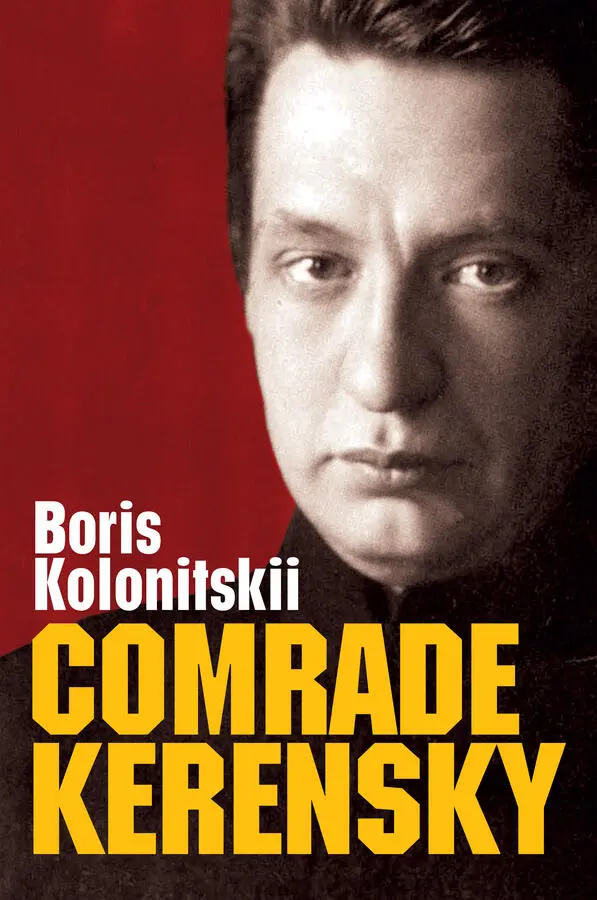
- Название:Comrade Kerensky
- Автор:
- Жанр:
- Год:неизвестен
- ISBN:нет данных
- Рейтинг книги:3 / 5. Голосов: 1
-
Избранное:Добавить в избранное
- Отзывы:
-
Ваша оценка:
Comrade Kerensky: краткое содержание, описание и аннотация
Предлагаем к чтению аннотацию, описание, краткое содержание или предисловие (зависит от того, что написал сам автор книги «Comrade Kerensky»). Если вы не нашли необходимую информацию о книге — напишите в комментариях, мы постараемся отыскать её.
Comrade Kerensky — читать онлайн ознакомительный отрывок
Ниже представлен текст книги, разбитый по страницам. Система сохранения места последней прочитанной страницы, позволяет с удобством читать онлайн бесплатно книгу «Comrade Kerensky», без необходимости каждый раз заново искать на чём Вы остановились. Поставьте закладку, и сможете в любой момент перейти на страницу, на которой закончили чтение.
Интервал:
Закладка:
172 172. Ivanchikov, ‘Ministr Kerenskii’, Nizhegorodskii listok, 29 April 1917.
173 173. E. V–ch, A. F. Kerenskii narodnyi ministr, p. 15.
174 174. Volia naroda, 4 May 1917.
175 175. The April Crisis arose out of disagreement over war aims between the Provisional Government and the Petrograd Soviet and led to the establishment of a coalition Provisional Government which included six socialist ministers nominated by the Soviet. [Trans.]
176 176. Soldatskaia pravda, 11 May 1917.
177 177. Anon, Syn Velikoi Russkoi Revoliutsii, p. 4.
178 178. Kerensky, The Catastrophe, pp. 15–16; Mel’gunov, Martovskie dni 1917 goda, p. 116; Kerensky, The Kerensky Memoirs, p. 197.
179 179. Kerensky, The Kerensky Memoirs, p. 200; The Russian Provisional Government, 1917: Documents, vol. 1, pp. 65–6; Nikolaev, Revoliutsiia i vlast’, pp. 190–201.
180 180. As a consequence of a printers’ strike a number of publications had ceased to appear, and Izvestiia Petrogradskogo Soveta rabochikh deputatov was published only from 28 February.
181 181. It is possible that Mstislavskii, a notable memoirist who took part in the revolution, is describing a conversation with Kerenskii after the arrest of Shcheglovitov, although he refers to the former head of the government, Boris Shtiurmer. ‘Kerenskii burst out laughing and, like a naughty boy, slapped his pocket, delved into it and pulled out an enormous old-fashioned door key. “That’s where I’m keeping Shtiurmer! You should have seen their ugly mugs when I locked him up … Rodzyanko nearly had a fit! He was all set to greet him as one of the family!”’ Sergei Mstislavskii, Piat’ dnei: Nachalo i konets Fevral’skoi revoliutsii (Berlin: Grzhebin, 1922), p. 24.
182 182. Partiia sotsialistov-revoliutsionerov: Dokumenty i materialy, p. 25; Zenzinov, ‘Fevral’skie dni’, p. 213.
183 183. Merzon, ‘A. F. Kerenskii v Moskve’.
184 184. Kerenskii personally wrote out an authorization on the headed notepaper of the chairman of the State Duma: ‘The Provisonal Committee delegates to member of the State Duma Kerenskii management of the ministerial pavilion where particularly important individuals are under arrest.’ Rodzyanko signed the authorization. See Burdzhalov, Vtoraia russkaia revoliutsiia, p. 264.
185 185. Kerensky, The Catastrophe, p. 29.
186 186. ‘Aleksandr Fedorovich Kerenskii (Shtrikhi k politicheskomu portretu)’, Gennadiy Sobolev, Aleksandr Kerenskii: Liubov’ i nenavist’ revoliutsii: dnevniki, stat’i, ocherki, vospominaniia sovremennikov (Cheboksary: Chuvashskii universitet, 1993), p. 19.
187 187. Vladimir Stankevich, Vospominaniia (1914–1919) (Berlin: Ladyzhnikov, 1920), p. 75; Sukhanov, Zapiski o revoliutsii, kn. 1, p. 63; Vasilii Shul’gin, Dni. 1920: Zapiski (Moscow: Sovremennik, 1989), pp. 179, 180, 185; Mel’gunov, Martovskie dni 1917 goda, pp. 116–17.
188 188. Ol’ga Kerenskaia, [Fragmentary reminiscences], House of Lords Record Office [London], Historical Collection, no. 206: The Stow Hill Papers, DS 2/2, Box 8, p. 4; Poliakov, ‘Komnata no. 10’; Mel’gunov, Martovskie dni 1917 goda, p. 51; Kerensky, The Catastrophe, pp. 59, 76.
189 189. Narodnyi tribun, 14 October 1917.
190 190. Den’ [Petrograd], 9 March 1917.
191 191. Rossiiskii gosudarstvennyi arkhiv sotsial’no-politicheskoi istorii [RGASPI, Russian State Archive of Socio-Political History], fond 662, opis’ 1, delo 58, list 98.
192 192. Novoe vremia, 5 March 1917.
193 193. GARF, fond 1807, opis’ 1, delo 361, list 66.
194 194. RGIA, fond 1278, opis’ 5, delo 1324, list 62; fond 1405, opis’ 538, delo 177, list 51; GARF, fond 1807, opis’ 1, delo 363, list 1.
195 195. GARF, fond 1807, opis’ 1, delo 359, list 151; delo 361, list 17, 19; delo 363, list 13.
196 196. The Duma received some 20,000 such telegrams and letters. Nikolaev, Revoliutsiia i vlast’, p. 573.
197 197. Ekaterina Gavroeva, ‘Pis’ma vo vlast’: Rabochie i M. V. Rodzianko (Mart 1917 g.)’, Revoliutsiia 1917 goda v Rossii: Novye podkhody i vzgliady: Sbornik nauchnykh statei, ed. Andrei Nikolaev (St Petersburg: Tsentral’nyi gosudarstvennyi istoricheskii arkhiv Sankt-Peterburga [TsGIA SPb, the Central State Archive of History, St Petersburg], 2015), pp. 76–82; Gavroeva, ‘Pis’ma vo vlast’: Soldaty i M. V. Rodzianko (Mart 1917 g.)’, Peterburgskie voennoistoricheskie chteniia: Sbornik statei, ed. Andrei Nikolaev (St Petersburg: RGPU im Gertsena, 2015), pp. 112–17.
198 198. RGIA, fond 1278, opis’ 5, delo 1324, list 87.
199 199. Gavroeva, ‘Pis’ma vo vlast’: Soldaty’, p. 117.
200 200. GARF, fond 1807, opis’ 1, delo 354, listy 19–22.
201 201. Russkii invalid, 8 March 1917; GARF, fond 1807, opis’ 1, delo 359, list 7.
202 202. Delo naroda, 7 July 1917.
203 203. Nadezhda Krupskaia, ‘Stranichka iz istorii Rossiiskoi sotsialdemokraticheskoi partii’, Soldatskaia pravda, 13 May 1917. Quoted from Krupskaia, Izbrannye proizvedeniia (Moscow: Izdatel’stvo politicheskoi literatury, 1988), pp. 44–8; Sotsial-demokrat [Moscow], 26 May, 9 June 1917.
204 204. Saratovskii Sovet rabochikh deputatov (1917–1918): Sbornik dokumentov (Moscow and Leningrad: Gosudarstvennoe sotsial’no-ekonomicheskoe izdatel’stvo, 1931), p. 162.
205 205. RGIA, fond 1405, opis’ 538, delo 177, list 52. The text was sent no later than 22 March.
206 206. GARF, fond 1779, opis’ 1, delo 293, list 293; Russkoe slovo, 21 May 1917.
207 207. GARF, fond 1778, opis’ 1, delo 362, list 221.
208 208. RGIA, fond 1412, opis’ 16, delo 537, list 2.
209 209. Hoover Institution on War, Revolution and Peace Archives, B. I. Nicolaevsky Collection, box 149, file 3, F. [Navotnyi], [Propaganda], p. 88.
210 210. GARF, fond 1807, opis’ 1, delo 354, listy 95–6.
211 211. ‘Vserossiiskii s”ezd uchitelei’, Delo naroda, 9 April 1917.
212 212. For further detail, see Kolonitskii, Simvoly vlasti i bor’ba za vlast’: K izucheniiu politicheskoi kul’tury Rossiiskoi revoliutsii 1917 goda (St Petersburg: Dmitrii Bulanin, 2001; 2nd edn, St Petersburg: Liki Rossii, 2012).
213 213. Velikaia russkaia revoliutsiia v ocherkakh i kartinakh (Moscow: N. V. Vasil’ev, 1917), vyp. 4: ‘80-e gody. Bortsy za svobodu. Letopis’ revoliutsii’; Bortsy za svobodu (Biografii revoliutsionerov, kaznivshikh Aleksandra II) (Moscow: D. M. Kumanov, 1917); Bortsy za svobodu: [Sbornik] (Petrograd: Severnoe izdatel’stvo, 1917); Mikhail Gernet, Bortsy za svobodu v Shlissel’burgskoi kreposti (Moscow: Nachalo, 1917).
214 214. Bertliev, Borets za svobodu i chest’ naroda: Pamiati Egora Sazonova (Moscow: [Zemlia i volia?], 1917); Viacheslav Pirogov, Smert’ Egora Sazonova (Petrograd: Partiia sotsialistov-revoliutsionerov, 1917).
215 215. Kirik Levin, Pervyi borets za svobodu russkogo naroda: Zhizn’ i deiatel’nost’ A. N. Radishcheva (Moscow: Knigoizdatel’stvo E. D. Miagkogo ‘Kolokol’, 1906); Evgenii Shveder, Pervyi russkii borets za svobodu Aleksandr Nikolaevich Radishchev: Biograficheskii ocherk (Moscow: Pechatnik, 1917).
216 216. A pamphlet in the series ‘Pervye bortsy za svobodu’ was Dekabrist Mikhail Sergeevich Lunin: Ocherk ego biografii, ego zaveshchanie, pis’ma iz ssylki i politicheskie stat’i (Petrograd: Khudozhestvennaia pechatnia, 1917).
217 217. Sine-fono, nos. 11–12 (1917), pp. 26–7, 35, 97; Priboi [Helsingfors], 6 August 1917; Velikii Kinemo: Katalog sokhranivshikhsia igrovykh fil’mov Rossii, 1908–1919, ed. Veronika Ivanova et al. (Moscow: Novoe literaturnoe obozrenie, 2002), pp. 364, 370.
218 218. Even the delegates of the All-Russia Congress of Cossacks paid respect to the memory of Lieutenant Schmidt by standing and singing the funeral anthem Memory Eternal. See ‘Kazachii s”ezd’, Novoe vremia, 8 June 1917. Among the delegates were some who would later be active in the White cause. On the politics of memory in Sevastopol, see Kolonitskii, ‘Pamiat’ o Pervoi rossiiskoi revoliutsii v 1917 godu (Sluchai Sevastopolia i Gel’singforsa)’, Cahiers du Monde Russe, no. 3 (48) (2007), pp. 519–37.
Читать дальшеИнтервал:
Закладка:
Похожие книги на «Comrade Kerensky»
Представляем Вашему вниманию похожие книги на «Comrade Kerensky» списком для выбора. Мы отобрали схожую по названию и смыслу литературу в надежде предоставить читателям больше вариантов отыскать новые, интересные, ещё непрочитанные произведения.



Обсуждение, отзывы о книге «Comrade Kerensky» и просто собственные мнения читателей. Оставьте ваши комментарии, напишите, что Вы думаете о произведении, его смысле или главных героях. Укажите что конкретно понравилось, а что нет, и почему Вы так считаете.