Boris Kolonitskii - Comrade Kerensky
Здесь есть возможность читать онлайн «Boris Kolonitskii - Comrade Kerensky» — ознакомительный отрывок электронной книги совершенно бесплатно, а после прочтения отрывка купить полную версию. В некоторых случаях можно слушать аудио, скачать через торрент в формате fb2 и присутствует краткое содержание. Жанр: unrecognised, на английском языке. Описание произведения, (предисловие) а так же отзывы посетителей доступны на портале библиотеки ЛибКат.
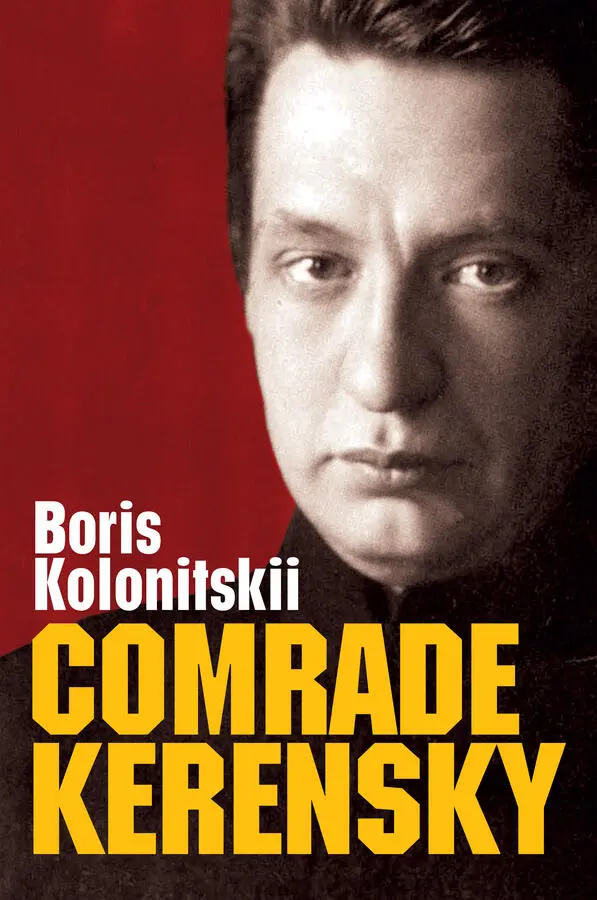
- Название:Comrade Kerensky
- Автор:
- Жанр:
- Год:неизвестен
- ISBN:нет данных
- Рейтинг книги:3 / 5. Голосов: 1
-
Избранное:Добавить в избранное
- Отзывы:
-
Ваша оценка:
Comrade Kerensky: краткое содержание, описание и аннотация
Предлагаем к чтению аннотацию, описание, краткое содержание или предисловие (зависит от того, что написал сам автор книги «Comrade Kerensky»). Если вы не нашли необходимую информацию о книге — напишите в комментариях, мы постараемся отыскать её.
Comrade Kerensky — читать онлайн ознакомительный отрывок
Ниже представлен текст книги, разбитый по страницам. Система сохранения места последней прочитанной страницы, позволяет с удобством читать онлайн бесплатно книгу «Comrade Kerensky», без необходимости каждый раз заново искать на чём Вы остановились. Поставьте закладку, и сможете в любой момент перейти на страницу, на которой закончили чтение.
Интервал:
Закладка:
103 103. Nathan Smith, ‘Political Freemasonry in Russia, 1906–1918: A Discussion of the Sources’, Russian Review, 44/2 (1985), p. 158.
104 104. ‘Zapis’ besedy s A.Ia. Gal’pernom, 1928 g.’, in Boris Nikolaevskii, Russkie masony i revoliutsiia (Moscow: Terra, 1990), p. 74.
105 105. Russkii invalid, 24 May 1917.
106 106. RGIA, fond 1278, opis’ 5, delo 442, listy 4–99 ob.
107 107. Abraham, Alexander Kerensky, pp. 68–9, 72.
108 108. ‘Kerenskii o kanune Fevralia’, Vozrozhdenie, 22 April 1932. Kerenskii even later claimed the left-wing parties had not wanted a revolution during the war and that the insurgency had been provoked by the autocracy. This is at variance with reality. In offering this interpretation, conspiracy-based and with the benefit of hindsight, he was evidently seeking to present himself as having been a moderate politician.
109 109. Gazeta-kopeika, 27 July 1914.
110 110. Pervyi Vserossiiskii s”ezd Sovetov, ed. Veniamin Rakhmetov (Moscow and Leningrad: Gosizdat, 1930), vol. 1, p. 80.
111 111. When the renowned ‘hunter of agents provocateurs’ Vladimir Burtsev, a convinced defencist, was arrested in 1914, he chose not to avail himself of Kerensky’s legal services, considering him an opponent of the war. This reputation became firmly attached and he found himself a hostage to it. See Vladimir Burtsev, ‘Vospominaniia’, Novyi zhurnal [New York], no. 69 (1962), pp. 181–2.
112 112. Abraham, Alexander Kerensky, pp. 76–9; Michael Melancon, The Socialist Revolutionaries and the Russian Anti-War Movement, 1914–1917 (Columbus: Ohio State University Press, 1990), pp. 46, 62–6, 101–3, 106, 202, 224, 236; Vladimir Stankevich, Vospominaniia, 1914–1919 gg. (Leningrad: Priboi, 1926), p. 13.
113 113. Melancon, The Socialist Revolutionaries, p. 221.
114 114. Aleksei Badaev, Bol’sheviki v Gosudarstvennoi dume: Bol’shevistskaia fraktsiia IV Gosudarstvennoi dumy i revoliutsionnoe dvizhenie v Peterburge. Vospominaniia (Moscow and Leningrad: Gosudarstvennoe izdatel’stvo, 1930), pp. 384, 405; 131; Grigorii Aronson, Rossiia v epokhu revoliutsii: Istoricheskie etiudy i memuary (New York: [self-published], 1966), pp. 19–20; Abraham, Alexander Kerensky, pp. 83–5; Tiutiukin, Aleksandr Kerenskii, pp. 74–6.
115 115. Pravye partii: Dokumenty i materialy, vol. 2, p. 473.
116 116. Golos soldata, 6 May 1917; Edinstvo, 6 May 1917.
117 117. ‘Tsarskaia okhranka ob A. F. Kerenskom’, Petrogradskaia gazeta, 27 June 1917; Aleksandr Fedorovich Kerenskii (Po materialam Departamenta politsii), pp. 11–25; E. V–ch, A. F. Kerenskii narodnyi ministr, pp. 13–14; Vladimir Zenzinov, ‘Fevral’skie dni’, Novyi zhurnal [New York], vol. 34 (1953), p. 190; Abraham, Alexander Kerensky, pp. 81–3, 90–1, 94, 100, 404; Melancon, The Socialist Revolutionaries, pp. 62–6, 84–5, 89, 101–6, 303–4. The report by the director of the police department was published: see ‘A. F. Kerenskii v bor’be za Uchreditel’noe sobranie v 1915 g.’, Golos minuvshego, nos. 10–12 (1918), p. 236.
118 118. Melancon, The Socialist Revolutionaries, pp. 106, 303–4.
119 119. Vladimir Lenin (Ul’ianov), Polnoe sobranie sochinenii, 55 vols (Moscow: Izdatel’stvo politicheskoi literatury, 1967–81), vol. 49 (1970), pp. 148–9.
120 120. Ivan Stepanov, ‘O Moskovskom soveshchanii’, Spartak, no. 6 (1917), pp. 11, 12. The Bol’shevik Ivan Skvortsov-Stepanov is mentioned in research as having been a Freemason. See Vitalii Startsev, Tainy russkikh masonov (St Petersburg: D.A.R.K., 2004), pp. 119–21.
121 121. Mark Vishniak, Dan’ proshlomu (New York: Chekhov, 1954), p. 240.
122 122. See Kornelii Shatsillo, ‘“Delo” polkovnika Miasoedova’, Voprosy istorii, no. 4 (1967), pp. 103–16; William C. Fuller, Jr, The Foe Within: Fantasies of Treason and the End of Imperial Russia (Ithaca, NY: Cornell University Press, 2006).
123 123. RGIA, fond 1405, opis’ 539, delo 773, listy 2–2 ob. The real author of the letter was a feature writer, Dmitrii Filosofov. See his ‘Dnevnik (1917–1918)’, Zvezda, no. 1 (1992), pp. 189–205; no. 2, pp. 188–204; no. 3, pp. 147–66.
124 124. RGIA, fond 1405, opis’ 539, delo 773, listy 1–1 ob.; Valerii Karrik, ‘Voina i revoliutsiia: Zapiski, 1914–1917 gg.’, Golos minuvshego, nos 4–6 (1918), pp. 14–15.
125 125. RGIA, fond 1405, opis’ 530, delo 1127, listy 3–3 ob. The letter was used in a leaflet issued by the Petersburg Committee of Bolsheviks. See Aleksandr Shliapnikov, Kanun semnadtsatogo goda: Semnadtsatyi god, 3 vols (Moscow: Politizdat, 1992), vol. 1, p. 168. See also: Revoliutsionnoe dvizhenie v armii i na flote v gody Pervoi mirovoi voiny (1914 – fevral’ 1917): Sb. dokumentov, ed. Arkadii Sidorov (Moscow: Nauka, 1966), p. 183.
126 126. Aleksandr Fedorovich Kerenskii (Po materialam Departamenta politsii), pp. 14–16; Abraham, Alexander Kerensky, pp. 86–7.
127 127. See Boris Kolonitskii, ‘Tragicheskaia erotika’: Obrazy imperatorskoi sem’i v gody Pervoi mirovoi voiny (Moscow: Novoe literaturnoe obozrenie, 2010).
128 128. Gosudarstvennaia duma. Chetvertyi sozyv. Stenograficheskie otchety. Sessiia chetvertaia (Petrograd: Gosudarstvennaia tipografiia, 1915–16), p. 110.
129 129. Leonidov, Vozhd’ svobody A. F. Kerenskii, p. 15.
130 130. On this expedition, see ‘Turkestan i Gosudarstvennaia duma Rossiiskoi imperii: Dokumenty TSGA Respubliki Uzbekistan, 1915–1916 gg.’, publication by Tat’iana Kotiukova, Istoricheskii arkhiv, no. 3 (2003), pp. 126–36. On Kerensky’s speech to the Duma about the results of his expedition, see ‘“Takoe upravlenie gosudarstvom – nedopustimo”: Doklad A. F. Kerenskogo na zakrytom zasedanii Gosudarstvennoi dumy, dekabr’ 1916 g.’, publication by Dinara Amanzholova, Istoricheskii arkhiv, no. 2 (1997), pp. 4–22. See also: Vosstanie 1916 goda v Turkestane: Dokumental’nye svidetel’stva obshchei tragedii (Sb. dokumentov i materialov), ed. Tat’iana Kotiukova (Moscow: Mardzhani, 2016).
131 131. Narodnaia niva (Helsingfors), 6 (19) May 1917.
132 132. Leonidov, Vozhd’ svobody A. F. Kerenskii, p. 16.
133 133. GARF, fond 1807, opis’ 1, delo 391. Letters and telegrams from various correspondents to A. F. Kerenskii expressing sympathy in connection with his illness.
134 134. Ibid., listy 7, 9, 13, 14, 17, 20, 21, 23, 26a, 29–29 ob., etc.
135 135. Among the officers was Captain Mikhail Murav’ev, who later became an organizer of shock battalions and subsequently commanded Soviet detachments which in autumn 1917 fought Kerenskii’s troops. On one occasion Kerensky’s friend Count Pavel Tolstoi came to see him, on behalf of Grand Duke Mikhail Aleksandrovich, to ask how the workers might react to the coronation of the emperor’s brother. See Sergei Mel’gunov, Na putiakh k dvortsovomu perevorotu (Zagovory pered revoliutsiei 1917 goda) (Paris: Rodnik, 1931), pp. 197, 208–9; Alexander F. Kerensky, The Catastrophe: Kerensky’s own Story of the Russian Revolution (New York: Appleton, 1927), pp. 101–2; Kerensky, The Kerensky Memoirs, pp. 147, 149–51; Abraham, Alexander Kerensky, pp. 89, 99–100, 117–19.
136 136. Letter from Vasilii Maklakov to Aleksandr Kerenskii, 3 June 1951, Hoover Institution on War, Revolution and Peace Archives, A. F. Kerensky Papers, box 1. Vladimir Stankevich met Kerenskii in January 1917 at a meeting of an ‘intimate circle’, which might mean a Masonic lodge, although Stankevich is not usually written of as being a Freemason. The question of a court coup was being discussed there. See Vladimir Stankevich, Vospominaniia, 1914–1919 gg. (Leningrad: Priboi, 1926), p. 30; Stankevich, Piat’ nenuzhnykh let: Vospominaniia odnogo iz vinovnikov voiny (1914–1919), Hoover Institution on War, Revolution and Peace Archives, B. I. Nikolaevsky Collection, box 122, sheet 39.
Читать дальшеИнтервал:
Закладка:
Похожие книги на «Comrade Kerensky»
Представляем Вашему вниманию похожие книги на «Comrade Kerensky» списком для выбора. Мы отобрали схожую по названию и смыслу литературу в надежде предоставить читателям больше вариантов отыскать новые, интересные, ещё непрочитанные произведения.



Обсуждение, отзывы о книге «Comrade Kerensky» и просто собственные мнения читателей. Оставьте ваши комментарии, напишите, что Вы думаете о произведении, его смысле или главных героях. Укажите что конкретно понравилось, а что нет, и почему Вы так считаете.