Museum Transformations
Здесь есть возможность читать онлайн «Museum Transformations» — ознакомительный отрывок электронной книги совершенно бесплатно, а после прочтения отрывка купить полную версию. В некоторых случаях можно слушать аудио, скачать через торрент в формате fb2 и присутствует краткое содержание. Жанр: unrecognised, на английском языке. Описание произведения, (предисловие) а так же отзывы посетителей доступны на портале библиотеки ЛибКат.
- Название:Museum Transformations
- Автор:
- Жанр:
- Год:неизвестен
- ISBN:нет данных
- Рейтинг книги:4 / 5. Голосов: 1
-
Избранное:Добавить в избранное
- Отзывы:
-
Ваша оценка:
Museum Transformations: краткое содержание, описание и аннотация
Предлагаем к чтению аннотацию, описание, краткое содержание или предисловие (зависит от того, что написал сам автор книги «Museum Transformations»). Если вы не нашли необходимую информацию о книге — напишите в комментариях, мы постараемся отыскать её.
Museum Transformations — читать онлайн ознакомительный отрывок
Ниже представлен текст книги, разбитый по страницам. Система сохранения места последней прочитанной страницы, позволяет с удобством читать онлайн бесплатно книгу «Museum Transformations», без необходимости каждый раз заново искать на чём Вы остановились. Поставьте закладку, и сможете в любой момент перейти на страницу, на которой закончили чтение.
Интервал:
Закладка:
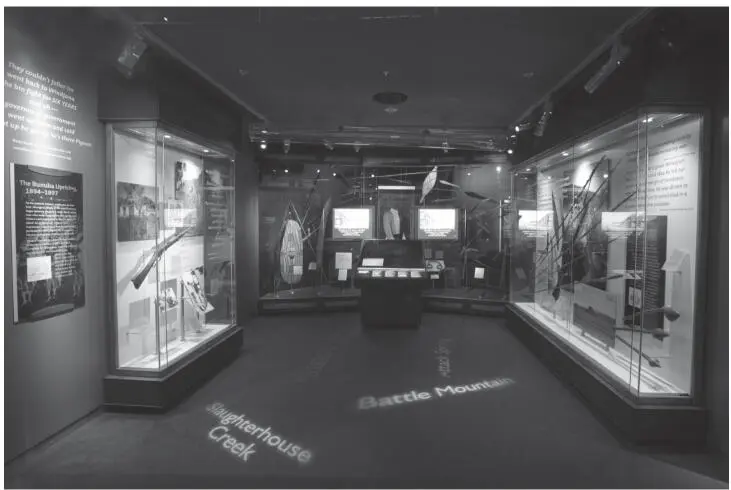
FIGURE 3.1The “Contested Frontiers” exhibit, National Museum of Australia, Canberra. Photo: George Serras. Reproduced with permission of the National Museum of Australia.
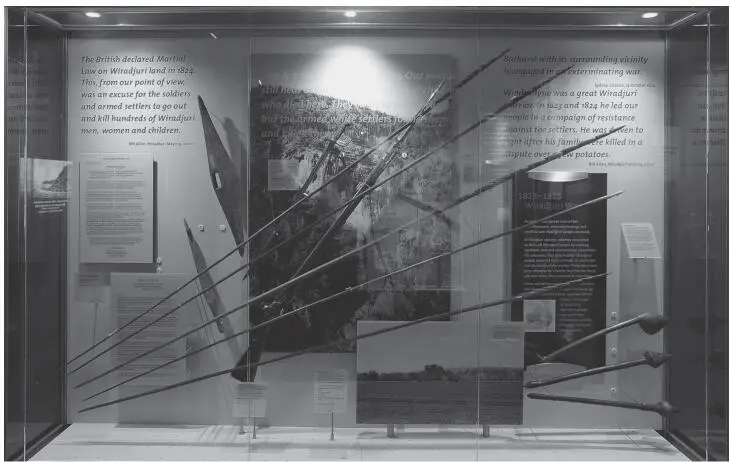
FIGURE 3.2The 1823–1825 Wiradjuri War display, National Museum of Australia. Photo: George Serras. Reproduced with permission of the National Museum of Australia.
Flanking these displays was “1823–1825 The Wiradjuri War” (which can be seen, complete with its text panels, at National Museum of Australia 2004b) (Figure 3.2) and “The Bunuba Uprising 1894–1897.” In both, the nature of the story being told had clearly shifted. They emphasized the local rather than the national and, more importantly, an Aboriginal perspective resting on memory rather than a settler one based on history. Part of the principal text panel for the Wiradjuri display read:
In Wiradjuri country, colonists attempted to drive off Aboriginal people by violating significant sites and contaminating waterholes. On occasions, they gave friendly Aboriginal people poisoned flour or bread. It is believed that the family of the warrior Windradyne was given potatoes by a farmer and that the family was shot when they returned to take more.
When martial law was declared, Windradyne and his people launched a guerrilla campaign. They frustrated the poorly organised British forces, who began to attack any Aboriginal people they could find. Windradyne and the Wiradjuri remained unvanquished.
In the center of this display was a large photo of Bells Falls Gorge, on which was imposed a text panel containing a statement made by a Wiradjuri elder, Bill Allen, in 2000: “This is a place of great sadness. Our people still hear the echoes of the women and children who died here. They came to seek refuge but the armed white settlers found them and killed them.” To the left and the right of this was further testimony by Allen: “The British declared martial law on Wiradjuri land in 1824. This, from our point of view , was an excuse for the soldiers and armed settlers to go out and kill hundreds of Wiradjuri men, women and children” (emphasis added) and “Windradyne was a great Wiradjuri warrior. In 1823 and 1824 he led our people in a campaign of resistance against the settlers. He was driven to fight after his family were killed in a dispute over a few potatoes.” In keeping with its focus on an Aboriginal perspective, this display featured Aboriginal rather than European weapons. A further photograph, of a field, was later accompanied by a panel conveying Aboriginal oral tradition: “Wiradjuri people believe this to be the site of a major battle.” Adjudicating history
Keith Windschuttle’s attack on this display rested on an assumption that it sought to tell the Bells Falls Gorge massacre story. He claimed that this narrative was “a complete fabrication” for which there was no contemporary historical evidence, asserted that the museum had a responsibility under its charter to promote “history” rather than “mythology,” insisted it should never have mounted the display by claiming that not only was there was no proper historical evidence for the story but a thoroughly researched scholarly analysis of it (by David Roberts) had revealed that it was “spurious,” and contended that the display was misleading since visitors would fail to realize that they were simply viewing “a piece of mythology” (Windschuttle 2001, 19; 2002, 31; 2003).
Windschuttle’s criticisms, it can be argued, reveal the complex nature of the difficult histories boom in the sense that they seem to be informed by several different impulses. First, he bemoaned the ways in which the new Australian history had drawn into doubt the nation’s moral character by telling unsettling stories, most notably about its dispossession, destruction, and despoliation of Aboriginal people. Second, he was convinced the unity of the nation was being threatened by the rise of forces such as “identity politics,” “pluralism,” and “multiculturalism,” which allegedly favored “minority cultures” and “special rights” at the cost of “the mainstream” or “ordinary people.” Third, he assumed that knowledge and learning, and thus the pursuit of truth, especially historical truth, was being corrupted by those same forces and that this left the nation without an overarching master narrative (Attwood 2005, ch. 3). In summary, Windschuttle’s concerns about the museum’s display might be regarded as typical of settler conservatives, who have felt sorely troubled by the profound changes in the stories that have long and lovingly been told about their nations. Yet such a conclusion would overlook two matters.
First, it can be argued that much of Windschuttle’s attack was informed by a series of assumptions that were commonplace among historians trained in the 1960s and 1970s, if not beyond. By the time that Windschuttle (b. 1942) studied history at university, historians had begun to pay attention to the pasts of women, the working class, migrants, indigenous peoples, and so forth, but they nonetheless tended to treat these as subordinate to a mainstream past. While they were increasingly expanding their methodological repertoire to include historical sources such as oral history and historical approaches such as local history, they remained committed to the traditional empirical goals of the discipline. In the decades since, many scholars have called into question the universalistic claims that academic history had made for its knowledge of the past, and have tried to show the ways in which memory, tradition, myth, and legend have their own conventions for establishing historical truth and which enjoy an authority of their own. But this approach has by no means found favor with all historians.
Second, Windschuttle’s attack seems to have been informed by a further commonly held apprehension, namely one about the grounds on which conflicting historical truths are to be adjudicated in democracies today. The democratization of history has meant that this is a much more difficult problem to negotiate than it was in the past. As Dipesh Chakrabarty (2000, ch. 4) has argued, this matter has been particularly vexed in cases where “minority histories” or “minority pasts,” like the stories told about Bells Falls Gorge, have raised fundamental questions about the discipline of history. In settling disputes about the past, he points out, the discipline has long insisted that historical narratives be assessed according to whether or not they meet its particular conception of the real and its rules for determining what is truthful. However, as we have observed, minorities like Aboriginal people in Australia seldom tell their histories in a manner that satisfies these criteria. Chakrabarty (2000) expresses the problem thus: “If minority histories go to the extent of questioning the very idea of fact or evidence, then[, it is asked], how would one find ways of adjudicating between competing claims in public life?” (99). The problem is all the greater, Chakrabarty (2007, 2008) has noted, in a context in which a conception of democracy that has long emphasized development and taken the nation as both a given and a unified whole is being challenged by a conception of democracy that emphasizes diversity, and where memory or the voice of experience has become a marketable commodity in the realm of the media, providing a means of persuasion which, in contrast to the discipline of history’s long insistence on a mode of persuasion that appeals to rational argument and demands the time-consuming process of marshalling evidence as proof, appeals instantaneously to emotion. Many, and not just the likes of Windschuttle, have insisted that a shared understanding of what constitutes historical knowledge must be maintained or even imposed so that national institutions like museums, as well as their visitors, are able to determine which historical narratives are true and which are not.
Читать дальшеИнтервал:
Закладка:
Похожие книги на «Museum Transformations»
Представляем Вашему вниманию похожие книги на «Museum Transformations» списком для выбора. Мы отобрали схожую по названию и смыслу литературу в надежде предоставить читателям больше вариантов отыскать новые, интересные, ещё непрочитанные произведения.





Обсуждение, отзывы о книге «Museum Transformations» и просто собственные мнения читателей. Оставьте ваши комментарии, напишите, что Вы думаете о произведении, его смысле или главных героях. Укажите что конкретно понравилось, а что нет, и почему Вы так считаете.