Museum Transformations
Здесь есть возможность читать онлайн «Museum Transformations» — ознакомительный отрывок электронной книги совершенно бесплатно, а после прочтения отрывка купить полную версию. В некоторых случаях можно слушать аудио, скачать через торрент в формате fb2 и присутствует краткое содержание. Жанр: unrecognised, на английском языке. Описание произведения, (предисловие) а так же отзывы посетителей доступны на портале библиотеки ЛибКат.
- Название:Museum Transformations
- Автор:
- Жанр:
- Год:неизвестен
- ISBN:нет данных
- Рейтинг книги:4 / 5. Голосов: 1
-
Избранное:Добавить в избранное
- Отзывы:
-
Ваша оценка:
Museum Transformations: краткое содержание, описание и аннотация
Предлагаем к чтению аннотацию, описание, краткое содержание или предисловие (зависит от того, что написал сам автор книги «Museum Transformations»). Если вы не нашли необходимую информацию о книге — напишите в комментариях, мы постараемся отыскать её.
Museum Transformations — читать онлайн ознакомительный отрывок
Ниже представлен текст книги, разбитый по страницам. Система сохранения места последней прочитанной страницы, позволяет с удобством читать онлайн бесплатно книгу «Museum Transformations», без необходимости каждый раз заново искать на чём Вы остановились. Поставьте закладку, и сможете в любой момент перейти на страницу, на которой закончили чтение.
Интервал:
Закладка:
Similar changes have unfolded in South Africa since the demise of apartheid. Former national museums were obliged to reinvent themselves as meaningful resources for the majority black population, previously excluded from a museum culture which had negated their presence as actors in any narrative of national history by largely relegating black experience to the ethnographic domain (see Coombes 2003). In the two decades following the first democratic elections, new national museums have been built. Though a number of these have won international prizes, they have not always succeeded in attracting black visitors because of the legacy of exclusion which sometimes makes the concept of a museum unappealing as a location for staging revisionist histories. The fact that many new museums and heritage sites in South Africa draw in vast numbers of international tourists rather than local or national visitors has been highly contentious. Although many South African museums have worked hard to bring new relevance to their institutions, the most successful in obtaining the support and interest of local and national communities are often community run. One well-known example of such success is the District Six Museum in central Cape Town – a member of the
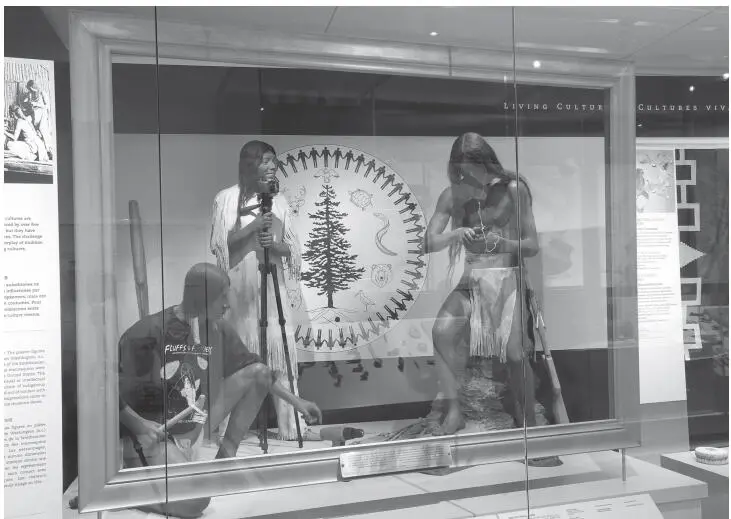
FIGURE 0.3Recreated Mohawk Family diorama, 2012, The Daphne Cockwell Gallery of Canada: First Peoples, Royal Ontario Museum, Toronto.
With permission of the Royal Ontario Museum © ROM.
Coalition of Sites of Conscience – which was created on the site of the infamous forced removals from that area.
The agency of the museum has also been invoked to support recovery from the broader and more pervasive losses of traditional knowledge that have resulted from often brutal colonial projects of erasure. In addition to the massive appropriation of Indigenous lands, in the course of six centuries of European expansionism and colonization, Indigenous populations all over the world have also been deprived of the basic human right to practice cultural traditions that has now been affirmed by the United Nations. 22In settler societies, assimilationist laws and policies forcibly suppressed Indigenous languages, spiritual beliefs, and ceremonies. At the same time, however, colonial practices of collecting – initially of curiosities and souvenirs and later of more systematically formed ethnographic and scientific assemblages – ensured the preservation in museums of language recordings, material culture, and other expressions of Indigenous knowledge. Museums, in other words, often hold the most important surviving documentation of historical Indigenous cultures and languages and therefore have the potential to serve as primary resources for projects of cultural renewal and restoration.
On a concrete level, recovery can mean the legal and physical repatriation of human remains and specific classes of objects. But on another level, recovery can also involve healing through the restoration of cultural losses and the psychic damage those losses have caused. Museum-based research and resulting exhibitions have made effective contributions to these healing processes, reversing colonial removals that disrupted the normal transgenerational transmission of cultural traditions. Working together, museums and source community members have pooled their expertise to develop more adequate understandings of historical collections. More accurate displays help museums by improving public interpretation and Indigenous community members by removing barriers to self-recognition as theorized by Charles Taylor (1992). One of the earliest examples of this process occurred in 1991 at the American Museum of Natural History during research for the exhibition Chiefly Feasts: The Enduring Kwakiutl Potlatch when elders recounted narratives associated with masks that had been in the museum for almost a century but had never been correctly identified (Jonaitis 1991). This research restored knowledge of the dance and its masks to community members so that they could create it anew in their community.
Similarly, other research collaborations have made it possible for Indigenous people to again make traditional clothing whose designs and patterns had long gone out of use. 23In Chapter 12, Laura Peers and Alison K. Brown discuss a collaboration between the Pitt Rivers Museum and the Blackfoot of Alberta, Canada which combined joint research, photo elicitation, and the travels of people and museum collections in order to restore the communities’ connection to their historic war shirts. In other projects, museums have contributed to Indigenous language recovery by digitizing wax cylinder recordings to support language recovery and the repertoires of contemporary dance groups. The Smithsonian’s (2014) institution-wide Recovering Voices project has devoted resources to research on and support for endangered languages worldwide and will also produce an exhibition to heighten public awareness. Lissant Bolton’s chapter (10) analyzes the impact of the Indigenous cultural research and revival program established by the Vanuatu Cultural Centre in the Pacific where local community members were trained to document the histories and practices in their areas. Many museums have also recognized that some of the things in their care are culturally sensitive and have agreed to store and care for them – and sometimes remove them from display – in accordance with the practices of the source communities. Such projects are designed not only to support cultural recovery but also to educate non-Indigenous publics about histories of oppression that have not been adequately narrated. On the other hand, as Nicholas Thomas suggests in Chapter 11, museums also need to recognize that not all communities attach cultural value to objects and artifacts, or indeed to heritage and history, and that these reservations should be acknowledged even though they may not fit in with the museum’s agenda.
Globalization has speeded up the transnational movements of peoples as refugees and immigrants, both legal and illegal. As diasporic communities establish themselves in new countries, they have often been regarded with suspicion and resentment as economic competitors and, through old racial stereotypes, as unwelcome representatives of alien cultures. The traditional function of the museum in transtemporal and transcultural processes of translation and interpretation has made them natural sites for projects of familiarization and the deconstruction of stereotypes. New roles for ethnographic museums including proactive exhibits that address contemporary migration have been developed and shown by a consortium of European national ethnographic museums in Rome, Paris, Brussels, and Vienna, 24with funding from the European Community. At Rome’s Pigorini Museum, for example, the exhibit S/oggetti migranti: dietro le cose le persone/people behind things established a shared historical connection between colonial museum collections and members of highly marginalized Moroccan, sub-Saharan African, Chinese, and other migrant communities. As the catalog states:
These projects aim at the sharing of experiences and practices that add value to the collections and promote cultural diversity. They are driven by the awareness that, in the light of new demands for information created by the widespread presence of the representatives of many cultures in a contemporary world traversed by global fluxes that are challenging the physiognomy of Europe, ethnographic museums are being called on to renew their mission and propose new opportunities for interpreting and deriving benefit from anthropological heritage. This has allowed fruitful partnerships and opportunities for exchange of experiences that resulted from scientific workshops and exhibit events, planned with museum directors, curators and employees of partner institutions. (Munapé 2012, 9).
Читать дальшеИнтервал:
Закладка:
Похожие книги на «Museum Transformations»
Представляем Вашему вниманию похожие книги на «Museum Transformations» списком для выбора. Мы отобрали схожую по названию и смыслу литературу в надежде предоставить читателям больше вариантов отыскать новые, интересные, ещё непрочитанные произведения.





Обсуждение, отзывы о книге «Museum Transformations» и просто собственные мнения читателей. Оставьте ваши комментарии, напишите, что Вы думаете о произведении, его смысле или главных героях. Укажите что конкретно понравилось, а что нет, и почему Вы так считаете.