border and bordering
Здесь есть возможность читать онлайн «border and bordering» — ознакомительный отрывок электронной книги совершенно бесплатно, а после прочтения отрывка купить полную версию. В некоторых случаях можно слушать аудио, скачать через торрент в формате fb2 и присутствует краткое содержание. Жанр: unrecognised, на английском языке. Описание произведения, (предисловие) а так же отзывы посетителей доступны на портале библиотеки ЛибКат.
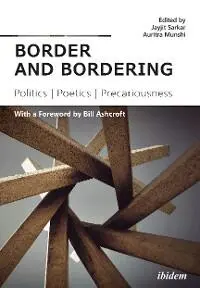
- Название:border and bordering
- Автор:
- Жанр:
- Год:неизвестен
- ISBN:нет данных
- Рейтинг книги:3 / 5. Голосов: 1
-
Избранное:Добавить в избранное
- Отзывы:
-
Ваша оценка:
border and bordering: краткое содержание, описание и аннотация
Предлагаем к чтению аннотацию, описание, краткое содержание или предисловие (зависит от того, что написал сам автор книги «border and bordering»). Если вы не нашли необходимую информацию о книге — напишите в комментариях, мы постараемся отыскать её.
border and bordering — читать онлайн ознакомительный отрывок
Ниже представлен текст книги, разбитый по страницам. Система сохранения места последней прочитанной страницы, позволяет с удобством читать онлайн бесплатно книгу «border and bordering», без необходимости каждый раз заново искать на чём Вы остановились. Поставьте закладку, и сможете в любой момент перейти на страницу, на которой закончили чтение.
Интервал:
Закладка:
Against the sterile clichés of opinion (doxa), Matthew Arnold pitted culture for its fresh possibility of “fusing horizons''. Though commonly taken as an apologist for ‘high culture’ and Englishness as norms, Arnold found culture to be far from stabilizing and actually fissured with differences. Finding English culture ‘ambivalent’ and ‘antagonistic’ and Victorian ideologies barren, Arnold came to share actively the burgeoning interests in Gypsies in the 1850s and 1860s. Material realities of changing Victorian society had inspired in Arnold the creative process of ‘becoming different’ and ‘active individuation’ by wilful displacement to and fascination for peripheral locations. Arnold’s re-telling of Glanvil’s seventeenth-century story of a legendary scholar’s voluntary withdrawal from Oxford evinces how ‘nomadic multiplicities’ can offer a leeway to the tutelage of Victorian ideology and its closed and bounded horizon. In foregrounding mutation and creative transformation in the Gypsy life and its ‘wild brotherhood’, Arnold’s poem contravenes fixed ways of existing. Chapter 14 attempts to read how the contours of space and time are redrawn in Arnold’s poem; in charting the roving of a scholar in and around Oxford and its countryside where it extols the illegitimate presence of the ‘margin’ and its overhaul of culture’s homogenizing, nationalistic affiliation. With Deleuze and Guattari’s conceptual apparatus of ‘line of flight’ and ‘striated space’, Nirjhar Sarkar tries to understand the process of overcoming or transcending spatio-temporal belonging, hindrance of fixed and identifiable points which are germane to conventional mode of existence. As individuals create lines of flight from segmented life for them to unstructure the received ideas and de-throne ‘intellectual’ glory, Arnoldian hero in The Scholar Gypsy may said to have entered a passional ‘molecular’ phase of life. By creating and transforming the world, his story continues to be a bold antidote against blinding doctrines of border.
As political consciousness was gaining force in late nineteenth and early twentieth century colonial India, nationalistic concerns found its way into every aspect of social, cultural and materialistic existence. It is with the rise of such concerns that the segregation between public and private domains manifested itself in numerous ways to suit the nationalistic project. The effects of such compartmentalization was ubiquitous upon women who by now had become the most contested object of reform movements triggered by both the colonizing mission of ‘saving the brown woman from the brown man’ and the nationalistic mission of transcreating women as goddess/mother/nation. Within these contradictory pulls of the time, women found themselves trapped for a voice and a vocabulary which could give shape to their anxieties and misgivings while also allowing them to recognize the ways of moving out and identifying their subjectivities formed for themselves. It was the drive towards education of women which created the perforation in an otherwise claustrophobic existence within concentric borders of control. Education which was supposed to prepare women according to the nationalistic need, transformed them into subjects who now set out to remake, recast women into new roles. New, not adhunik, or modern as we know it now, but nabya was how change was understood then, which also would lead us to understand the indigenous parameters of modernity. It is this ‘new woman’ or nobeena, who constantly tries to move out from her constrictions, mainly using the tool of education. What then emerged was the ‘lekhika’, the phenomenon of the woman writer in the late nineteenth century and early twentieth century, who blurred the borders of private and public existence by writing about her private life for the public readers. While it would be too far-fetched to state that women writers were not implicit subjects of patriarchy, it is also true that it was through these writers that the patriarchal citadel of existence was rocked from within the very andarmahals of the bhadralok household. While concentrating on the very act of writing by women, Chapter 15 tries to understand how the idea of ‘new woman’ gained currency in the intellectual world of late nineteenth and early twentieth century colonial Bengal where the blurring of the private and public domains of existence for women became a consistent act of striking against the world, the bahir, while also trying to comprehend the meanings within the home, the ghar. In this respect, Priyanka Chatterjee refers to similar movements in England during the same time frame, the differences it posed against the indigenous counterpart and the impact the idea of ‘new woman’ had in the encounters of women regarding the public-private divide which led to complicated representations of the character of women detectives in fictions by women in both England and colonial Bengal.
Children’s texts or primers are not as innocent as they appear to be. They often carry the ideology of the hegemonic groups and ruling class. Tagore’s Sahaj Path is a children’s text, but we may unravel the text to pick up threads of challenging interpretations. In Sahaj Path, the presence of some characters who may be called subalterns is consciously highlighted by Tagore. They are accorded a place of honour and importance. These people, as portrayed by Tagore, are not merely treated as adjunct to the upper class people, used as soft targets to be wished away at will, instead they play vital roles in the society. Sahaj Path endorses Tagore’s notion of meaningful negotiation between the rich and the poor and thereby attempts to erase the psychological margins between the economically weak working class and the members of the wealthy upper class. In a way, the two parts of Sahaj Path re-vision the prevalent social structure and inculcate in young learners a vision of an ideal society that honours the dignity of labour and recognises the status of all classes, castes and genders.
In the last chapter, Goutam Buddha Sural shows how the lessons, to a certain extent, oppose subalternization of ‘marginal’ characters, thereby challenging a hegemonic reading of the text(s). The primer opposes the disproportionate influence of the wealthy on the working class people who enjoy a space of their own in social life. Most of the members of the upper class society as represented in these texts do not believe and participate in the marginalization of people belonging to the lower social order and this mutuality helps in the establishment of a ‘felt-community’ by invisibilizing the psychological borders between the rich and the poor.
References
Anzaldua, Gloria (1987). Borderlands = La Frontera: The New Mestiza . San Francisco, US: Spinters/Aunt Lute.
Bourdieu, Pierre (1977). Outline of a Theory of Practice . Cambridge and New York: Cambridge University Press.
Derrida, Jacques (1993). Aporias: Dying—awaiting (one Another At) the “limits of Truth” . California: Stanford University Press.
Gaonkar, Dilip (2001). Alternative Modernities . Durham: Duke University Press.
McBrien, Justin (2016). Accumulating Extinction: Planetary Catastrophism in the Necrocene in Jason W. Moore’s (Ed.) Anthropocene or capitalocene?: Nature, history and the crisis of capitalism . Oakland: PM Press. 116-137
Mignolo, Walter (2006). Citizenship, Knowledge, and the Limits of Humanity. American Literary History , 18(2), 312-321
Mbembe, Achille (2017). Critique of Black Reason . (translated by Lauren Dubois). Durham/London: Duke University Press.
Nietzsche, Friedrich Wilhelm (1968). The Will to Power (translated by Walter Kauffman, and R. J. Hollindale). New York: Vintage Books
Читать дальшеИнтервал:
Закладка:
Похожие книги на «border and bordering»
Представляем Вашему вниманию похожие книги на «border and bordering» списком для выбора. Мы отобрали схожую по названию и смыслу литературу в надежде предоставить читателям больше вариантов отыскать новые, интересные, ещё непрочитанные произведения.










Обсуждение, отзывы о книге «border and bordering» и просто собственные мнения читателей. Оставьте ваши комментарии, напишите, что Вы думаете о произведении, его смысле или главных героях. Укажите что конкретно понравилось, а что нет, и почему Вы так считаете.