Patrick Muldowney - Gauge Integral Structures for Stochastic Calculus and Quantum Electrodynamics
Здесь есть возможность читать онлайн «Patrick Muldowney - Gauge Integral Structures for Stochastic Calculus and Quantum Electrodynamics» — ознакомительный отрывок электронной книги совершенно бесплатно, а после прочтения отрывка купить полную версию. В некоторых случаях можно слушать аудио, скачать через торрент в формате fb2 и присутствует краткое содержание. Жанр: unrecognised, на английском языке. Описание произведения, (предисловие) а так же отзывы посетителей доступны на портале библиотеки ЛибКат.
- Название:Gauge Integral Structures for Stochastic Calculus and Quantum Electrodynamics
- Автор:
- Жанр:
- Год:неизвестен
- ISBN:нет данных
- Рейтинг книги:3 / 5. Голосов: 1
-
Избранное:Добавить в избранное
- Отзывы:
-
Ваша оценка:
Gauge Integral Structures for Stochastic Calculus and Quantum Electrodynamics: краткое содержание, описание и аннотация
Предлагаем к чтению аннотацию, описание, краткое содержание или предисловие (зависит от того, что написал сам автор книги «Gauge Integral Structures for Stochastic Calculus and Quantum Electrodynamics»). Если вы не нашли необходимую информацию о книге — напишите в комментариях, мы постараемся отыскать её.
, left off,
introduces readers to particular problems of integration in the probability-like theory of quantum mechanics. Written as a motivational explanation of the key points of the underlying mathematical theory, and including ample illustrations of the calculus, this book relies heavily on the mathematical theory set out in the author’s previous work. That said, this work stands alone and does not require a reading of
in order to be understandable.
Gauge Integral Structures for Stochastic Calculus and Quantum Electrodynamics Stochastic calculus, including discussions of random variation, integration and probability, and stochastic processes. Field theory, including discussions of gauges for product spaces and quantum electrodynamics. Robust and thorough appendices, examples, illustrations, and introductions for each of the concepts discussed within. An introduction to basic gauge integral theory. The methods employed in this book show, for instance, that it is no longer necessary to resort to unreliable «Black Box» theory in financial calculus; that full mathematical rigor can now be combined with clarity and simplicity. Perfect for students and academics with even a passing interest in the application of the gauge integral technique pioneered by R. Henstock and J. Kurzweil,
is an illuminating and insightful exploration of the complex mathematical topics contained within.
Gauge Integral Structures for Stochastic Calculus and Quantum Electrodynamics — читать онлайн ознакомительный отрывок
Ниже представлен текст книги, разбитый по страницам. Система сохранения места последней прочитанной страницы, позволяет с удобством читать онлайн бесплатно книгу «Gauge Integral Structures for Stochastic Calculus and Quantum Electrodynamics», без необходимости каждый раз заново искать на чём Вы остановились. Поставьте закладку, и сможете в любой момент перейти на страницу, на которой закончили чтение.
Интервал:
Закладка:

where 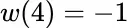 is a “negative gain” or net loss. With
  , this can be interpreted as the Stieltjes integral 3
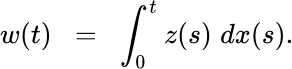
Observe that the number  of shares held at any time
  depends on whether the share price
  has moved up or down. So
  ,
, 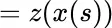 , is a deterministic function of
  ; and the value of
  varies randomly because
  varies randomly.
The same applies to the values of  , including the terminal value
  , or
, or  with
with  . Table 2.5gives the respective process sample paths for processes,
  where the underlying share price process
  follows sequence DUUU (sample number 2 in Table 2.4).
Regarding notation, the symbols  ,
,  (and so on) are used here, in contrast to symbols
  etc. which were used in discussion of stochastic calculus in Chapter 1. In the latter, the emphasis was on the classical rigorous theory in which random variables are measurable functions, and this is signalled by using
  instead of
  , etc.
Where  (rather than
  etc.) is used, the purpose is to indicate the “naive” or “natural” outlook which sees random variability, not in terms of abstract mathematical measurable sets and functions, but in terms of actual occurrences such as tossing a coin, or such as the unpredictable rise and fall of prices.
A mathematically rigorous approach to random variation can be squarely based on the latter view, and in due course this will provide mathematical justification for notation  etc.
etc.
Table 2.5describes two out of a possible total of sixteen outcomes, or sample paths, for each of the processes involved. But the tables do not examine the probabilities of the various outcomes. So Table 2.4, for instance, does not really shed much light on how the investment policy of the portfolio holder (shareholder) is capable of performing. The alternative outcomes of the policy are displayed in Table 2.4, but on its own the list of outcomes does not say whether a gain of wealth is more likely than an overall loss.
What if, for instance, we wish to determine the expected overall gain in the value of the shareholding at the end of four days? With  , what is the value 4 of
  ?
?
This can be answered directly as follows.
Suppose the different possible amounts of total or net shareholding gain are known. Two of these, and , are calculated above. There are 16 possible sample paths for the underlying process corresponding to the 16 permutations of U, D. So, allowing for duplication of values, there are at most 14 other values for total shareholding gains.
The probability of each of the 16 values of is the same as the probability of the corresponding underlying sample path (or ). It is assumed that the probability of a U or D transition is 0.5 in each case. If it is further assumed that the transitions are independent, then the probability of each of the 16 sample paths is , or one sixteenth. This is then the probability of each of 16 outcomes for total shareholding gain, including duplicated values.
The 16 values for  can be easily calculated, as in Table 2.5above. In fact, the 16 outcomes for net wealth (shareholding value) gain are
Интервал:
Закладка:
Похожие книги на «Gauge Integral Structures for Stochastic Calculus and Quantum Electrodynamics»
Представляем Вашему вниманию похожие книги на «Gauge Integral Structures for Stochastic Calculus and Quantum Electrodynamics» списком для выбора. Мы отобрали схожую по названию и смыслу литературу в надежде предоставить читателям больше вариантов отыскать новые, интересные, ещё непрочитанные произведения.










Обсуждение, отзывы о книге «Gauge Integral Structures for Stochastic Calculus and Quantum Electrodynamics» и просто собственные мнения читателей. Оставьте ваши комментарии, напишите, что Вы думаете о произведении, его смысле или главных героях. Укажите что конкретно понравилось, а что нет, и почему Вы так считаете.