Уистан Оден - Стихи и эссе
Здесь есть возможность читать онлайн «Уистан Оден - Стихи и эссе» весь текст электронной книги совершенно бесплатно (целиком полную версию без сокращений). В некоторых случаях можно слушать аудио, скачать через торрент в формате fb2 и присутствует краткое содержание. Жанр: Поэзия, Публицистика, на русском языке. Описание произведения, (предисловие) а так же отзывы посетителей доступны на портале библиотеки ЛибКат.
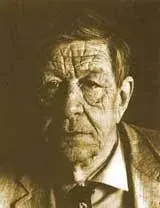
- Название:Стихи и эссе
- Автор:
- Жанр:
- Год:неизвестен
- ISBN:нет данных
- Рейтинг книги:3 / 5. Голосов: 1
-
Избранное:Добавить в избранное
- Отзывы:
-
Ваша оценка:
Стихи и эссе: краткое содержание, описание и аннотация
Предлагаем к чтению аннотацию, описание, краткое содержание или предисловие (зависит от того, что написал сам автор книги «Стихи и эссе»). Если вы не нашли необходимую информацию о книге — напишите в комментариях, мы постараемся отыскать её.
Стихи и эссе — читать онлайн бесплатно полную книгу (весь текст) целиком
Ниже представлен текст книги, разбитый по страницам. Система сохранения места последней прочитанной страницы, позволяет с удобством читать онлайн бесплатно книгу «Стихи и эссе», без необходимости каждый раз заново искать на чём Вы остановились. Поставьте закладку, и сможете в любой момент перейти на страницу, на которой закончили чтение.
Интервал:
Закладка:
Professors back from secret missions
Resume their proper eruditions,
Though some regret it;
They liked their dictaphones a lot,
They met some big wheels, and do not
Let you forget it.
But Zeus' inscrutable decree
Permits the will-to-disagree
To be pandemic,
Ordains that vaudeville shall preach
And every commencement speech
Be a polemic.
Let Ares doze, that other war
Is instantly declared once more
'Twixt those who follow
Precocious Hermes all the way
And those who without qualms obey
Pompous Apollo.
Brutal like all Olympic games,
Though fought with similes and Christian names
And less dramatic,
This dialectic strife between
The civil gods is just as mean,
And more fanatic.
What high immortals do in mirth
Is life and death on Middle Earth;
Their a-historic
Antipathy forever gripes
All ages and somatic types,
The sophomoric
Who face the future's darkest hints
With giggles or with prairie squints
As stout as Cortez,
And those who like myself turn pale
As we approach with ragged sail
The fattening forties.
The sons of Hermes love to play,
And only do their best when they
Are told they oughtn't;
Apollo's children never shrink
From boring jobs but have to think
Their work important.
Related by antithesis,
A compromise between us is
Impossible;
Respect perhaps but friendship never:
Falstaff the fool confronts forever
The prig Prince Hal.
If he would leave the self alone,
Apollo's welcome to the throne,
Fasces and falcons;
He loves to rule, has always done it;
The earth would soon, did Hermes run it,
Be like the Balkans.
But jealous of our god of dreams,
His common-sense in secret schemes
To rule the heart;
Unable to invent the lyre,
Creates with simulated fire
Official art.
And when he occupies a college,
Truth is replaced by Useful Knowledge;
He pays particular
Attention to Commercial Thought,
Public Relations, Hygiene, Sport,
In his curricula.
Athletic, extrovert and crude,
For him, to work in solitude
Is the offence,
The goal a populous Nirvana:
His shield bears this device: Mens sana
Qui mal y pense.
To-day his arms, we must confess,
From Right to Left have met success,
His banners wave
From Yale to Princeton, and the news
From Broadway to the Book Reviews
Is very grave.
His radio Homers all day long
In over-Whitmanated song
That does not scan,
With adjectives laid end to end,
Extol the doughnut and commend
The Common Man.
His, too, each homely lyric thing
On sport or spousal love or spring
Or dogs or dusters,
Invented by some court-house bard
For recitation by the yard
In filibusters.
To him ascend the prize orations
And sets of fugal variations
On some folk-ballad,
While dietitians sacrifice
A glass of prune-juice or a nice
Marsh-mallow salad.
Charged with his compound of sensational
Sex plus some undenominational
Religious matter,
Enormous novels by co-eds
Rain down on our defenceless heads
Till our teeth chatter.
In fake Hermetic uniforms
Behind our battle-line, in swarms
That keep alighting,
His existentialists declare
That they are in complete despair,
Yet go on writing.
No matter; He shall be defied;
White Aphrodite is on our side:
What though his threat
To organize us grow more critical?
Zeus willing, we, the unpolitical,
Shall beat him yet.
Lone scholars, sniping from the walls
Of learned periodicals,
Our facts defend,
Our intellectual marines,
Landing in little magazines,
Capture a trend.
By night our student Underground
At cocktail parties whisper round
From ear to ear;
Fat figures in the public eye
Collapse next morning, ambushed by
Some witty sneer.
In our morale must lie our strength:
So, that we may behold at length
Routed Apollo's
Battalions melt away like fog,
Keep well the Hermetic Decalogue,
Which runs as follows:-
Thou shalt not do as the dean pleases,
Thou shalt not write thy doctor's thesis
On education,
Thou shalt not worship projects nor
Shalt thou or thine bow down before
Administration.
Thou shalt not answer questionnaires
Or quizzes upon World-Affairs,
Nor with compliance
Take any test. Thou shalt not sit
With statisticians nor commit
A social science.
Thou shalt not be on friendly terms
With guys in advertising firms,
Nor speak with such
As read the Bible for its prose,
Nor, above all, make love to those
Who wash too much.
Thou shalt not live within thy means
Nor on plain water and raw greens.
If thou must choose
Between the chances, choose the odd;
Read The New Yorker, trust in God;
And take short views.
1946
A Walk After Dark
A cloudless night like this
Can set the spirit soaring:
After a tiring day
The clockwork spectacle is
Impressive in a slightly boring
Eighteenth-century way.
It soothed adolescence a lot
To meet so shameless a stare;
The things I did could not
Be so shocking as they said
If that would still be there
After the shocked were dead.
Now, unready to die
But already at the stage
When one starts to resent the young,
I am glad those points in the sky
May also be counted among
The creatures of Middle-age.
It's cosier thinking of night
As more an Old People's Home
Than a shed for a faultless machine,
That the red pre-Cambrian light
Is gone like Imperial Rome
Or myself at seventeen.
Yet however much we may like
The stoic manner in which
The classical authors wrote,
Only the young and the rich
Have the nerve or the figure to strike
The lacrimae rerum note.
For the present stalks abroad
Like the past and its wronged again
Whimper and are ignored,
And the truth cannot be hid;
Somebody chose their pain,
What needn't have happened did.
Occurring this very night
By no established rule,
Some event may already have hurled
Its first little No at the right
Of the laws we accept to school
Our post-diluvian world:
But the stars burn on overhead,
Unconscious of final ends,
As I walk home to bed,
Asking what judgement waits
My person, all my friends,
And these United States.
1948
The More Loving One
Looking up at the stars, I know quite well
That, for all they care, I can go to hell,
But on earth indifference is the least
We have to dread from man or beast.
How should we like it were stars to burn
With a passion for us we could not return?
If equal affection cannot be,
Let the more loving one be me.
Интервал:
Закладка:
Похожие книги на «Стихи и эссе»
Представляем Вашему вниманию похожие книги на «Стихи и эссе» списком для выбора. Мы отобрали схожую по названию и смыслу литературу в надежде предоставить читателям больше вариантов отыскать новые, интересные, ещё непрочитанные произведения.


![Сергей Гандлевский - Счастливая ошибка [стихи и эссе о стихах]](/books/407949/sergej-gandlevskij-schastlivaya-oshibka-stihi-i-esse-thumb.webp)




Обсуждение, отзывы о книге «Стихи и эссе» и просто собственные мнения читателей. Оставьте ваши комментарии, напишите, что Вы думаете о произведении, его смысле или главных героях. Укажите что конкретно понравилось, а что нет, и почему Вы так считаете.