Уистан Оден - Стихи и эссе
Здесь есть возможность читать онлайн «Уистан Оден - Стихи и эссе» весь текст электронной книги совершенно бесплатно (целиком полную версию без сокращений). В некоторых случаях можно слушать аудио, скачать через торрент в формате fb2 и присутствует краткое содержание. Жанр: Поэзия, Публицистика, на русском языке. Описание произведения, (предисловие) а так же отзывы посетителей доступны на портале библиотеки ЛибКат.
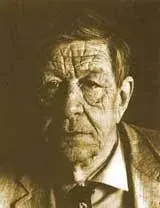
- Название:Стихи и эссе
- Автор:
- Жанр:
- Год:неизвестен
- ISBN:нет данных
- Рейтинг книги:3 / 5. Голосов: 1
-
Избранное:Добавить в избранное
- Отзывы:
-
Ваша оценка:
Стихи и эссе: краткое содержание, описание и аннотация
Предлагаем к чтению аннотацию, описание, краткое содержание или предисловие (зависит от того, что написал сам автор книги «Стихи и эссе»). Если вы не нашли необходимую информацию о книге — напишите в комментариях, мы постараемся отыскать её.
Стихи и эссе — читать онлайн бесплатно полную книгу (весь текст) целиком
Ниже представлен текст книги, разбитый по страницам. Система сохранения места последней прочитанной страницы, позволяет с удобством читать онлайн бесплатно книгу «Стихи и эссе», без необходимости каждый раз заново искать на чём Вы остановились. Поставьте закладку, и сможете в любой момент перейти на страницу, на которой закончили чтение.
Интервал:
Закладка:
tell if I'm talking English, German or
just typewriting: that what he utters
I may enjoy as an alien rigmarole.) I ought
to outlast the limber dragonflies
as the muscle-bound firs are certainly
going to outlast me: I shall not end
down any oesophagus, though I may succumb
to a filter-passing predator,
shall, anyhow, stop eating, surrender my smidge
of nitrogen to the World Fund
with a drawn-out Oh (unless at the nod
of some jittery commander
I be translated in a nano-second
to a c.c. of poisonous nothing
in a giga-death). Should conventional
blunderbuss war and its routiers
invest my bailiwick, I shall of course
assume the submissive posture:
but men are not wolves and it probably
won't help. Territory, status,
and love, sing all the birds, are what matter:
what I dared not hope or fight for
is, in my fifties, mine, a toft-and-croft
where I needn't, ever, be at home to
those I am not at home with, not a cradle,
a magic Eden without clocks,
and not a windowless grave, but a place
I may go both in and out of.
1962
The Common Life
A living-room, the catholic area you
(Thou, rather) and I may enter
without knocking, leave without a bow, confronts
each visitor with a style,
a secular faith: he compares its dogmas
with his, and decides whether
he would like to see more of us. (Spotless rooms
where nothing's left lying about
chill me, so do cups used for ash-trays or smeared
with lip-stick: the homes I warm to,
though seldom wealthy, always convey a feeling
of bills being promptly settled
with cheques that don't bounce.) There's no We at an instant,
only Thou and I, two regions
of protestant being which nowhere overlap:
a room is too small, therefore,
if its occupants cannot forget at will
that they are not alone, too big
if it gives them any excuse in a quarrel
for raising their voices. What,
quizzing ours, would Sherlock Holmes infer? Plainly,
ours is a sitting culture
in a generation which prefers comfort
(or is forced to prefer it)
to command, would rather incline its buttocks
on a well-upholstered chair
than the burly back of a slave: a quick glance
at book-titles would tell him
that we belong to the clerisy and spend much
on our food. But could he read
what our prayers and jokes are about, what creatures
frighten us most, or what names
head our roll-call of persons we would least like
to go to bed with? What draws
singular lives together in the first place,
loneliness, lust, ambition,
or mere convenience, is obvious, why they drop
or murder one another
clear enough: how they create, though, a common world
between them, like Bombelli's
impossible yet useful numbers, no one
has yet explained. Still, they do
manage to forgive impossible behavior,
to endure by some miracle
conversational tics and larval habits
without wincing (were you to die,
I should miss yours). It's a wonder that neither
has been butchered by accident,
or, as lots have, silently vanished into
History's criminal noise
unmourned for, but that, after twenty-four years,
we should sit here in Austria
as cater-cousins, under the glassy look
of a Naples Bambino,
the portrayed regards of Strauss and Stravinsky,
doing British cross-word puzzles,
is very odd indeed. I'm glad the builder gave
our common-room small windows
through which no observed outsider can observe us:
every home should be a fortress,
equipped with all the very latest engines
for keeping Nature at bay,
versed in all ancient magic, the arts of quelling
the Dark Lord and his hungry
animivorous chimaeras. (Any brute
can buy a machine in a shop,
but the sacred spells are secret to the kind,
and if power is what we wish
they won't work.) The ogre will come in any case:
so Joyce has warned us. Howbeit,
fasting or feasting, we both know this: without
the Spirit we die, but life
without the Letter is in the worst of taste,
and always, though truth and love
can never really differ, when they seem to,
the subaltern should be truth.
1963
August 1968
The Ogre does what ogres can,
Deeds quite impossible for Man,
But one prize is beyond his reach,
The Ogre cannot master Speech.
About a subjugated plain,
Among its desperate and slain,
The Ogre stalks with hands on hips,
While drivel gushes from his lips.
* 1968 *
Moon Landing
It's natural the Boys should whoop it up for
so huge a phallic triumph, an adventure
it would not have occurred to women
to think worth while, made possible only
because we like huddling in gangs and knowing
the exact time: yes, our sex may in fairness
hurrah the deed, although the motives
that primed it were somewhat less than menschlich.
A grand gesture. But what does it period?
What does it osse? We were always adroiter
with objects than lives, and more facile
at courage than kindness: from the moment
the first flint was flaked this landing was merely
a matter of time. But our selves, like Adam's,
still don't fit us exactly, modern
only in this-our lack of decorum.
Homer's heroes were certainly no braver
than our Trio, but more fortunate: Hector
was excused the insult of having
his valor covered by television.
Worth going to see? I can well believe it.
Worth seeing? Mneh! I once rode through a desert
and was not charmed: give me a watered
lively garden, remote from blatherers
about the New, the von Brauns and their ilk, where
on August mornings I can count the morning
glories where to die has a meaning,
and no engine can shift my perspective.
Unsmudged, thank God, my Moon still queens the Heavens
as She ebbs and fulls, a Presence to glop at,
Her Old Man, made of grit not protein,
still visits my Austrian several
with His old detachment, and the old warnings
still have power to scare me: Hybris comes to
an ugly finish, Irreverence
is a greater oaf than Superstition.
Our apparatniks will continue making
the usual squalid mess called History:
all we can pray for is that artists,
chefs and saints may still appear to blithe it.
1969
River Profile
Our body is a moulded river
NOVALISOut of a bellicose fore-time, thundering
head-on collisions of cloud and rock in an
up-thrust, crevasse-and-avalanche, troll country,
deadly to breathers,
Интервал:
Закладка:
Похожие книги на «Стихи и эссе»
Представляем Вашему вниманию похожие книги на «Стихи и эссе» списком для выбора. Мы отобрали схожую по названию и смыслу литературу в надежде предоставить читателям больше вариантов отыскать новые, интересные, ещё непрочитанные произведения.


![Сергей Гандлевский - Счастливая ошибка [стихи и эссе о стихах]](/books/407949/sergej-gandlevskij-schastlivaya-oshibka-stihi-i-esse-thumb.webp)

Обсуждение, отзывы о книге «Стихи и эссе» и просто собственные мнения читателей. Оставьте ваши комментарии, напишите, что Вы думаете о произведении, его смысле или главных героях. Укажите что конкретно понравилось, а что нет, и почему Вы так считаете.