Уистан Оден - Стихи и эссе
Здесь есть возможность читать онлайн «Уистан Оден - Стихи и эссе» весь текст электронной книги совершенно бесплатно (целиком полную версию без сокращений). В некоторых случаях можно слушать аудио, скачать через торрент в формате fb2 и присутствует краткое содержание. Жанр: Поэзия, Публицистика, на русском языке. Описание произведения, (предисловие) а так же отзывы посетителей доступны на портале библиотеки ЛибКат.
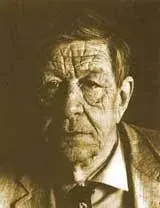
- Название:Стихи и эссе
- Автор:
- Жанр:
- Год:неизвестен
- ISBN:нет данных
- Рейтинг книги:3 / 5. Голосов: 1
-
Избранное:Добавить в избранное
- Отзывы:
-
Ваша оценка:
Стихи и эссе: краткое содержание, описание и аннотация
Предлагаем к чтению аннотацию, описание, краткое содержание или предисловие (зависит от того, что написал сам автор книги «Стихи и эссе»). Если вы не нашли необходимую информацию о книге — напишите в комментариях, мы постараемся отыскать её.
Стихи и эссе — читать онлайн бесплатно полную книгу (весь текст) целиком
Ниже представлен текст книги, разбитый по страницам. Система сохранения места последней прочитанной страницы, позволяет с удобством читать онлайн бесплатно книгу «Стихи и эссе», без необходимости каждый раз заново искать на чём Вы остановились. Поставьте закладку, и сможете в любой момент перейти на страницу, на которой закончили чтение.
Интервал:
Закладка:
And lived expensively and did without,
And could not find the earth which he had paid for,
Nor feel the love that he knew all about.
XXI
The life of man is never quite completed;
The daring and the chatter will go on:
But, as an artist feels his power gone,
These walk the earth and know themselves defeated.
Some could not bear nor break the young and mourn for
The wounded myths that once made nations good,
Some lost a world they never understood,
Some saw too clearly all that man was born for.
Loss is their shadow-wife, Anxiety
Receives them like a grand hotel; but where
They may regret they must; their life, to hear
The call of the forbidden cities, see
The stranger watch them with a happy stare,
And Freedom hostile in each home and tree.
XXV
Nothing is given: we must find our law.
Great buildings jostle in the sun for domination;
Behind them stretch like sorry vegetation
The low recessive houses of the poor.
We have no destiny assigned us:
Nothing is certain but the body; we plan
To better ourselves; the hospitals alone remind us
Of the equality of man.
Children are really loved here, even by police:
They speak of years before the big were lonely,
And will be lost.
And only
The brass bands throbbing in the parks foretell
Some future reign of happiness and peace.
We learn to pity and rebel.
1938
In Memory of W. B. Yeats
I
He disappeared in the dead of winter:
The brooks were frozen, the airports almost deserted,
And snow disfigured the public statues;
The mercury sank in the mouth of the dying day.
What instruments we have agree
The day of his death was a dark cold day.
Far from his illness
The wolves ran on through the evergreen forests,
The peasant river was untempted by the fashionable quays;
By mourning tongues
The death of the poet was kept from his poems.
But for him it was his last afternoon as himself,
An afternoon of nurses and rumours;
The provinces of his body revolted,
The squares of his mind were empty,
Silence invaded the suburbs,
The current of his feeling failed; he became his admirers.
Now he is scattered among a hundred cities
And wholly given over to unfamiliar affections,
To find his happiness in another kind of wood
And be punished under a foreign code of conscience.
The words of a dead man
Are modified in the guts of the living.
But in the importance and noise of to-morrow
When the brokers are roaring like beasts on the floor of the Bourse,
And the poor have the sufferings to which they are fairly accustomed,
And each in the cell of himself is almost convinced of his freedom,
A few thousand will think of this day
As one thinks of a day when one did something slightly unusual.
What instruments we have agree
The day of his death was a dark cold day.
II
You were silly like us; your gift survived it all:
The parish of rich women, physical decay,
Yourself. Mad Ireland hurt you into poetry.
Now Ireland has her madness and her weather still,
For poetry makes nothing happen: it survives
In the valley of its making where executives
Would never want to tamper, flows on south
From ranches of isolation and the busy griefs,
Raw towns that we believe and die in; it survives,
A way of happening, a mouth.
III
Earth, receive an honoured guest:
William Yeats is laid to rest.
Let the Irish vessel lie
Emptied of its poetry.
In the nightmare of the dark
All the dogs of Europe bark,
And the living nations wait,
Each sequestered in its hate;
Intellectual disgrace
Stares from every human face,
And the seas of pity lie
Locked and frozen in each eye.
Follow, poet, follow right
To the bottom of the night,
With your unconstraining voice
Still persuade us to rejoice;
With the firming of a verse
Make a vineyard of the curse,
Sing of human unsuccess
In a rapture of distress;
In the deserts of the heart
Let the healing fountain start,
In the prison of his days
Teach the free man how to praise.
1939
Law Like Love
Law, say the gardeners, is the sun,
Law is the one
All gardeners obey
To-morrow, yesterday, to-day.
Law is the wisdom of the old,
The impotent grandfathers feebly scold;
The grandchildren put out a treble tongue,
Law is the senses of the young.
Law, says the priest with a priestly look,
Expounding to an unpriestly people,
Law is the words in my priestly book,
Law is my pulpit and my steeple.
Law, says the judge as he looks down his nose,
Speaking clearly and most severely,
Law is as I've told you before,
Law is as you know I suppose,
Law is but let me explain it once more,
Law is The Law.
Yet law-abiding scholars write:
Law is neither wrong nor right,
Law is only crimes
Punished by places and by times,
Law is the clothes men wear
Anytime, anywhere,
Law is Good-morning and Good-night.
Others say, Law is our Fate;
Others say, Law is our State;
Others say, others say
Law is no more,
Law has gone away.
And always the loud angry crowd,
Very angry and very loud,
Law is We,
And always the soft idiot softly Me.
If we, dear, know we know no more
Than they about the Law,
If I no more than you
Know what we should and should not do
Except that all agree
Gladly or miserably
That the Law is
And that all know this,
If therefore thinking it absurd
To identify Law with some other word,
Unlike so many men
I cannot say Law is again,
No more than they can we suppress
The universal wish to guess
Or slip out of our own position
Into an unconcerned condition.
Although I can at least confine
Your vanity and mine
To stating tirmidly
A timid similarity,
We shall boast anyway:
Like love I say.
Like love we don't know where or why,
Like love we can't compel or fly,
Like love we often weep,
Like love we seldom keep.
1939
Under Which Lyre
Ares at last has quit the field,
The bloodstains on the bushes yield
To seeping showers,
And in their convalescent state
The fractured towns associate
With summer flowers.
Encamped upon the college plain
Raw veterans already train
As freshman forces;
Instructors with sarcastic tongue
Shepherd the battle-weary young
Through basic courses.
Among bewildering appliances
For mastering the arts and sciences
They stroll or run,
And nerves that steeled themselves to slaughter
Are shot to pieces by the shorter
Poems of Donne.
Интервал:
Закладка:
Похожие книги на «Стихи и эссе»
Представляем Вашему вниманию похожие книги на «Стихи и эссе» списком для выбора. Мы отобрали схожую по названию и смыслу литературу в надежде предоставить читателям больше вариантов отыскать новые, интересные, ещё непрочитанные произведения.


![Сергей Гандлевский - Счастливая ошибка [стихи и эссе о стихах]](/books/407949/sergej-gandlevskij-schastlivaya-oshibka-stihi-i-esse-thumb.webp)


Обсуждение, отзывы о книге «Стихи и эссе» и просто собственные мнения читателей. Оставьте ваши комментарии, напишите, что Вы думаете о произведении, его смысле или главных героях. Укажите что конкретно понравилось, а что нет, и почему Вы так считаете.