M. Thomas - Confessions of a Sociopath
Здесь есть возможность читать онлайн «M. Thomas - Confessions of a Sociopath» весь текст электронной книги совершенно бесплатно (целиком полную версию без сокращений). В некоторых случаях можно слушать аудио, скачать через торрент в формате fb2 и присутствует краткое содержание. Город: New York, Год выпуска: 2013, ISBN: 2013, Издательство: Crown Publishers, Жанр: Психология, Биографии и Мемуары, на английском языке. Описание произведения, (предисловие) а так же отзывы посетителей доступны на портале библиотеки ЛибКат.
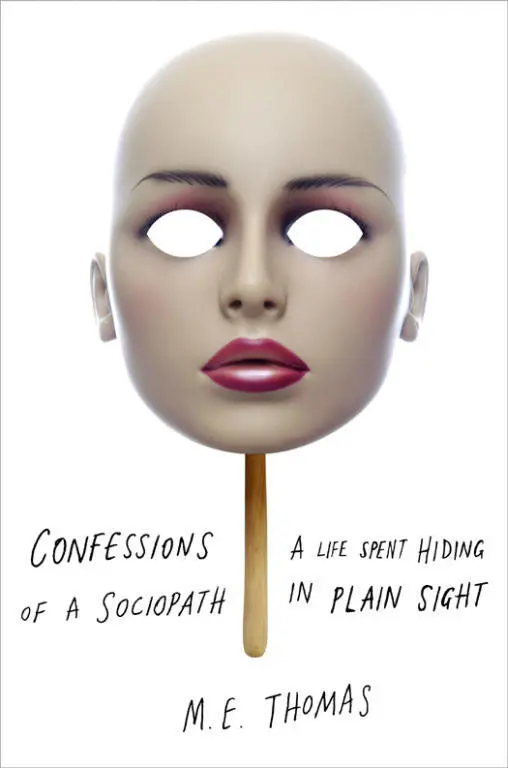
- Название:Confessions of a Sociopath
- Автор:
- Издательство:Crown Publishers
- Жанр:
- Год:2013
- Город:New York
- ISBN:978-0-307-95666-8
- Рейтинг книги:3 / 5. Голосов: 1
-
Избранное:Добавить в избранное
- Отзывы:
-
Ваша оценка:
Confessions of a Sociopath: краткое содержание, описание и аннотация
Предлагаем к чтению аннотацию, описание, краткое содержание или предисловие (зависит от того, что написал сам автор книги «Confessions of a Sociopath»). Если вы не нашли необходимую информацию о книге — напишите в комментариях, мы постараемся отыскать её.
Confessions of a Sociopath Confessions of a Sociopath
Confessions of a Sociopath — читать онлайн бесплатно полную книгу (весь текст) целиком
Ниже представлен текст книги, разбитый по страницам. Система сохранения места последней прочитанной страницы, позволяет с удобством читать онлайн бесплатно книгу «Confessions of a Sociopath», без необходимости каждый раз заново искать на чём Вы остановились. Поставьте закладку, и сможете в любой момент перейти на страницу, на которой закончили чтение.
Интервал:
Закладка:
Children sociopaths are not obvious to adults, which is perhaps why people debate their very existence. It’s rare to hear stories of child sociopaths that seem ripped from the pages of The Bad Seed . In a New York Times Magazine article titled “Can You Call a 9-Year-Old a Psychopath?” the author told the story of Michael, a boy who had been terrorizing his parents since soon after his baby brother was born. Michael would fly into a rage at the slightest interruption to his life, like being asked to put on his shoes, punching and kicking walls while screaming at his parents. When his mother tried to reason with him with reminders about how they had talked about his behavior and that she had hoped they had gotten past it, he stopped cold in his tantrum and replied, “Well you didn’t think that through very clearly, did you?” Other horror stories included another nine-year-old boy who pushed a toddler into the swimming pool of a motel, then pulled up a chair to watch it drown. When asked why he did those things he replied, curiosity. Unfazed by the threat of punishment, he seemed to welcome being the focus of attention.
This sort of behavior is by far the exception. At least to adult eyes, the behavior of a typical child sociopath is much more subtle. Paul Frick, a child psychologist with the University of New Orleans, explains that more common behavior might be the lack of remorse shown when caught. For instance, normal children tend to feel conflicted about getting caught with their hand in the cookie jar. On the one hand, they wanted that cookie. On the other hand, they feel like there is something morally wrong about stealing. A child sociopath would not show this same type of remorse. The only thing the child sociopath would regret is getting caught. Even the New York Times journalist who interviewed Michael was surprised at how normal he seemed: “When I entered the house, of course, I was thinking of adult psychopaths who have led criminal lives for decades, which is normally how they come to our attention. I was maybe expecting a child version of that, but of course that’s kind of ridiculous. Even among adult psychopaths, that would be a small minority.”
No, fooling adults was never my problem; it was always my peers who were more sensitive and exacting in the homogeneity of “normal” behavior that they required. I’m good, but I’m not flawless, and they required near perfection. Let me give an example of what I mean. If a person were to go to a Mormon church for the first time, there would be many things that might give them away as a non-Mormon—perhaps the newcomer would be wearing jeans, or would be a woman wearing slacks instead of a dress or a skirt, or even a woman wearing a skirt cut above her knees. There is an extremely high degree of homogeneity in Mormon culture, and in ways that may not be immediately obvious to the uninitiated. It is not just a pressure to conform that makes everyone so uniform; it actually reflects a shared underlying belief system and similar experiences. You can try to imitate the physical trappings of Mormonism all you want, but unless you’ve studied and practiced Mormon culture extensively, you will never be confused for a cultural Mormon. Similarly, since I did not share the same worldview and underlying beliefs and experiences as my childhood peers, I could pretend and imitate all I wanted, but there would still be small discrepancies that would give me away, or at the very least make me seem quirky to my peers.
I usually had friends despite my perceived oddness, but I experienced periods in which I was avoided or even ostracized by everyone. I could overwhelm people, put them off. I was too aggressive for them, or they could see how deceptive, untrustworthy, and scheming I was. Sometimes my considerable charisma could outweigh the off-putting aspects of my personality, but sometimes it went the other way. My ability to understand my occasional status as a social pariah was spotty; I was good at observing the way other kids reacted to me, but I didn’t always care enough to do anything about it. I was too impulsive, too willing to sacrifice several months of social capital in exchange for a moment’s indiscretion.
Of course I was never bullied or picked on. If anything, my peers were afraid of me. And I usually had enough sense to be selective about whom I targeted—no one too likable. Kids love vigilantism, so I frequently went after bullies. I remember this one set of white trash twins. One of the kids had something wrong with his legs, so he would show up to school with braces or special shoes. He far exceeded children’s tolerance for diversity. Perhaps because they were identical and to distance himself from the less fortunate twin, the other one became a big bully. He was little but scrappy, and since he couldn’t really pick on the true alphas, he would pick on everyone else, hoping merely to establish his dominance as a beta. Everyone hated him, but no one wanted to provoke his wrath. I didn’t care either way about him. I think maybe I scared him. But one time he was basically forced to confront me during an undersupervised game of capture the flag. I had cheated somehow and his team goaded him into calling me on it. Words turned into shoves and pretty soon I had him pinned to the ground and I beat the crap out of him. Not too long, lest we draw attention. Just enough that he didn’t get up for several minutes. The other kids loved me for that for at least several months. I was happy to do it. To me, stopping a bully was like helping put out a fire. It may not have reached my house yet, but fires are unpredictable and they spook the surrounding wildlife into behaving unpredictably. The probability that it will somehow affect me is high enough that any preventative measures on my part are often warranted. And beating on a bully makes you a hero in people’s eyes. I guess that’s why Batman does it.
I often wonder how my life would be different if I had been educated outside the public school system (or even outside the U.S.). Maybe I would pretend less or be less good at it? As it was, trying to blend in with the other children required me to learn the skills of an anthropologist. As an outsider trying to fit in, I had to learn about people through observation and the recognition of patterns. I became very perceptive. I also became good at acting. I could see that other kids thought and behaved differently from me, often reacting emotionally whereas I stayed calm, and so I began to mimic them. I think my first attempts at imitating normal behavior were honest attempts to actually be normal, in the same way that an infant imitates the speech patterns of its parents not to try to trick, but in an honest attempt to communicate. I didn’t realize it at the time, but I would never be normal. Maybe it was the cognitive fork in the road when I was four years old. Maybe it was the code written in my DNA. Either way, it was too late by that time to turn back—if I ever indeed could have. I was irrevocably different from other people, in ways that I had yet to fully understand. I wasn’t able to articulate that then of course, but I knew it in my bones.
In the years when I played observer, I’d watch with contempt as the kids who weren’t popular fawned all over the kids who were. I’d see them for the weaklings they were and wonder why they thought belonging mattered so much that they were willing to debase themselves. I couldn’t even conceive of the idea that anyone or any group was important enough for me to humiliate myself. After I had observed long enough and learned what I needed to know, I easily became one of the popular kids. But even when I was schmoozing with the jocks and the cheerleaders and the class clowns whom everybody loved, even when kids from lower grades wanted my attention, I knew I was not one of them. I’d known that I would never really belong no matter how many people claimed to love hanging out with me, because the person they thought they knew was not the real me.
Читать дальшеИнтервал:
Закладка:
Похожие книги на «Confessions of a Sociopath»
Представляем Вашему вниманию похожие книги на «Confessions of a Sociopath» списком для выбора. Мы отобрали схожую по названию и смыслу литературу в надежде предоставить читателям больше вариантов отыскать новые, интересные, ещё непрочитанные произведения.










Обсуждение, отзывы о книге «Confessions of a Sociopath» и просто собственные мнения читателей. Оставьте ваши комментарии, напишите, что Вы думаете о произведении, его смысле или главных героях. Укажите что конкретно понравилось, а что нет, и почему Вы так считаете.