M. Thomas - Confessions of a Sociopath
Здесь есть возможность читать онлайн «M. Thomas - Confessions of a Sociopath» весь текст электронной книги совершенно бесплатно (целиком полную версию без сокращений). В некоторых случаях можно слушать аудио, скачать через торрент в формате fb2 и присутствует краткое содержание. Город: New York, Год выпуска: 2013, ISBN: 2013, Издательство: Crown Publishers, Жанр: Психология, Биографии и Мемуары, на английском языке. Описание произведения, (предисловие) а так же отзывы посетителей доступны на портале библиотеки ЛибКат.
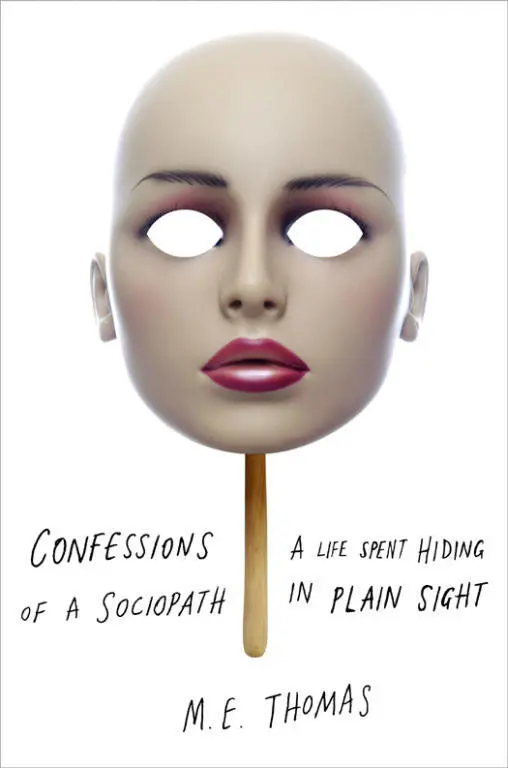
- Название:Confessions of a Sociopath
- Автор:
- Издательство:Crown Publishers
- Жанр:
- Год:2013
- Город:New York
- ISBN:978-0-307-95666-8
- Рейтинг книги:3 / 5. Голосов: 1
-
Избранное:Добавить в избранное
- Отзывы:
-
Ваша оценка:
Confessions of a Sociopath: краткое содержание, описание и аннотация
Предлагаем к чтению аннотацию, описание, краткое содержание или предисловие (зависит от того, что написал сам автор книги «Confessions of a Sociopath»). Если вы не нашли необходимую информацию о книге — напишите в комментариях, мы постараемся отыскать её.
Confessions of a Sociopath Confessions of a Sociopath
Confessions of a Sociopath — читать онлайн бесплатно полную книгу (весь текст) целиком
Ниже представлен текст книги, разбитый по страницам. Система сохранения места последней прочитанной страницы, позволяет с удобством читать онлайн бесплатно книгу «Confessions of a Sociopath», без необходимости каждый раз заново искать на чём Вы остановились. Поставьте закладку, и сможете в любой момент перейти на страницу, на которой закончили чтение.
Интервал:
Закладка:
I was fortunate that Jim continued to include me in his social life, even though I was his kid sister. In high school, all of his friends were older—not exactly edgy, but energetic and committed to ska music. They dressed in vintage suits and skinny ties. Every weekend they went to clubs and house parties to hear their favorite bands play, and my brother and I would go with them. It was my introduction to mosh pits and crowd surfing, knives, broken bottles, and crowd fights where people got dragged off in stretchers and cop cars. It was thrilling.
In high school I would get into elaborate feuds with people. Once I fought with one of my teachers over who should be in charge of the class—I thought I should be; for some reason he thought he should be. I bought yards of black fabric and cut out armbands, eventually getting half of the school involved in the “protest” against him. (Teenagers are eager to rebel against any sort of authority, which I was only too willing to exploit.) Another time I wanted to start a competitive drum line that would compete in shows around Southern California. We needed instruments, so, figuring it was better to ask forgiveness than to ask permission, I forged the entrance forms and took the school’s gear on the weekends, when I was sure no one would notice. I picked fights with people much bigger and stronger than I was, but mostly they were at rock concerts as part of a mosh pit, where the violence was tolerated. Cunning and calculating even then, I managed to stay out of serious trouble to preserve my freedom.
In order to avoid complaints and simply because I liked to, I mostly played with the boys as a child. They rarely tattled about injuries. I liked running around and jostling with them, coming in with a thin coat of sweat and grime from my time in the yard. When I was very young, I refused to wear a shirt so that I could be just like the boys. I didn’t understand why anyone would choose to hold baby dolls rather than make war with army soldiers.
I loved contact sports, everything about them. Touch football was classic that way. Especially after it rained and the fields were muddy, it was natural for tackling and black eyes to happen. Or playing tag on the playground equipment, we would fling ourselves off platforms and whip around corners, our bodies colliding in clumsy ballets. It was such a rush to smash my body into someone else’s, such satisfaction when one of my playmates got sent off to the nurse’s office with a bloody nose! In high school softball, I wasn’t the best player, but I’m sure I collided with other players more than anyone else. I stole bases with relish. Even if the ball had been thrown to the baseman by the time I got there, my unmitigated determination in running straight for her often freaked her out enough that she would leap to one side. One time as I was stealing home, I spooked the catcher so much that she clotheslined me though she didn’t even have the ball yet. It’s true that sometimes people are alarmed by my enthusiasm, but usually, I consider it their problem.
Risk taking, aggression, and a lack of concern for your own health or that of others are all symptoms of sociopathy, and my childhood is rife with evidence of them. I think that narrow escapes from death are probably better experienced young than old. They imprint in your mind a healthy sense of your mortality for later use. When I was eight, I almost drowned while swimming in the ocean. I can’t recall the experience in great detail but I do remember the force of the ocean overcoming me, water as invisible as air swallowing me alive. My mother tells me that when the lifeguard fished me out of the water and breathed life into me, my first signs of life were gasps of laughter. It was perfect timing. I learned that death could come at any moment but was not so bad, really. I never developed a fear of it. At times I have flirted with it, even longed for it, but never actively sought it.
One Sunday I got very sick. It was a couple months before my sixteenth birthday. I usually kept these things to myself. Even then, I didn’t like involving other people in my personal issues, because it presented an invitation to interfere with the activities of my life. But that day, I relented and told my mother about the sharp pain directly below my sternum. After she expressed her usual exasperation, she gave me some kind of quack herbal medicine and told me to rest. Now I felt pain plus nausea.
The next day I stayed home from school, which did nothing but make me feel behind in all of my activities. It took all my challenging classes, music and sports groups, and other extracurriculars, plus toying with the interior lives of my friends, acquaintances, and authority figures, to keep my mind and body occupied. Boredom was my enemy, and thus, so too was illness. The next day, despite still being sick, I went back to school; that week I played softball and hit a double.
Every day my parents would suggest another new remedy. I carried a little bag of medicine with me wherever I went: Tums, Advil, ibuprofen, and various homeopathic cure-alls. I knew that there was pain, but I could not gauge its severity or analyze its meaning. It was an obstacle, like missing a player on the field or being farsighted. I had to play harder, strain my eyes—to contend with this thing growing in my insides, pulsing for attention, and blanketing my body with a reluctance to function.
All the energy that I usually used in social situations to blend in and charm others was redirected into controlling and ignoring the pain. A few days into it, I began to snarl at people, to glower. I ceased engaging in flattery or even polite pleasantries. I stopped reacting to people with nods or concerned facial expressions; instead, I stared at them with the dead eyes I had previously reserved for when I was alone and unseen. I couldn’t be bothered to smile. There was no filter between my secret thoughts and my mouth, so I ended up telling my friends how ugly they were or why they deserved the bad things that came to them. I didn’t have the intellectual ability to properly regulate my emotions or to turn on the charm. Without the mental stamina to constantly calibrate my effect on people, I embraced the raw flavor of my meanness, the mélange of dull sadism and sharp disregard.
I didn’t even know I was doing it, as I hadn’t realized how much brainpower it had taken me simply to maintain my personal relationships, how much was required of me to restrain my natural impulses. Only later when none of my friends stuck around did I realize what had happened. They can only make exceptions for you for so long. I behaved with sufficient meanness that my vile behavior justified many of my friends’ abandonment of me. It was like I had spent my adolescence wearing medieval chain mail under my clothes only to suddenly lose it unawares. Unrestricted by its weight, my movements were outsize and bizarre.
Mornings, afternoons, and evenings passed this way, in silent, growling submission to pain. My abdominal pains migrated to my back at the level of my kidneys. I grew sweatier, clammier, and greener. My dad suggested I had muscle strain. I went back to school and had to go to a band festival about forty miles away. On the bus I was feverish and lay down on the floor on the ride home. All weekend I stayed in bed. Tuesday, I went back to school but was too sick to stay in class, so I spent the afternoon sleeping in my brother’s car. I don’t remember the season, but the afternoons were sunny, and the warm, undifferentiated sunlight streamed in from the windows, turning the car into a greenhouse, an incubator. Curled up in the backseat, I felt the delicious warmth blocking out the mixture of throbbing, sharp, and dull pains now populating every wide expanse and narrow corner of my body. At home I disappeared into bed. When my mother came to wake me for dinner, she unraveled a shivering, hot, wet child from the covers. When my dad got home he stared at me for a while and contemplated his next move. He looked at my torso, saw that something was very wrong, and relented: “We’ll go to the doctor tomorrow.”
Читать дальшеИнтервал:
Закладка:
Похожие книги на «Confessions of a Sociopath»
Представляем Вашему вниманию похожие книги на «Confessions of a Sociopath» списком для выбора. Мы отобрали схожую по названию и смыслу литературу в надежде предоставить читателям больше вариантов отыскать новые, интересные, ещё непрочитанные произведения.









Обсуждение, отзывы о книге «Confessions of a Sociopath» и просто собственные мнения читателей. Оставьте ваши комментарии, напишите, что Вы думаете о произведении, его смысле или главных героях. Укажите что конкретно понравилось, а что нет, и почему Вы так считаете.