M. Thomas - Confessions of a Sociopath
Здесь есть возможность читать онлайн «M. Thomas - Confessions of a Sociopath» весь текст электронной книги совершенно бесплатно (целиком полную версию без сокращений). В некоторых случаях можно слушать аудио, скачать через торрент в формате fb2 и присутствует краткое содержание. Город: New York, Год выпуска: 2013, ISBN: 2013, Издательство: Crown Publishers, Жанр: Психология, Биографии и Мемуары, на английском языке. Описание произведения, (предисловие) а так же отзывы посетителей доступны на портале библиотеки ЛибКат.
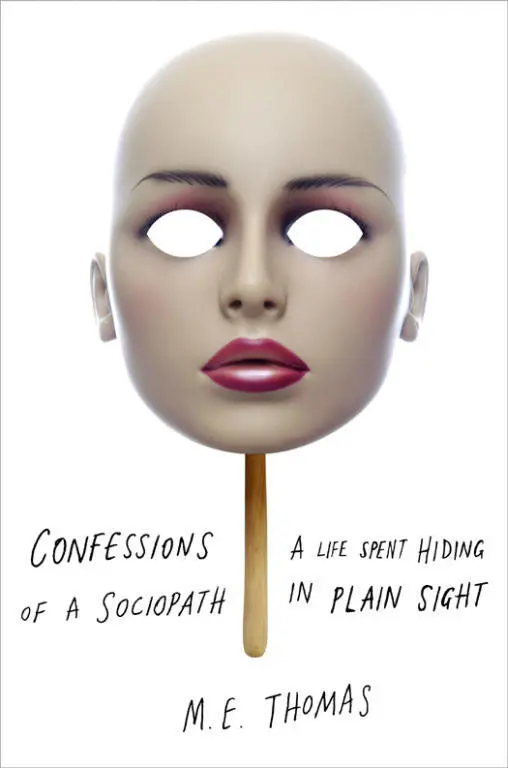
- Название:Confessions of a Sociopath
- Автор:
- Издательство:Crown Publishers
- Жанр:
- Год:2013
- Город:New York
- ISBN:978-0-307-95666-8
- Рейтинг книги:3 / 5. Голосов: 1
-
Избранное:Добавить в избранное
- Отзывы:
-
Ваша оценка:
Confessions of a Sociopath: краткое содержание, описание и аннотация
Предлагаем к чтению аннотацию, описание, краткое содержание или предисловие (зависит от того, что написал сам автор книги «Confessions of a Sociopath»). Если вы не нашли необходимую информацию о книге — напишите в комментариях, мы постараемся отыскать её.
Confessions of a Sociopath Confessions of a Sociopath
Confessions of a Sociopath — читать онлайн бесплатно полную книгу (весь текст) целиком
Ниже представлен текст книги, разбитый по страницам. Система сохранения места последней прочитанной страницы, позволяет с удобством читать онлайн бесплатно книгу «Confessions of a Sociopath», без необходимости каждый раз заново искать на чём Вы остановились. Поставьте закладку, и сможете в любой момент перейти на страницу, на которой закончили чтение.
Интервал:
Закладка:
We have grown into adults who are all likely to survive an apocalypse, which, being Mormon, we were taught to take seriously. It doesn’t matter if it comes in a gradually encroaching ice age or a sudden storm of nuclear fire; we’ll band together to survive and we won’t suffer any survivor guilt. We each have our roles in the family based on our perceived usefulness and are expected to dispatch these duties proficiently and efficiently. Collectively, we can remodel houses, build traps, make butter, shoot guns, put out fires, destroy reputations, sew clothes, and navigate bureaucracies. Most of us can defend ourselves relatively proficiently with guns, bows, knives, sticks, spears, or our fists. When one of us fails, we demand that he suffer the consequences. But we’re not savages, either. We love art. There was always music in our house—my brother on the piano or my sister dancing on the stairs. It seemed that whatever ugliness was upon us, some species of happiness was only a few notes away.
And there wasn’t a lack of love in my family. It was an unspoken deal we made to care about each other, if necessary to the exclusion of all others. Though they accept me and never questioned my behavior as a child, I know they’ve been tempted to blame themselves for the way I turned out, wondering about little things that they did or didn’t do that could have pushed me here.
For my parents, their denial that anything might be wrong with me came from a deep insecurity that they had irrevocably damaged me. They had viewed me as troubled from birth, and everything they did after that seemed to make me worse. My tomboyishness made them worried that I would become a lesbian. My proclivity for violence, stealing, and arson made them anxious that I would become a criminal. I imagine that my colic as a baby must have set the tone for my parents in their relationship with me. There was nothing that could be done for me; my high-pitched complaints indicated to my parents that I had already decided they were inadequate. Even as a baby, I didn’t tire; I was relentless, unreasonable, and immoderate. They must have approached me with such consternation, as there were mysteries in me that simply could not be solved.
If I had grown up today, some elementary school teacher would probably have had a serious conversation with my parents and asked them to get me psychological testing. As it was, I wasn’t sent to a therapist until I was sixteen. By that time my mother had emotionally emancipated herself from my father’s dictatorial rule. She was keen to also get us the “emotional help” we needed, but I was the only one she deemed so damaged as to warrant professional help. By then she had noticed that I was not just fiercely independent and reckless, but also emotionally apathetic. And it didn’t seem like I was going to grow out of it. It was too late, though; I was already too smart for the therapist. Or maybe I was never amenable to therapy. Either way, I wasn’t going to change. I had already chosen to view the world as a set of opportunities at winning or losing in a zero-sum game, and I used every encounter to gain information to my advantage.
Everything I learned about people’s motivations, their expectations, desires, and emotional responses, was cataloged in my mind for later use. Therapy was a treasure trove in this respect. It taught me about what was expected of me as a normal person and therefore made me better able to disguise myself, to scheme my manipulations with greater precision. In particular, it crystallized a valuable piece of data that I had already internalized—that frailty could excuse anything. I learned to capitalize on my vulnerabilities, real or imagined. Therapists helped me find them, as their job was to look for them, coming up with reasons for my deficits and digging for trauma wherever they could find it. So many valuable tactics for seduction and exploitation were uncovered in my teenage therapy sessions. And school was the society in which I could exercise those tactics.
Chapter 4
LITTLE SOCIOPATH IN THE BIG WORLD
When people on the blog and elsewhere ask me how they can know if they are sociopaths, I often ask them about their childhoods: If you were always on the outside looking in, separated from the other kids and maybe even from your family by a wall of emotions that they seemed to feel effortlessly while you did not; if you could instinctively get a sense of how power flowed between various cliques, between the students and the staff, and within your family; if belonging never meant anything to you yet you found you could easily enter and then manipulate any group at will; then maybe, just maybe, you were a tiny wolf in lamb’s wool, a young sociopath without knowing it.
My childhood was unusual only in that it never had a start and never had an end. From a very young age, I filled my life with minutiae and little conquests. While others were learning to play kickball, I learned to play people. I was not subtle. I used friends as pawns purely for access to their toys or whatever else they could offer me. I generally didn’t need to play out elaborate ruses of the kind I’d spin a few years later; I simply did the minimum necessary to insinuate myself into their good graces so I could get what I needed: food at lunch when my family’s pantry was empty, rides home or to activities when my parents were MIA, invitations to birthday parties at fun venues that I was otherwise priced out of, and the thing that I craved more than anything else—the fear of others that let me know that I was the one in power, I was the one in control. I think it unnerved people how little I cared about things that other people cared about, like the well-being of others or my own physical safety. When one of my classmates cried about having a split lip from my punching him, I just stood there, watching, and left when I got bored with the blood and drama of it. I liked toys and candy like every other kid, but I couldn’t be blackmailed or manipulated with them, refusing to be tricked into sharing or playing nice like the other kids were.
Other children weren’t my only targets. Adults tend to believe children, especially when they make their faces seem so expressively open with emotion, especially when the child seems to be the victim of adult overreaching or abuse. I knew what that looked like in other children, the face of the victimized. They would widen their eyes quizzically, pause, then slowly reflect on the reality of their situation (was that man with the van and free candy really being nice, or was there something more insidious going on?) with the wheels turning in their tiny little heads and their mouths half-open. Looks of consternation would manifest on their chubby, soft faces, and then a sad realization would slowly spread across them, their faces falling—they have been victimized and you, adult, are the only one who can help them. Sometimes I would watch myself in the mirror, seeing if my face could also make those faces.
I was better at manipulating adults than I was at manipulating other children, which is why I often wonder about child sociopaths who can’t manage to remain undetected. Adults do not inspect children’s behavior closely. It’s been so long since they saw the world through child eyes that they don’t really remember what is normal behavior for children. There are times when they do not understand children, but they also have vague memories of being misunderstood as a child. Careful not to make that same mistake, adults tend to have a much greater tolerance or margin of error when it comes to unusual childish behavior. They’re much more willing to write off a child obsessed with collecting worms during recess as being a simple variation of the eccentricities of childhood, whereas the child’s peers would more readily classify that child as an anomalous freak.
Читать дальшеИнтервал:
Закладка:
Похожие книги на «Confessions of a Sociopath»
Представляем Вашему вниманию похожие книги на «Confessions of a Sociopath» списком для выбора. Мы отобрали схожую по названию и смыслу литературу в надежде предоставить читателям больше вариантов отыскать новые, интересные, ещё непрочитанные произведения.









Обсуждение, отзывы о книге «Confessions of a Sociopath» и просто собственные мнения читателей. Оставьте ваши комментарии, напишите, что Вы думаете о произведении, его смысле или главных героях. Укажите что конкретно понравилось, а что нет, и почему Вы так считаете.