M. Thomas - Confessions of a Sociopath
Здесь есть возможность читать онлайн «M. Thomas - Confessions of a Sociopath» весь текст электронной книги совершенно бесплатно (целиком полную версию без сокращений). В некоторых случаях можно слушать аудио, скачать через торрент в формате fb2 и присутствует краткое содержание. Город: New York, Год выпуска: 2013, ISBN: 2013, Издательство: Crown Publishers, Жанр: Психология, Биографии и Мемуары, на английском языке. Описание произведения, (предисловие) а так же отзывы посетителей доступны на портале библиотеки ЛибКат.
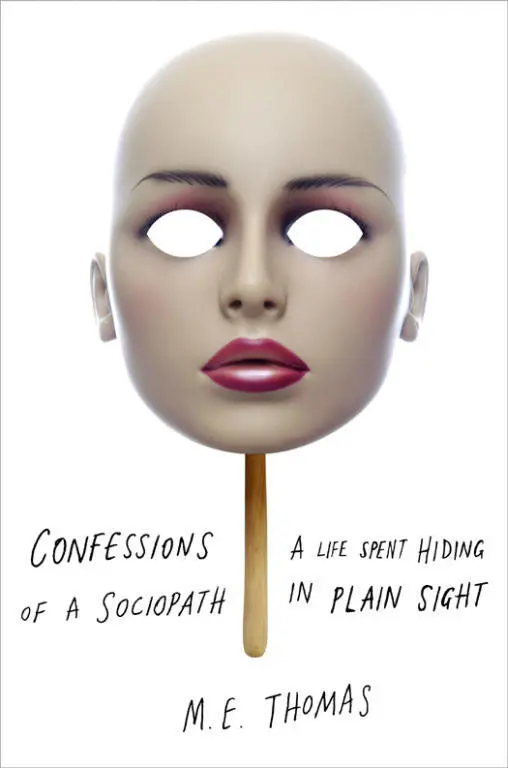
- Название:Confessions of a Sociopath
- Автор:
- Издательство:Crown Publishers
- Жанр:
- Год:2013
- Город:New York
- ISBN:978-0-307-95666-8
- Рейтинг книги:3 / 5. Голосов: 1
-
Избранное:Добавить в избранное
- Отзывы:
-
Ваша оценка:
Confessions of a Sociopath: краткое содержание, описание и аннотация
Предлагаем к чтению аннотацию, описание, краткое содержание или предисловие (зависит от того, что написал сам автор книги «Confessions of a Sociopath»). Если вы не нашли необходимую информацию о книге — напишите в комментариях, мы постараемся отыскать её.
Confessions of a Sociopath Confessions of a Sociopath
Confessions of a Sociopath — читать онлайн бесплатно полную книгу (весь текст) целиком
Ниже представлен текст книги, разбитый по страницам. Система сохранения места последней прочитанной страницы, позволяет с удобством читать онлайн бесплатно книгу «Confessions of a Sociopath», без необходимости каждый раз заново искать на чём Вы остановились. Поставьте закладку, и сможете в любой момент перейти на страницу, на которой закончили чтение.
Интервал:
Закладка:
Everything I learned about power—how great it feels to have it and how terrible it feels to be without it—I learned from my dad. Our relationship for the most part constituted a quiet wrestle for power—he demanded dominion over me as part of his home and family, while I enjoyed undermining what I believed to be his undeserved authority. When I misbehaved I would sometimes get beaten black and blue by my father, but I never reacted. If anything, what bothered me about the beatings was that he thought he was winning our power struggle, but I knew it wouldn’t last. If someone who loves you is hitting you that hard, you have more power than he does. You’ve provoked a reaction in him that he cannot control, and if you are like me, you will use this incident however it suits you for as long as you are associated with him. For my image-obsessed father, the threat of my disclosing these beatings was enough to torture him. Perhaps at a church social gathering I might wince as I lowered myself gingerly into a chair, making meaningful eye contact with my father when well-meaning third parties asked if I was okay, a look of terror flashing over his features as he anticipated my response. Strategically speaking, the beatings were the best thing to happen to me. His guilt and self-hatred were more potent than any other weapon in my little child arsenal and more enduring than any bruises that I may have suffered.
My father often made ridiculous demands of his children. He would tape lists of demands like “build a fence” and “fix the sink” to the doors of our bedrooms so we would see them when we woke up. I had gotten used to attempting the impossible when my father requested it. The way he asked me always made it seem like a dare, questioning whether I had the smarts or the courage to make things happen. Because that’s what I prided myself on, getting stuff done. Unlike my father, whom I considered to be largely inefficient, I was great at taking care of business. That was my role in the family.
His narcissism made him love me for my accomplishments because they reflected well on him, but it also made him hate me because I never bought into his self-image, which was all he ever really cared about. His dossier of civic duty and success meant nothing to me, because I knew better, and mine was and would be far greater than his. I think I did a lot of the same things he did—played baseball, joined a band, attended law school—so that he would know that I was better. I lived my life so that I had no reason to respect him.
One night in my early teens, driving home from the movies with my parents, I got into an argument with my father about the movie’s ending, which he thought was about overcoming obstacles and, of course, I thought was about meaninglessness, as I did about most everything those days. I was full of a teenager’s petulance and contrariness mixed with a little more intelligence and cruelty than the average kid.
I didn’t mind arguing with him. I in fact made it a point not to back down from any of our arguments, particularly if they presented an opportunity to challenge some part of his provincial worldview, which I had already concluded was distorted in self-serving ways. We were still arguing by the time we pulled into the driveway of our house, and I could tell that he wasn’t going to let it go. I told him, “You believe what you want,” and went into the house. My impassivity often provoked his worst behavior.
I should have known that he wasn’t going to let me get away that easily, or maybe I knew but didn’t care. He followed me up the stairs, because it bothered him that his daughter—who was just a child—refused to agree with him, didn’t care if he disagreed with her, and thought nothing of casually dismissing him.
At the time, my parents were going through one of their rough patches. My father would bully my mother and she would have momentary breakdowns in which she would lie on the bathroom floor and respond to us by rhyming whatever it was we said to her:
“Mom, are you okay?”
“What did you say?”
“Do you need help? Are you well?”
“No, I’m feeling swell.”
Sometimes when my parents fought, she would try to assert herself using whatever she had learned from the self-help books that lined the headboard of their bed. One of her favorite lines was “I’m rolling up my window on you.” It meant that she was refusing to let him affect how she felt, which drove him mad. In retrospect I wonder who it was that wrote that self-help book and how many of its readers ended up with swollen lips and bruised eyes. The idea that my father couldn’t make an impact on a person was enraging to him. Had my mother actually rolled up a car window on him he would have smashed the glass.
That night as my father became increasingly hostile about our argument over the movie, I told him, “I’m rolling up my window on you,” and then I slipped into the bathroom at the top of the stairs, shutting and locking the door.
I knew there would be consequences. I knew he hated that phrase, and that my repetition of it presented the specter of another generation of women in his house who refused to respect or appreciate him, and instead despised him. I also knew that he hated locked doors. I knew these things would damage him, which is what I wanted. And in any case, I needed to pee.
It was only a moment before he was pounding on the door. I imagined his face on the other side, getting redder and redder, contorted in an ugly display of anger. I remember wondering detachedly how long I would have to wait for him to go away. He began to shout.
“Open up!”
“Open up!”
“Open up!”
Each time he said it was louder than the last, swelling with impending violence. There was a pregnant pause, then the first big punch into the door, and then a crack. I wondered, curiously, about the door’s sturdiness, about whether its designer contemplated this kind of domestic disturbance to its integrity. I thought about how many blows it would take for my father to get through the door, and I wondered, curiously, how much danger I was really in. What did he imagine he would do when he got through the door? Would he drag me out of the bathroom by my hair, kicking me in the soft of my stomach, screaming at me to agree with him about the ending of the movie? It seemed absurd.
I sat down on the tub to wait it out. The loud noises triggered a rush of adrenaline in the form of increased heart rate, heightened sensitivity to sounds, decreased peripheral vision; I observed these facts to myself calmly. I passively ignored their invitation to feel a sense of urgency as being counterproductive. Despite my body’s involuntary physical reactions, there was no emotional panic. I don’t know what it feels like to panic in a situation like this. What would a panicked person even do? There are so few options in such tight quarters. If anything, I was intrigued, curious to see how events would unravel.
By now the punches had knocked a hole in the door, and I could see through the hole that his hand was bloody and swollen. I wasn’t concerned about his hand, although it occurs to me that another daughter might have been. I wasn’t glad that he was hurt either, because I knew that it gave him satisfaction to be stricken by such passion that he could disregard his own pain and suffering. The bathroom door was not the only door that would be damaged by my father’s fists. The bedroom door at the end of the hall accumulated several indentations throughout my childhood (it opened to my oldest brother’s bedroom), as did the door to the master bedroom (resulting from fights with Mom). Walls were occasionally dented from having been punched near the heads of his family members.
He kept working at the jagged, splintered hole until it was big enough for him to stick his face through it, which meant that it was of considerable size. I remember achieving confirmation of his ugliness, seeing his face glisten with sweat under the harsh bathroom light. But he wasn’t grimacing in anger as I had imagined; instead, he was smiling widely so that his teeth showed. He asked me with a wild gleefulness, “ You are going to roll up your window on me ?”
Читать дальшеИнтервал:
Закладка:
Похожие книги на «Confessions of a Sociopath»
Представляем Вашему вниманию похожие книги на «Confessions of a Sociopath» списком для выбора. Мы отобрали схожую по названию и смыслу литературу в надежде предоставить читателям больше вариантов отыскать новые, интересные, ещё непрочитанные произведения.





Обсуждение, отзывы о книге «Confessions of a Sociopath» и просто собственные мнения читателей. Оставьте ваши комментарии, напишите, что Вы думаете о произведении, его смысле или главных героях. Укажите что конкретно понравилось, а что нет, и почему Вы так считаете.