M. Thomas - Confessions of a Sociopath
Здесь есть возможность читать онлайн «M. Thomas - Confessions of a Sociopath» весь текст электронной книги совершенно бесплатно (целиком полную версию без сокращений). В некоторых случаях можно слушать аудио, скачать через торрент в формате fb2 и присутствует краткое содержание. Город: New York, Год выпуска: 2013, ISBN: 2013, Издательство: Crown Publishers, Жанр: Психология, Биографии и Мемуары, на английском языке. Описание произведения, (предисловие) а так же отзывы посетителей доступны на портале библиотеки ЛибКат.
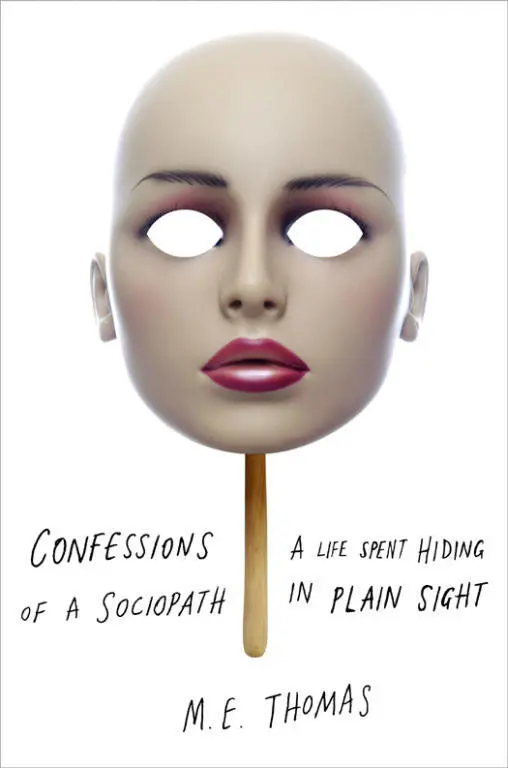
- Название:Confessions of a Sociopath
- Автор:
- Издательство:Crown Publishers
- Жанр:
- Год:2013
- Город:New York
- ISBN:978-0-307-95666-8
- Рейтинг книги:3 / 5. Голосов: 1
-
Избранное:Добавить в избранное
- Отзывы:
-
Ваша оценка:
Confessions of a Sociopath: краткое содержание, описание и аннотация
Предлагаем к чтению аннотацию, описание, краткое содержание или предисловие (зависит от того, что написал сам автор книги «Confessions of a Sociopath»). Если вы не нашли необходимую информацию о книге — напишите в комментариях, мы постараемся отыскать её.
Confessions of a Sociopath Confessions of a Sociopath
Confessions of a Sociopath — читать онлайн бесплатно полную книгу (весь текст) целиком
Ниже представлен текст книги, разбитый по страницам. Система сохранения места последней прочитанной страницы, позволяет с удобством читать онлайн бесплатно книгу «Confessions of a Sociopath», без необходимости каждый раз заново искать на чём Вы остановились. Поставьте закладку, и сможете в любой момент перейти на страницу, на которой закончили чтение.
Интервал:
Закладка:
But Jim was always my partner in crime. He was older, but growing up it often felt like I was his big sister. He was easy to manipulate, so sweet. I never had to try hard with him. His default was to give me what I wanted, and so we were best friends. Being attached to Jim was a problem, though. I was used to things not lasting. My parents were unpredictable, so I had gotten used to relying on myself. When things got rough at home, I found great comfort in thinking that there was nothing really keeping me there—except Jim.
I used to wonder what life would be like without him. It bothered me to think that what we had would end, and so I used my analytical mind to plan the prevention of this possibility. He and I would spend hours talking about what our lives would look like together into adulthood. We planned where we would live, how we would support ourselves, what activities would fill our days. At some point our dream was to own a model train store together. Together we would build miniature cities around which our engines would run, their chains of red and yellow and blue cars trailing in loops without end. Later it was to play music together. It didn’t matter what kind.
He was the one assurance in my child life. I could always count on him to provide for all my needs as best he could, and so I was extraordinarily selfish with him. I made him pay me money to play the games he wanted to play, which he would sometimes resist, but he always relented in the end. And I knew he would, because he wanted so much to play with me, and he didn’t mind being exploited enough to make a fuss. He never disagreed with me with any conviction. He never defended himself. I demanded things of him all the time with the knowledge that he would inevitably cave.
He was so concerned about upsetting me, and I never thought once about whether what I did would hurt his feelings. I was just happy that I could do what I wanted, and I had this tagalong older brother with me to bail me out when stuff got bad. He wasn’t always particularly useful. He was softhearted, sensitive, mostly passive, but my enemies were his enemies and he would oppose them with whatever tools he had.
Although my oldest brother, Scott, bullied everyone, including his siblings, Jim bore the brunt of it. Scott was a thug. We called him the stupid brother, because all he had was brute strength, which he used to achieve his will. It was instinctual for him to target Jim, whose weakness seeped out from his bones. Scott was the muscle, the soldier—emotionally blind. He brutalized people without noticing the impact on them, and for a long time, he did things to Jim without it ever occurring to him that they might have some negative effect on Jim. In this way Scott and I were very similar.
Even though I didn’t like Scott, he had his value to me. He taught me how physical strength could be used for psychological intimidation and how to channel my love of beating people into games and sports. We would box each other with ski gloves or pretend that we were wrestlers in the WWF. I held my own against him by being shorter and faster, and it was fun for me. I liked that he treated me as his equal and not a weaker, younger thing, that he didn’t even think to do so. We would egg each other on and dream up more violent games to play.
But Jim had no natural inclination to fight either of us, and he ended up absorbing all of the blows. He would just lie on the floor with his arms in front of his face. I couldn’t tell if he just didn’t think he had any other choice, or if he thought he did have a choice and that this was what he was choosing. I knew I didn’t want to live like him, that I couldn’t. To me, Jim’s choices were emotional ones, and they were bad. His actions seemed irrational and therefore beyond my understanding. Watching him, my respect for his emotional world diminished, as did any regard for my own emotions or those of others.
I am not sure when it happened, but eventually my oldest brother and I realized that we shouldn’t hit Jim anymore—that he was too delicate for it. We realized that we had to protect him or he wouldn’t survive life’s blows. We were the strong ones, the ones who could take care of business. At first we started pulling punches against him, and then we stopped throwing them at all. Soon we started blocking other people’s punches. We say now that we have spent our lives coddling him, which means that from his early teens to now we have been putting ourselves out for him, buying him cars and houses, cosigning loans with him on which he will inevitably default. We are worried that if we do not, he’ll snap.
Jim was so different from me. Being so close, it often felt like we were confronted with the same challenges and chose opposite ways of dealing with them. But the antisocial behaviors that now characterize me constituted the best choices for me when I was growing up, and I made them consciously. I followed so closely behind Jim in age that it was easy to see what worked or didn’t work for him and then avoid his same mistakes. I equated his emotional sensitivity with his frailty. Where I forged ahead, he bent. Where I demanded things, he gave. Where I fought with all my might, he elected passive resistance or simply succumbed to whatever fate someone else had chosen for him. Who would want to live that way? I would think to myself. Because he was so concerned about my feelings, or my dad’s, he had to deprioritize his own emotional well-being in favor of ours.
I often think it would be interesting to do a controlled experiment on identical twins with sociopathic genes, putting one of them in a “bad” environment and another in a “good” environment. Then we might get some real answers about what role genetics plays. I once read about a doctor who had a mad-scientist dream of determining what role genetics plays in the development of gender. One day he got his chance. A botched circumcision had left one boy in a pair of identical twins with a horribly mutilated penis. The doctor convinced the parents that it was much better for them to remove the entire penis and raise the boy as a girl. They agreed. S/he struggled with feelings of ambiguous gender until finally s/he confronted the parents, who confessed. After he started living life as a man, how did he feel when he looked at his identical twin? Did he see in his twin “what could have been”? Sometimes I wonder if my brother looks at me and asks himself the same. But because he is an empath, I think it is much more likely that he pities me.
My siblings are brutally honest with each other, because it is our nature to be brutal, but also because we assume that if we don’t tell each other the ugly truths about ourselves, no one else will. We are competitive. If asked for a complete ranking of the family members based on any given trait—attractiveness, intelligence, agility, or depravity, for instance—we could give you a list without having to take a second to think about it. Not everyone in the family is a sociopath; I am the only one who has been diagnosed as one. But we grew up sharing a perspective of blunt practicality and disdain for moral sentiment, having tacitly agreed to a collective rejection of the outside world.
Sometimes there weren’t a lot of incentives to make friends outside of the family. When strangers came to the house—friends or future spouses—we ignored them. Once when my father had invited over a young man for dinner, we ate silently and neglected to address him. After dinner we all went into another room and played computer games. When we failed to invite the young man to join us, my father complained, to which I responded matter-of-factly that we simply wanted him to leave. My father describes us as “vicious,” which to me inaccurately implies that we go out of our way to hurt people. We don’t go to that kind of trouble; it is that we rarely give anyone a second thought. For whatever reason, we do care about each other, however. Perhaps it is an evolutionary imperative to preserve our genes that makes us want to keep each other alive and relatively well. Or perhaps it is an alliance that we long ago worked out among ourselves to ensure each person’s individual survival. I can’t say. Whatever our differences, we stuck together, and for the most part benefited from doing so.
Читать дальшеИнтервал:
Закладка:
Похожие книги на «Confessions of a Sociopath»
Представляем Вашему вниманию похожие книги на «Confessions of a Sociopath» списком для выбора. Мы отобрали схожую по названию и смыслу литературу в надежде предоставить читателям больше вариантов отыскать новые, интересные, ещё непрочитанные произведения.









Обсуждение, отзывы о книге «Confessions of a Sociopath» и просто собственные мнения читателей. Оставьте ваши комментарии, напишите, что Вы думаете о произведении, его смысле или главных героях. Укажите что конкретно понравилось, а что нет, и почему Вы так считаете.