M. Thomas - Confessions of a Sociopath
Здесь есть возможность читать онлайн «M. Thomas - Confessions of a Sociopath» весь текст электронной книги совершенно бесплатно (целиком полную версию без сокращений). В некоторых случаях можно слушать аудио, скачать через торрент в формате fb2 и присутствует краткое содержание. Город: New York, Год выпуска: 2013, ISBN: 2013, Издательство: Crown Publishers, Жанр: Психология, Биографии и Мемуары, на английском языке. Описание произведения, (предисловие) а так же отзывы посетителей доступны на портале библиотеки ЛибКат.
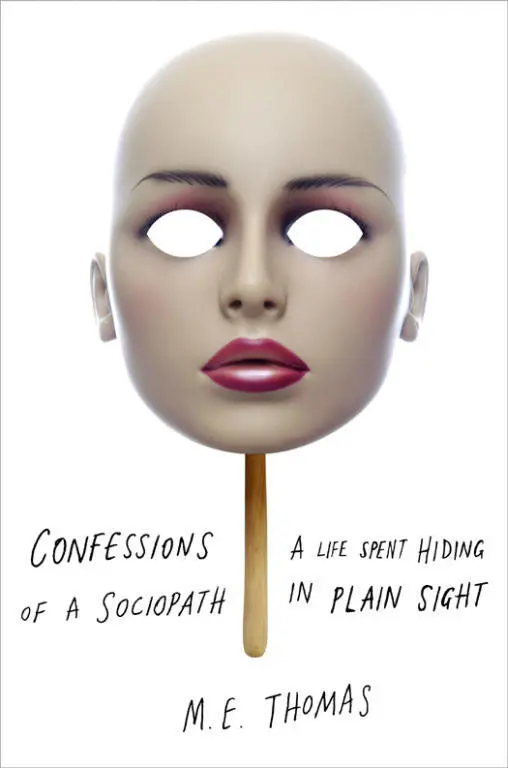
- Название:Confessions of a Sociopath
- Автор:
- Издательство:Crown Publishers
- Жанр:
- Год:2013
- Город:New York
- ISBN:978-0-307-95666-8
- Рейтинг книги:3 / 5. Голосов: 1
-
Избранное:Добавить в избранное
- Отзывы:
-
Ваша оценка:
Confessions of a Sociopath: краткое содержание, описание и аннотация
Предлагаем к чтению аннотацию, описание, краткое содержание или предисловие (зависит от того, что написал сам автор книги «Confessions of a Sociopath»). Если вы не нашли необходимую информацию о книге — напишите в комментариях, мы постараемся отыскать её.
Confessions of a Sociopath Confessions of a Sociopath
Confessions of a Sociopath — читать онлайн бесплатно полную книгу (весь текст) целиком
Ниже представлен текст книги, разбитый по страницам. Система сохранения места последней прочитанной страницы, позволяет с удобством читать онлайн бесплатно книгу «Confessions of a Sociopath», без необходимости каждый раз заново искать на чём Вы остановились. Поставьте закладку, и сможете в любой момент перейти на страницу, на которой закончили чтение.
Интервал:
Закладка:
I could sense this was true about life, even at the age of four or so. I could choose to take charge of my life, to leverage my time, talents, and health, and to potentially profit or die trying. Or I could contentedly get in line and wait my turn. It was not a difficult choice to make, but rather a decision made in direct response to my environment and how I could best survive and even thrive in that environment. My way seemed to offer a competitive advantage. I chose to eschew relying on instinct and instead to rely on rigid mental analysis and hyper-awareness of all of my thoughts, actions, and decisions.
Years later I questioned whether I had made a mistake—and whether it was possible for me somehow to still be normal. Maybe there were legitimate reasons why everyone else thought the way they did about life. Maybe crying really is the best response to being hurt instead of vengeance. Maybe love is more valuable than power in relationships. But by then it was too late. The windows had closed.
Growing up, everyone in the family was inclined to interpret things that I did as normal. There were other words for what I was, words other than “sociopath.” “Tomboy” explained why I was reckless all of the time. Did you know that drowning deaths for boys are four times what they are for girls? No one really has a good explanation other than that boys tend to be more reckless, less judicious, and more impulsive. So when I was a child jumping off ocean jetties into heavy surf, no one thought I was a sociopath—they thought I was a tomboy.
“Precocious” explained my fixation on the power structures of the adult world. Most children are content to live in their own child worlds. I found my peers, particularly my non-siblings, to be unbearably simpleminded. Unlike them, I was obsessed with learning everything there was to learn about how the world worked, on both micro and macro levels. I would hear something in school or in casual adult conversation like Vietnam or atomic bomb and then spend a week or two obsessed with learning everything I could about this new thing, this thing that seemed to matter so much to other people. I remember the first time I heard about AIDS. I must have been seven or eight years old. My aunt was babysitting me. She was a childlike woman and I could tell from her interactions with my parents that she had no power or influence in the outside world (there were plenty of those people, I had already noticed). She doted on us because she had no children of her own (there were many of those people as well, easy marks for a child’s manipulation). We heard AIDS on the news. My aunt got upset and started crying. I didn’t know at the time but found out soon that her uncle, my great-uncle, was sick, and gay, and that was one of the reasons why AIDS seemed so fraught for her and others. I asked her what AIDS was. She gave me a child’s understanding of the disease that should have satisfied me, but it didn’t. My need to know the whys and hows of the world was not easily sated. I continued to ask other adults (the only people who seemed interested in the things I was interested in were adults) and they laughed at my interest, calling me precocious. They didn’t call me a sociopath. They never wondered why I wanted to know. They assumed that I wanted to know for the same reason that they wanted to know—fear. And that was partly true, but I was not afraid of AIDS. I only wanted to understand completely why AIDS made everyone else afraid. So it never mattered much what I did because they would readily excuse my behavior in whatever way was convenient or simply ignore it.
As a child, my outsize inner life seeped out onto the surface in all sorts of messy ways that my family pretended not to see. I talked to myself all the time, repeating everything I said sotto voce as if I were acting in a dress rehearsal. My parents ignored my blatant and awkward attempts to manipulate, deceive, and inveigle adults. They neglected to notice the odd way that I associated with my childhood acquaintances without really forming connections, never seeing them as anything more than moving objects—instruments in my games. I lied all the time. I stole things, but more often than not, I would just trick kids into giving them to me. I snuck into people’s homes and rearranged their belongings. I broke things, burned things, and bruised people.
And I played my part beautifully. I never failed to up the ante in our neighborhood games. If we were jumping off the diving board into the pool, I asked how much more fun it would be to jump off the roof into the pool. If we were dressing up in paramilitary garb, I suggested that we might as well kidnap our neighbor’s lawn ornaments and make elaborate ransom notes for them. We cut out letters from magazines and made a “proof of life” video. Because the neighbors were so good-spirited and we had taken such pains in accomplishing our absurd adventures, we got away with smiles all around.
That was the thing with me. I made people smile so much that it was easy to laugh off anything I did as harmless and silly rather than dangerous or reckless. I was a natural clown, an entertainer. I danced with gusto. I yelled and told stories. If there had been YouTube back then, I would have gone viral. My family could often ignore my other quirks because I was so charming and kooky. They could imagine they were just living inside a Saturday-morning television show involving a high-spirited kid and her colorful high jinks. At the end of each episode, they would smile, shrug their shoulders, and shake their heads.
But my lack of inhibition also meant that it all came out unfiltered, the charm interspersed with the awkward and disturbing. When I was on , I could delight everyone. But sometimes I could be too much. I would demand too much attention, pushing past cuteness to an uncomfortable grotesque. Other times, I would turn off , withdrawing completely into myself as if no one else was around me. I felt like I could turn invisible.
I was a perceptive child, but I couldn’t relate to people beyond amusing them, which was just another way for me to make them do or behave how I wanted them to. I didn’t like to be touched and rejected affection. The only physical contact I wanted entailed violence, and that I craved. The father of one of my best friends in grade school had to pull me aside and sternly ask me to stop beating his daughter. She was this skinny, stringy thing, all bony and with no muscle, with this goofy laugh; it was like she was asking to be slapped. I didn’t know that what I was doing was bad. It didn’t even occur to me that it would hurt her or that she might not like it.
I was not a typical child. That was obvious to everyone. I knew I was different, but there were no real indications to me of how or why I was different. Children are all selfish things, but maybe I was a little more self-interested than most. Or maybe I was simply more adept at accomplishing my self-serving ends than others, unfettered by conscience or guilt as I was. It was not clear. Young and powerless, I developed my own forms of power by convincing people that pleasing me was in their own best interest. Like many children, I objectified everyone around me. I envisioned the people in my life as two-dimensional robots that turned off when I wasn’t directly interacting with them. I loved getting high marks in my classes; it meant I could get away with things other students couldn’t because I was one of the smart kids. I made sure to stay within the realm of socially acceptable childish behavior—or at least to have a sympathetic narrative prepared in case I was caught. Other than being adept at childish manipulation, I never seemed different from my peers, at least not in a way that could not be explained by my exceptional intelligence.
Читать дальшеИнтервал:
Закладка:
Похожие книги на «Confessions of a Sociopath»
Представляем Вашему вниманию похожие книги на «Confessions of a Sociopath» списком для выбора. Мы отобрали схожую по названию и смыслу литературу в надежде предоставить читателям больше вариантов отыскать новые, интересные, ещё непрочитанные произведения.









Обсуждение, отзывы о книге «Confessions of a Sociopath» и просто собственные мнения читателей. Оставьте ваши комментарии, напишите, что Вы думаете о произведении, его смысле или главных героях. Укажите что конкретно понравилось, а что нет, и почему Вы так считаете.