M. Thomas - Confessions of a Sociopath
Здесь есть возможность читать онлайн «M. Thomas - Confessions of a Sociopath» весь текст электронной книги совершенно бесплатно (целиком полную версию без сокращений). В некоторых случаях можно слушать аудио, скачать через торрент в формате fb2 и присутствует краткое содержание. Город: New York, Год выпуска: 2013, ISBN: 2013, Издательство: Crown Publishers, Жанр: Психология, Биографии и Мемуары, на английском языке. Описание произведения, (предисловие) а так же отзывы посетителей доступны на портале библиотеки ЛибКат.
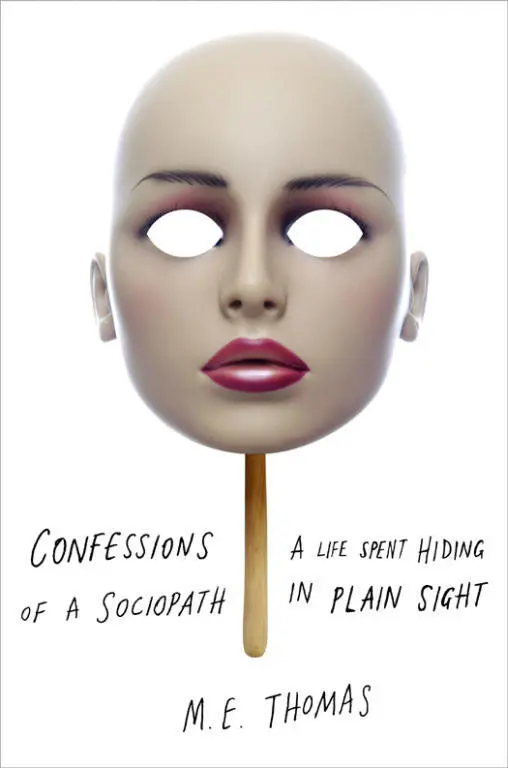
- Название:Confessions of a Sociopath
- Автор:
- Издательство:Crown Publishers
- Жанр:
- Год:2013
- Город:New York
- ISBN:978-0-307-95666-8
- Рейтинг книги:3 / 5. Голосов: 1
-
Избранное:Добавить в избранное
- Отзывы:
-
Ваша оценка:
Confessions of a Sociopath: краткое содержание, описание и аннотация
Предлагаем к чтению аннотацию, описание, краткое содержание или предисловие (зависит от того, что написал сам автор книги «Confessions of a Sociopath»). Если вы не нашли необходимую информацию о книге — напишите в комментариях, мы постараемся отыскать её.
Confessions of a Sociopath Confessions of a Sociopath
Confessions of a Sociopath — читать онлайн бесплатно полную книгу (весь текст) целиком
Ниже представлен текст книги, разбитый по страницам. Система сохранения места последней прочитанной страницы, позволяет с удобством читать онлайн бесплатно книгу «Confessions of a Sociopath», без необходимости каждый раз заново искать на чём Вы остановились. Поставьте закладку, и сможете в любой момент перейти на страницу, на которой закончили чтение.
Интервал:
Закладка:
By then I must have seemed startled enough to satisfy him.
He withdrew his face, and through the hole in the door, I could see that he had lost his propelling anger. Any power I had gained by walking away from him and locking that door was stolen back from me the moment he saw the distress in my eyes, even if it was only slight.
He walked over to the closet to take out some gauze and other medical supplies to tend to his hand. In his youth he had worked as an EMT and was very proud of his first aid skills, so I knew that he would be meticulous with his self-ministering, as a point of pride. When I was certain that he was fully engrossed in his task, I slipped out of the bathroom, down the stairs, and outside, where I hid in the dark.
I stayed out there for a while, breathing deeply and contemplating my next move. I was not scared per se, but more aware of the way my world had changed in the past fifteen minutes. I was suddenly less concerned about my math homework and more concerned about preparing for a physical assault. Before hiding in the trees, I grabbed a hammer from the shed and held it up with the claw end out. For a few seconds, I would have killed anyone who came near me.
A little while later I heard my oldest brother yelling my name. I didn’t answer, waiting. I heard him go back inside. A few more minutes, and then he came back out.
“It’s okay. People are here.”
“Good,” I thought. “Witnesses.” But I knew that my dad was over it already. He had gotten the satisfaction of inflicting injury on himself, fear on me, and physical destruction where his loved ones could see it. He had everything he wanted, and was therefore done for the night.
My mother had called a church official to help calm my father, in front of whom we all knew he wouldn’t lay a hand on me. For the remainder of the night, he wouldn’t do anything but express contrition. Even this would be delicious for him, a crucial element of the dramatic narrative that he and I had set into motion. I dropped the hammer and snuck back inside.
That bathroom door didn’t get fixed for months. When he finally got around to replacing it, my dad threw the old one out around the side of the house, as the yard was our family’s repository for broken things. My brother Jim found it there and told me to come down to see it, but when I got out there he was gone.
I stood and stared at it a little before he showed up with a pickax and a sledgehammer in his hands. Jim let me take the first swing, and after that we took turns smashing it to splinters. I felt the breathless exhilaration of destruction, obliterating from existence this object that had contributed to invoking anxiety in me, that had dispelled any false sense of safety I may have felt within my own home. The impact of metal on wood, the aching in my arms—it all felt wonderful, powerful.
I don’t know where Jim was when my dad was punching through that door. If he was around, he certainly didn’t do anything to stop it. I couldn’t count on him to do things like that for me. He just wasn’t strong enough, and I could never really fault him for that. In truth I could take better care of myself that way than he ever could.
I could, however, count on Jim to maintain a deep and abiding hatred of my father on my behalf, which was actually the worst revenge I could get on my dad. Children can be so cruel that way—loving each other so much more than they could love a parent despite the affection that is heaped upon them.
Family folklore holds that I was not the most brilliant of my siblings, but I was decidedly the most accomplished, unhindered as I was by emotional and moral constraints. And with my obsession with power structures and the way things work, I was naturally the heart of the operation, the central command in which all resources were inventoried and tactically dispatched. More than being the typical “peacemaker” middle child, I was a powerbroker, negotiating deals and functioning as a clearinghouse between warring factions. Because I was relatively passionless, I was neutral (and rich) Switzerland.
My siblings and I were extremely insular and tight-knit—not because we are particularly affectionate, but rather from a common desire to optimize our group success. Wordlessly, we all seemed to acknowledge that our collective survival was paramount at the cost of all else, except that to me the whole point of the exercise was to ensure my own survival. Switzerland is a neutral banking powerhouse not to benefit all of Europe, but to benefit itself. I would have sacrificed any of my family members for myself in a heartbeat, if not for the fact that their presence in my life was—to varying degrees—essential to my happiness. This was made clear to me by the time Jim and I took sledgehammers to that bathroom door, if not sooner. We were like sticks: apart we were easily broken, but together we were strong. To say that I love them is insufficient or beside the point. I liked to have them around.
In some ways, my family might have appeared to be an ideal American family, an army of fresh- (but blank-) faced children with very few concerns outside the narrow world in which we lived. We regarded each other and our parents as immutable facts of life. We played games and read books, ran around in the backyard building things and breaking things, made expeditions into the woods and always got out alive.
We trauma bonded. And even though my siblings reacted to those traumas each in his or her own individual way, there is a strand of stupid toughness that runs through all of them, not unlike my great-grandparents who survived the Depression. The toughest of us—besides me—is my sister Kathleen. Her husband thinks that she is more of a sociopath than I am, and I can see what he means. She can be very callous and calculating. Her children have a healthy fear of her, and failure is not really an option for them. Her first child was born a little over a year after she got married. After previously not wanting children at any point in her life, she could think of nothing else but creating the perfect genetic amalgamation of her and her husband in as short a time as possible. When her baby was born, she took to the task of rearing her child with a military efficiency in accordance with the baby guides she had read in advance of his arrival. It was as if she wanted a do-over, replacing the family with which she had grown up with a new one that she could create and shape into something much better.
Kathleen resented our parents, I realized, for all the things that she felt she deserved from them and never got. They never attended her dance recitals, for instance, never volunteered for the school play she was in. It took me a long time to understand that these things constituted a measure of her perceived value in the world, and my parents’ failures were directly correlated in her mind to her diminished worth as a human being. For this measure, and almost everything else in life, she had a fixed standard—an immovable notion of what was good or bad, sufficient or insufficient, moral or immoral. Indeed, Kathleen put the imperative in moral imperative .
And that is where she and I departed. She put all her manipulative energies into what she believed was good and right, as opposed to me, who simply invested in whatever benefited me most at the moment. While I targeted people based solely on who caught my interest, she would target only bad apples in order to see them ruined and the good (embodied by her) prevail. While my self-image was that of a pagan god, hers was of an avenging angel. With her sword unsheathed (a little too eagerly, if you ask me), she was constantly alert to fight for the righteous cause, defying authority whenever it was exercised unjustly. I enjoyed this about her. Sometimes it felt like we were an invincible sibling team, alternately invoking fear and inspiring admiration in the hearts of our peers. She was easy to get riled up and enlisted in any of my “causes,” simply by making them sound like causes, like the time she was scheduled to give the valedictory speech and I convinced her to turn it into an elaborate prank as an act of defiance to a school administration that “mistreated” students. By the time my youngest sister, Susie, got to high school, there were few teachers left unscathed from the devastation left by Kathleen and me—Kathleen because she was compelled to right the wrongs of public school, and I because I had to win at all costs, sometimes allowing the costs to flow unchecked just to see the volume of my power.
Читать дальшеИнтервал:
Закладка:
Похожие книги на «Confessions of a Sociopath»
Представляем Вашему вниманию похожие книги на «Confessions of a Sociopath» списком для выбора. Мы отобрали схожую по названию и смыслу литературу в надежде предоставить читателям больше вариантов отыскать новые, интересные, ещё непрочитанные произведения.









Обсуждение, отзывы о книге «Confessions of a Sociopath» и просто собственные мнения читателей. Оставьте ваши комментарии, напишите, что Вы думаете о произведении, его смысле или главных героях. Укажите что конкретно понравилось, а что нет, и почему Вы так считаете.