M. Thomas - Confessions of a Sociopath
Здесь есть возможность читать онлайн «M. Thomas - Confessions of a Sociopath» весь текст электронной книги совершенно бесплатно (целиком полную версию без сокращений). В некоторых случаях можно слушать аудио, скачать через торрент в формате fb2 и присутствует краткое содержание. Город: New York, Год выпуска: 2013, ISBN: 2013, Издательство: Crown Publishers, Жанр: Психология, Биографии и Мемуары, на английском языке. Описание произведения, (предисловие) а так же отзывы посетителей доступны на портале библиотеки ЛибКат.
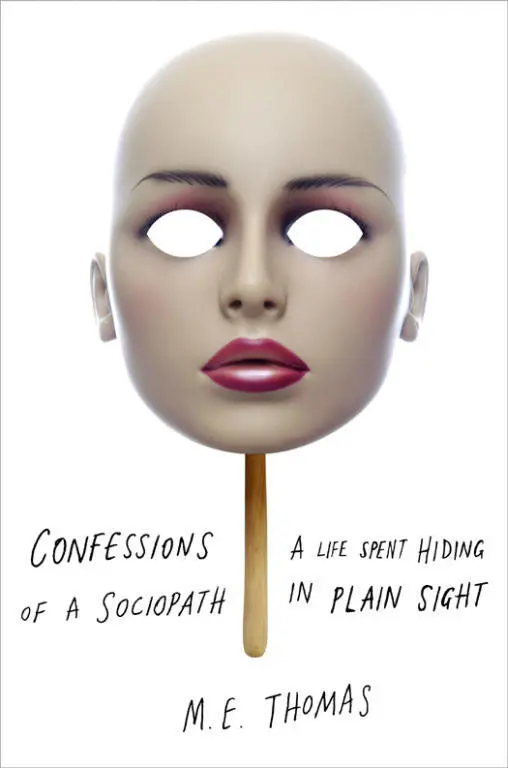
- Название:Confessions of a Sociopath
- Автор:
- Издательство:Crown Publishers
- Жанр:
- Год:2013
- Город:New York
- ISBN:978-0-307-95666-8
- Рейтинг книги:3 / 5. Голосов: 1
-
Избранное:Добавить в избранное
- Отзывы:
-
Ваша оценка:
Confessions of a Sociopath: краткое содержание, описание и аннотация
Предлагаем к чтению аннотацию, описание, краткое содержание или предисловие (зависит от того, что написал сам автор книги «Confessions of a Sociopath»). Если вы не нашли необходимую информацию о книге — напишите в комментариях, мы постараемся отыскать её.
Confessions of a Sociopath Confessions of a Sociopath
Confessions of a Sociopath — читать онлайн бесплатно полную книгу (весь текст) целиком
Ниже представлен текст книги, разбитый по страницам. Система сохранения места последней прочитанной страницы, позволяет с удобством читать онлайн бесплатно книгу «Confessions of a Sociopath», без необходимости каждый раз заново искать на чём Вы остановились. Поставьте закладку, и сможете в любой момент перейти на страницу, на которой закончили чтение.
Интервал:
Закладка:
“How did you like my solo?” I sneered after listening to him go on about everyone else in the class.
“Thomas! You have no class! Up there onstage, flopping all around, letting it all hang out. Not like these other girls,” he said, gesturing to the dancer in front of him. I think he was trying to turn the class against me, but unfortunately for him I had gotten to them first. He didn’t hurt my feelings; he had finally, unequivocally, overstepped the student-teacher boundary in front of witnesses.
After class I asked the dancer if she felt uncomfortable about his thinly veiled harassment. I was the picture of worried concern. She was touched by my sincerity. Yes, she had heard the rumor I started about her and this teacher (unaware that I was the one who started it). Yes, it did bother her. I was the sympathetic ear. She confessed all of her discomfort and I not only listened, I validated and fed the flame of her distress.
I used his behavior that day to paint him as out of control. I needed her to be afraid of him. I needed her to be one of the other voices raised in condemnation against him. I told her that we had to stop him before it got any worse. I told her that I was thinking of filing an official complaint against him for sexual harassment and asked if she would be willing to verify my story if necessary. I made it seem as if her participation would probably not be necessary, based on numerous contingencies, so she agreed. She would soon find out that she would be my star witness.
When I got home I told my mother about what had happened in class—strictly the facts, nothing about our power struggle or my preparations to get him fired. I told her about how “violated” I felt and about how I was not the only girl toward whom he had behaved in this way. I knew my mother felt bad about all of the times growing up that she had failed me, so she’d be inclined to help here. I told her I had found out that you make sexual harassment claims against teachers directly with the school district. Would she like to come with me to the district office the next morning to start the paperwork? My father was completely opposed to the idea, which I think made it all the more appealing to my mother.
I gave my statement and enlisted a small cadre of loyalists to paint him in as bad a light as they could. He was supervised for several weeks. There was always someone else with him whenever he was on campus, I noticed with delight. Officially he received a “strike,” an official censure; unofficially I believe he was forced into early retirement and had to give up his position as head of the English department, which to me was success. I was never one to be greedy or get caught up in the “principle of the thing.” I wasn’t trying to get him fired to protect future generations of vulnerable young girls. I was trying to get him fired to show him that he was vulnerable, and to me, a helpless little girl.
Still, it was a good lesson in the limits of the formal justice system, one that I would face again shortly in law school. This was not the only time I tangled with a teacher, but no matter what I did and to whom I reported them, none were ever fired or even removed from their positions. And while I gained the satisfaction of causing them pain, I garnered a reputation for making trouble. Maybe I lied, cheated, and bullied in order to achieve their destruction, but it was nonetheless true that they were bad teachers who should not have been allowed around kids. One teacher was an idiot who favored the popular kids over the unpopular ones, ignoring their talent in order to bask in the social acceptance that he never received when he was a student in high school himself. Another was sexually obsessed with his students and paid special lascivious attention to the ones with large breasts (including me) and low self-esteem (not including me). I wasn’t doing a public service in trying to ruin them. I just couldn’t stand that such unfit people could have authority over me. And that was the double injustice of being a young sociopath and a girl, too.
Chapter 5
I’M A CHILD OF GOD
I was raised in the Church of Jesus Christ of Latter-Day Saints. I attended church from infancy with my family, and I continue to be a practicing Mormon. Some people will find this hypocritical or will assume that my religious community will shun me if I am discovered to be a sociopath. They cannot fathom how I can negotiate my faith being who I am. But these people misunderstand the essential nature of Mormon beliefs, which is that we are all sons and daughters of a loving God who only wants our eternal progression and happiness. Mormons believe that everyone has the potential to be godlike, to be a creator of worlds. (This makes the LDS church a sociopath’s dream; it’s a belief that’s well suited to my own megalomaniacal sense of divine destiny.) I believe that “everyone” includes me. And because every being is capable of salvation, I can only conclude that my actions are what matter—not my emotional deficits, not my ruthless thoughts, and not my nefarious motivations. My own adherence to the standards of the church, despite their frequent conflict with my nature, is proof that the teachings of the gospel are for everyone—every nation, kindred, tongue, and people. I like the idea that there is a creator of all things, including sociopaths. I like having a check on my behavior, a reason for being a good sociopath. And I like the reward for good behavior—the feeling of elation and otherworldliness inherent in prayer, song, and religious devotion.
The church is especially well suited to me, because its rules and standards are very explicit. Throughout my childhood, I was able to make up for my inability to intuit social norms by following the church’s clear set of expectations and guidelines—from detailed lessons on chastity to small pamphlets with handy bullet-pointed rules about what to wear, whom and how to date, what not to watch or listen to, and how much money to give to the church. I liked that these things were written down. I don’t mean to imply that the Mormon church was actually okay with whatever I did as long as I didn’t drink Coke, was abstinent, and tithed. I’m sure the church meant these things merely as guidelines and not as safe-harbor provisions, but having them stated so explicitly helped me to blend in with everyone else.
I was watching television recently, one of these mystery dramas in which the main story arc over the entire season involves people trying to figure out who killed the main character. After many episodes of intrigue and bad behavior, one of the characters remarks in exasperation, “I’m having a hard time figuring out who’s evil and who’s just naughty.” Is there a distinction between being naughty and being evil? Who deserves mercy, and who is beyond hope?
I never felt like I was evil. I was taught in church that I am a child of God. I also read the Old Testament. There is a story in Kings where God has forty-two children dismembered by she-bears for insulting the prophet Elisha. It was not much of a stretch to believe that that God was my father.
And who doesn’t have flaws? When it counts, most of us think we are basically good people. In Dan Ariely’s book The (Honest) Truth About Dishonesty , he describes how the gift shop at the Kennedy Center for the Performing Arts was the victim of rampant embezzlement, mainly by elderly volunteers manning an unsecured cash drawer. Interestingly, there wasn’t one person who was stealing tons, but many people stole just a little. Everybody cheats, and if you stay within the realm of what everybody does then you can (apparently) maintain the good image you have of yourself.
In our discussions on religion, my summer intern office mate who diagnosed me would argue that the Christian concept of sin is a state of being, not certain actions. We are all “sinners” and, simultaneously, we are all “saved.” She thinks that evil, “if it has any meaning at all, means more than just ‘I did this right today and I did that wrong today.’ ” According to her, evil doesn’t lie in whether you drink caffeine or whether you do the right number of rosaries. It’s different in quality from the notion of “transgressions.”
Читать дальшеИнтервал:
Закладка:
Похожие книги на «Confessions of a Sociopath»
Представляем Вашему вниманию похожие книги на «Confessions of a Sociopath» списком для выбора. Мы отобрали схожую по названию и смыслу литературу в надежде предоставить читателям больше вариантов отыскать новые, интересные, ещё непрочитанные произведения.









Обсуждение, отзывы о книге «Confessions of a Sociopath» и просто собственные мнения читателей. Оставьте ваши комментарии, напишите, что Вы думаете о произведении, его смысле или главных героях. Укажите что конкретно понравилось, а что нет, и почему Вы так считаете.