M. Thomas - Confessions of a Sociopath
Здесь есть возможность читать онлайн «M. Thomas - Confessions of a Sociopath» весь текст электронной книги совершенно бесплатно (целиком полную версию без сокращений). В некоторых случаях можно слушать аудио, скачать через торрент в формате fb2 и присутствует краткое содержание. Город: New York, Год выпуска: 2013, ISBN: 2013, Издательство: Crown Publishers, Жанр: Психология, Биографии и Мемуары, на английском языке. Описание произведения, (предисловие) а так же отзывы посетителей доступны на портале библиотеки ЛибКат.
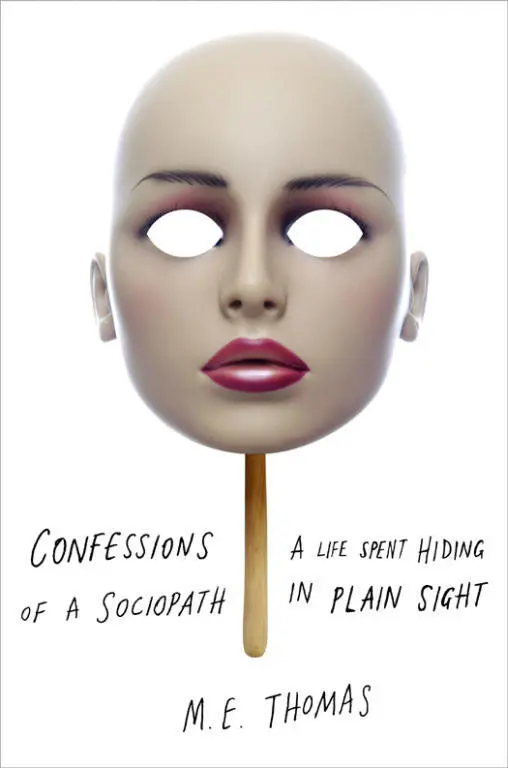
- Название:Confessions of a Sociopath
- Автор:
- Издательство:Crown Publishers
- Жанр:
- Год:2013
- Город:New York
- ISBN:978-0-307-95666-8
- Рейтинг книги:3 / 5. Голосов: 1
-
Избранное:Добавить в избранное
- Отзывы:
-
Ваша оценка:
Confessions of a Sociopath: краткое содержание, описание и аннотация
Предлагаем к чтению аннотацию, описание, краткое содержание или предисловие (зависит от того, что написал сам автор книги «Confessions of a Sociopath»). Если вы не нашли необходимую информацию о книге — напишите в комментариях, мы постараемся отыскать её.
Confessions of a Sociopath Confessions of a Sociopath
Confessions of a Sociopath — читать онлайн бесплатно полную книгу (весь текст) целиком
Ниже представлен текст книги, разбитый по страницам. Система сохранения места последней прочитанной страницы, позволяет с удобством читать онлайн бесплатно книгу «Confessions of a Sociopath», без необходимости каждый раз заново искать на чём Вы остановились. Поставьте закладку, и сможете в любой момент перейти на страницу, на которой закончили чтение.
Интервал:
Закладка:
The next day, everyone at the doctor’s office was very solicitous, calm, and soothing. They did some tests, and after the results came back, everything changed into rushing and accusations. The doctor said something in outraged tones about my white cell count. I could sense my mother receding into quiet, semicatatonic disavowal, the state she retreated to when my father punched things or screamed at her. The doctor was all questions—if I had felt pain, what I had been doing for the last ten days, and why I hadn’t spoken up sooner—the kind that suggested I had done something wrong, and I stopped answering them. I was bored and restless. I didn’t want to be there anymore. I wanted to be free to do my own thing instead of being a passive victim at the mercy of the well-intentioned. Someone asked me if I wanted to lie down; I politely declined and then passed out. When I came to, I heard shouting and my father convincing the medical staff not to order an ambulance. Even in my delirium I could sense their mistrust of him.
My dad would have done anything to get away from the reproachful stares. Behind my own fluttering, half-closed eyelids, I could see the wild panic in his eyes. It wasn’t panic about his daughter dying. Or rather, it was. But it was the moral judgment of his friends and neighbors upon my dying rather than the loss of me that terrified him. That he would allow his daughter to die from neglect. That he and my mother had let me suffer in excruciating pain for more than a week without seeking any medical attention, because—as I discovered later—he had allowed our family’s medical insurance to lapse. To think of it now, I am surprised that he didn’t leave my mother and me there to sort it out ourselves. In a way, my mother was luckier than my father. Her oppression allowed her to escape responsibility; her powerlessness absolved her guilt.
When I woke up following surgery, I saw my dad standing over me with tired anger. He gave me the rundown: The appendix had perforated, spewing toxins into my guts. My insides had become septic with infection, and the muscles in my back had become gangrenous. The surgeons had to cut out chunks of rotted flesh, and a plastic tube was inserted in the wound to drain the pus out. There should be no lasting damage.
“You could have died. The doctors are very angry.” At me, his tone implied. It was as if I should have apologized to everyone.
Hospitals are, of course, dehumanizing places. The worst time of day is predawn, when the floors are especially cold and the daylight peeking through the blinds feels like a reckoning. The night nurses get replaced by the day nurses, fresh in their cheerful cartoon scrubs and eager to inflict their cruel practicalities. The gaggles of interns and doctors make their rounds, pulling curtains to examine and catalog flaccid, damaged flesh connected to tubes and machines—cyborgs in clinical phantasmagoria.
Stripped of your armor, you can embrace the savage that the hospital makes of you, or you can grasp desperately for the human. For me, it was an easy choice. I was well acquainted with the savage in me—the animal that knew no other thing than its will to survive and thrive. I had no trouble turning off my sense of dignity or my need for connection, because I knew that to do so was the most efficient means of getting through the days ahead. There was also a sense of relief that I didn’t have to put on a mask for anyone. It saved me a lot of mental energy. Life was whittled down to the essentials—sleeping, eating, and defecating—interrupted by frequent physical violations that could be predicted and planned for. In this, I was a model patient. I did as I was told, dutifully doing my breathing exercises and taking my laps around the floor, hospital gown flapping open behind me. One nurse thought I was “brave.” I think she was talking about my steely-eyed, grin-and-bear-it kind of attitude. There were no tears, no complaints from me—a total lack of affect. In a victim, it is courage and thus admirable; in a predator, it is a lack of humanity and instills fear.
After about a week, I was scheduled to leave, as long as I maintained my upward wellness trajectory. The nurse told me that my final barrier to departure was the morning breakfast. Too nauseated to eat, I tried nibbling the foods with the highest volume-to-density ratio so it would look like I had downed more than I had, but it still appeared as if I hadn’t touched anything. In this instance, my dad saved me. He showed up an hour before he was due at a meeting, cramming pancakes into his mouth with one hand and flushing scrambled eggs down the toilet with the other.
On the way home, and with minutes to spare before my dad’s meeting, we swung by the music store to pick up a compact disc I had wanted. It was closed, but he pounded on the door until he got the attention of an employee, gestured toward me with hurried explanations, and came back to the car with what I had asked for. People can surprise you.
I do not know how the family survived my hospital bills, but I am sure the same skills my dad used to get me my CD helped in getting out from under our enormous debt. When we got home, he walked me up the stairs and helped me into my bed, assuring me that someone would do something about my soaked bandages. He often said things like that, which were incredibly unlikely to actually happen.
My parents generally weren’t much more attentive to personal safety than I was. My family got into a surprising number of car accidents. When we were kids, we had a very serious accident on a dangerous mountain highway while on our way to visit my cousins. We got rear-ended (by someone who later appeared to be intoxicated), and the force propelled our car across several lanes of traffic until we collided with a concrete wall. Partly because us kids were all crammed into the back of the car, we all got pretty banged up, but for some reason, we didn’t turn back home and instead drove the rest of the ten hours that it took for us to get to our relatives’ house. I suspect we lived on the insurance proceeds from that accident for several years. Even now my first instinct upon being involved in an auto accident (usually not my fault; I’m a great driver) is to take a copious number of photos and solicit incriminating statements from the other driver.
I had been climbing on moving vehicles since I was little. I would climb onto moving vehicles, climb around already moving vehicles, and even once tried climbing under a moving vehicle. I loved to ride in the backs of trucks, dangling off.
When I was ten years old, a family friend asked my older brother Jim and me to operate an eight-passenger, gas-powered golf cart to shuttle guests to and from a Halloween party hosted about a half mile away from the parking area. We were polite and safe when taking passengers up to the house but performed increasingly risky acts on the way back down. On one trip, I was attempting to climb along the roof from the back of the golf cart to the front. My brother wasn’t paying attention and when he didn’t see me, he assumed that he had left me back at the house. He made a sharp U-turn and I went flying off the roof, barrel-rolling for several seconds along the pavement. I lost consciousness and woke up on my back, red tail-lights rapidly coming my direction. My brother (still unaware of what had happened) was backing up as part of a three-point turn and I just missed being run over by rolling out of the way.
“Where’d you go?” my brother asked, surprised, when I climbed back into the cart.
“I don’t know. Nowhere,” I replied.
Driving my own motor vehicle wasn’t any less hazardous. One afternoon my mother introduced me to what would become, $1,200 later, my first car. The car was a beautiful disaster—a 1972 Pontiac “Luxury” LeMans, V-8 engine with dual mufflers coming out the back. The car was viscerally appealing, a sister of the GTO with a nearly identical body. It was the last year that the Pontiac maintained its curvy form, mimicking the musculature of the animals that cars of that era were frequently named after (Mustang, Charger, Cougar). The Pontiac’s dual round headlights stared back at you; its grill and bumper sneered. Its fenders were rusted out by the wheel wells and the only thing saving the roof from rust was the white vinyl top. The best feature in my mother’s eyes, though, was the Detroit steel. She believed that in an accident the other person would feel the hurt, not me. I proved this intuition to be accurate many times in my first few years with it.
Читать дальшеИнтервал:
Закладка:
Похожие книги на «Confessions of a Sociopath»
Представляем Вашему вниманию похожие книги на «Confessions of a Sociopath» списком для выбора. Мы отобрали схожую по названию и смыслу литературу в надежде предоставить читателям больше вариантов отыскать новые, интересные, ещё непрочитанные произведения.









Обсуждение, отзывы о книге «Confessions of a Sociopath» и просто собственные мнения читателей. Оставьте ваши комментарии, напишите, что Вы думаете о произведении, его смысле или главных героях. Укажите что конкретно понравилось, а что нет, и почему Вы так считаете.