Jilly Cooper - Prudence
Здесь есть возможность читать онлайн «Jilly Cooper - Prudence» весь текст электронной книги совершенно бесплатно (целиком полную версию без сокращений). В некоторых случаях можно слушать аудио, скачать через торрент в формате fb2 и присутствует краткое содержание. Год выпуска: 2010, ISBN: 2010, Издательство: Transworld Digital, Жанр: Современные любовные романы, на английском языке. Описание произведения, (предисловие) а так же отзывы посетителей доступны на портале библиотеки ЛибКат.
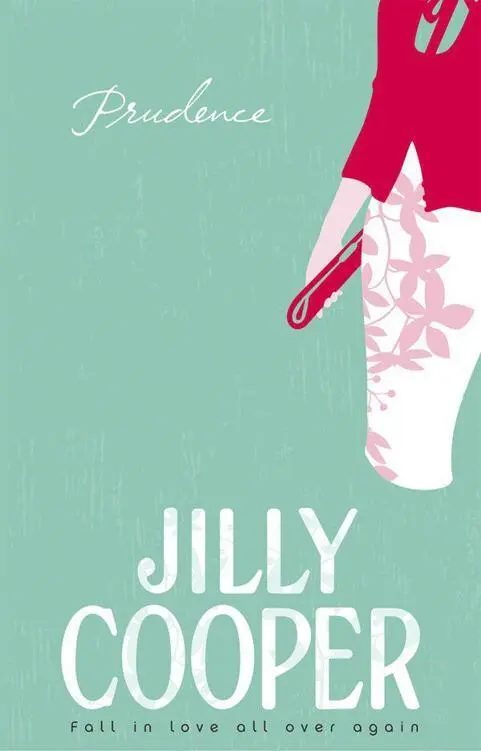
- Название:Prudence
- Автор:
- Издательство:Transworld Digital
- Жанр:
- Год:2010
- ISBN:9781409032281
- Рейтинг книги:5 / 5. Голосов: 1
-
Избранное:Добавить в избранное
- Отзывы:
-
Ваша оценка:
Prudence: краткое содержание, описание и аннотация
Предлагаем к чтению аннотацию, описание, краткое содержание или предисловие (зависит от того, что написал сам автор книги «Prudence»). Если вы не нашли необходимую информацию о книге — напишите в комментариях, мы постараемся отыскать её.
Prudence — читать онлайн бесплатно полную книгу (весь текст) целиком
Ниже представлен текст книги, разбитый по страницам. Система сохранения места последней прочитанной страницы, позволяет с удобством читать онлайн бесплатно книгу «Prudence», без необходимости каждый раз заново искать на чём Вы остановились. Поставьте закладку, и сможете в любой момент перейти на страницу, на которой закончили чтение.
Интервал:
Закладка:
My letter to Ace took ages. It’s so difficult when all you want to say to someone is, ‘I love you, I love you, I love you.’ In the end it was a bald little note saying thank you and that my mother was ill.
Mr Braddock put my things in the car. The kitten was thumping round in its basket, mewing piteously. I went into the kitchen. Berenice was sitting eating her revolting rats’-dropping-in-sawdust breakfast, and reading the Guardian. I ignored her and hugged Mrs Braddock.
‘Goodbye, and thank you for bringing up all those trays and everything.’
Mrs Braddock mopped her eyes with her apron.
‘You’re a good girl and you worked very hard yesterday. And we’ll all miss you very much. I hope you come again soon, although I’m not sure I’ll be here.’ She shot a venomous glance at Berenice, who calmly went on eating.
Mr Braddock appeared in the doorway. ‘We’ll have to hurry, love, if we’re going to catch the train.’
I walked to the door, ignoring Berenice, but she looked up and said:
‘Goodbye Prudence, I’m sure you’ll find a permanent commitment soon. I hope you’ve got enough ego strength not to take Ivan’s rejection as a sign of rejection.’
For a second I looked at her meditatively, teeny-bopper to woman. Then I said, ‘As you keep saying, the only really authentic thing in life is to act on your own impulses.’ And I picked up her plate of horrible health food and emptied it, milk and all, over her shiny newly washed head. ‘And I’ll come and throw brown rice at your wedding,’ I added. Then I ran out to the waiting car.
Rose was waiting outside. It was a beautiful day. The sunshine, the sparkling snow and the rollicking dogs seemed so incongruous beside my black suicidal gloom.
‘Goodbye Rose darling,’ I said, leaping into the car. ‘Give my love to Jack — and Ace.’
As she waved me off, I felt like a barnacle being prised away from its rock.
The mountains gleamed like marble against the bright blue sky, snow ivied the walls, every twig and grass blade glittered thickly like sparkler fireworks. What was the poem we learnt at school?
‘Crack goes the whip, and off we go.
The trees and houses smaller grow.
Last, round the woody turn we swing.
Goodbye, goodbye to everything.’
I turned and caught a last glimpse of the Mulhollands’ house with its dark fringe of pines. I felt I must be leaving behind a shiny snail’s mark of tears.
Suddenly I heard a low chuckle. I looked at Mr Braddock’s impassive face; then he chuckled again.
‘Mrs Braddock and I could scarcely restrain ourselves,’ he said. ‘We could have cheered and cheered. To my dying day I shall remember the expression on her face with all the milk and stuff dripping down it. I wish I had the nerve to do something like that. Anyway your name shall be writ large for evermore.’
‘Oh dear, I could do without the publicity. Ace is going to be livid.’
‘Perhaps it will make the scales fall from his eyes. If that woman becomes mistress of Ambleside, Mrs Braddock and I will be out on our ears.’
Then he chuckled again.
After buying a platform ticket and carrying my suitcase and the still furiously mewing kitten on to the platform, he said he’d be off. ‘I’ve got a lot of snow to shovel, but perhaps I may shake you by the hand.’
‘Pleased I’ve made someone happy,’ I said, gloomily.
The journey back to London was a nightmare. Tears kept trickling out from under my dark glasses. The train was packed, and all the old ladies who said how sweet the kitten was when I got into the carriage and begged me to let him out of his basket, got fed up when he crawled all over them and laddered their stockings. I commuted between the loos all down the train, crying myself stupid until someone rattled the door, then moving on to the next one.
Jane was obviously not expecting me back for ages. She was out, and she’d been making full use of my wardrobe. My clothes were strewn all over the bedroom, and she’d left the top off my favourite bottle of scent. I made the kitten at home, gave it a tin of lobster we had in the larder, and wandered desolately round the flat wondering if I’d been crazy to walk out like that.
Jane came in about ten, and made a great fuss about being pleased to see me. She was horribly embarrassed, because she was wearing my fur coat and my boots. Suddenly she looked at me for the first time full in the face. Her embarrassment turned to horror.
‘Pru, lovie, you look like a road accident. What, or rather who, have you been up to?’
‘I’ve been ill,’ I said, and burst into tears. Eventually, the whole story came pouring out.
‘I knew all along, of course,’ said Jane sententiously. ‘I could tell from your letter you were getting over Pendle pretty quickly, and there was an obvious swing towards Ace.
‘Mind you, I think you’re raving mad,’ she went on. ‘I wouldn’t have left. I’d have battled it out with this Berenice woman — what a soppy name! Look how keen on Pendle you were, and now look at you. Well, Ace may have fancied this woman a bit, and now he doesn’t. You wait, he’ll come pounding after you.’
But Ace didn’t come after me. For the first time in my life, I became familiar with real hell. You don’t need a pitchfork and demons, just take someone away from someone they love — that’s enough. Before, when I’d been unhappily in love, it only needed a handsome man giving me the glad eye in the street, or a patch of blue sky above a grey building to jerk me temporarily out of my gloom. But this time it was unrelieved despair. I dragged myself round the flat like a wounded animal and every night I cried great earth-shaking sobs until dawn came.
The weekend crawled by — not a letter, not a telephone call. I even rang up the engineers to check if the telephone was working. Jane, worried at first, got rather fed up with me. One can’t dole out sympathy indefinitely. She rang Rodney, who took her out for a long drunken Sunday lunch to discuss what to do for and about Prudence.
On Monday morning, back in the office, gazing at a lot of statistics about canned peaches, I was just wondering how I’d ever get through the week when the telephone rang. Rodney answered it.
‘It’s for you,’ he said, waving the receiver. ‘A voice from your immediate past.’
‘Who is it?’ I said listlessly.
‘Someone called Mulholland.’
I was across the room like a streak of light.
‘Hullo, Pru,’ said a familiar drawling voice. It was Maggie.
‘How are you?’ I said, battling with my disappointment.
‘Comme ci, comme very ca. Pendle’s out. Come to lunch.’
‘I’d like to,’ I said. Crazy masochist, I couldn’t resist talking to someone who knew Ace, and I was also curious to know how she was enjoying living with Pendle.
When I arrived, I hardly recognized Pendle’s flat. It had always been so impeccably tidy. Now clothes lay everywhere, carrier bags and tissue paper were littered all over the floor. Ashtrays were overflowing, and Maggie had made dramatic inroads into that well-stocked drinks cupboard. Professor Copeland’s hat, still carrying a fair sprinkling of Antonia Fraser’s ginger hairs, was perched rakishly over the nose of Julius Caesar’s bust.
She hugged me when I arrived. ‘Pru, how lovely to see you! I rang quite on the off-chance. I thought you might still be at home. Are you wildly hungry?’
I shook my head.
‘Good, because I’m afraid we’ve only got whisky and some smoked salmon for lunch.’
She poured us out huge drinks.
‘Do you like my new kit?’ she asked, twirling round. She was wearing a red midi dress, and her hair was permed into tight little curls. She’d plucked her eyebrows to the edge of extinction, and was wearing pink shoes.
Читать дальшеИнтервал:
Закладка:
Похожие книги на «Prudence»
Представляем Вашему вниманию похожие книги на «Prudence» списком для выбора. Мы отобрали схожую по названию и смыслу литературу в надежде предоставить читателям больше вариантов отыскать новые, интересные, ещё непрочитанные произведения.











Обсуждение, отзывы о книге «Prudence» и просто собственные мнения читателей. Оставьте ваши комментарии, напишите, что Вы думаете о произведении, его смысле или главных героях. Укажите что конкретно понравилось, а что нет, и почему Вы так считаете.