Дэн Симмонс - The Fall of Hyperion
Здесь есть возможность читать онлайн «Р”СЌРЅ РЎРёРјРјРѕРЅСЃ - The Fall of Hyperion» весь текст электронной книги совершенно бесплатно (целиком полную версию без сокращений). В некоторых случаях можно слушать аудио, скачать через торрент в формате fb2 и присутствует краткое содержание. Город: London, Год выпуска: 2006, ISBN: 2006, Издательство: Orion Publishing Group, Жанр: Эпическая фантастика, Космическая фантастика, на английском языке. Описание произведения, (предисловие) а так же отзывы посетителей доступны на портале библиотеки ЛибКат.
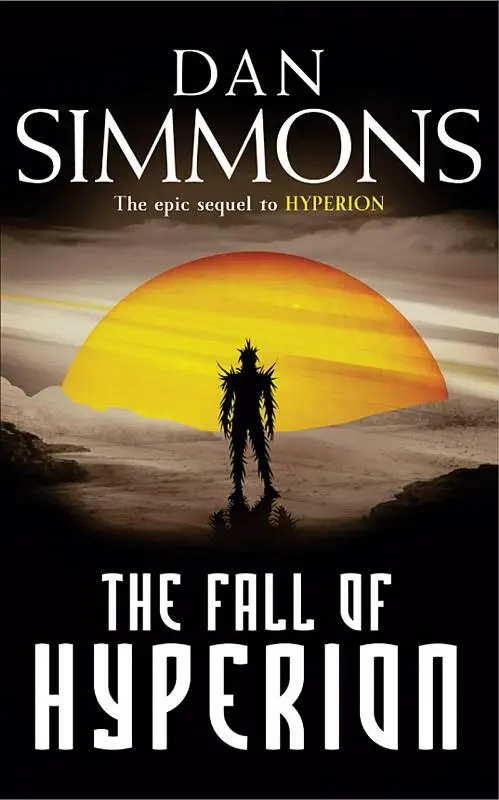
- Название:The Fall of Hyperion
- Автор:
- Издательство:Orion Publishing Group
- Жанр:
- Год:2006
- Город:London
- ISBN:9780575076389
- Рейтинг книги:5 / 5. Голосов: 1
-
Избранное:Добавить в избранное
- Отзывы:
-
Ваша оценка:
The Fall of Hyperion: краткое содержание, описание и аннотация
Предлагаем к чтению аннотацию, описание, краткое содержание или предисловие (зависит от того, что написал сам автор книги «The Fall of Hyperion»). Если вы не нашли необходимую информацию о книге — напишите в комментариях, мы постараемся отыскать её.
The Fall of Hyperion — читать онлайн бесплатно полную книгу (весь текст) целиком
Ниже представлен текст книги, разбитый по страницам. Система сохранения места последней прочитанной страницы, позволяет с удобством читать онлайн бесплатно книгу «The Fall of Hyperion», без необходимости каждый раз заново искать на чём Вы остановились. Поставьте закладку, и сможете в любой момент перейти на страницу, на которой закончили чтение.
Интервал:
Закладка:
Several times, when Keats fell into fitful naps, Hunt walked to the window and once down the stairs to the front door to stare into the Piazza. Something tall and sharp edged stood in the deepest shadows opposite the Piazza near the base of the steps.
In the evening, Hunt himself dozed off while sitting upright in the hard chair next to Keats’s bed. He awoke from a dream of falling and put his hand out to steady himself only to find Keats awake and staring at him.
“Did you ever see anyone die?” asked Keats between soft gasps for breath.
“No.” Hunt thought that there was something odd about the young man’s gaze, as if Keats were looking at him but seeing someone else.
“Well then I pity you,” said Keats. “What trouble and danger you have got into for me. Now you must be firm for it will not last long.”
Hunt was struck not only by the gentle courage in that remark, but by the sudden shift in Keats’s dialect from flat Web-standard English to something much older and more interesting.
“Nonsense,” said Hunt heartily, forcing enthusiasm and energy he did not feel. “We’ll be out of this before dawn. I’m going to sneak out as soon as it gets dark and find a farcaster portal.”
Keats shook his head. “The Shrike will take you. It will allow no one to help me. Its role is to see that I must escape myself through myself.” He closed his eyes as his breathing grew more ragged.
“I don’t understand,” said Leigh Hunt, taking the young man’s hand.
He assumed this was more of the fever talking, but since it was one of the few times Keats had been fully conscious in the past two days. Hunt felt it worth the effort to communicate. “What do you mean escape yourself through yourself?”
Keats’s eyes fluttered open. They were hazel and far too bright.
“Ummon and the others are trying to make me escape myself through accepting the godhood, Hunt. Bait to catch the white whale, honey to catch the ultimate fly. Fleeing Empathy shall find its home in me… in me. Mister John Keats, five feet high… and then the reconciliation begins, right?”
“What reconciliation?” Hunt leaned closer, trying not to breathe on him. Keats appeared to have shrunk in his bedclothes, tangle of blankets, but heat radiating from him seemed to fill the room. His face was a pale oval in the dying light. Hunt was only faintly aware of a gold band of reflected sunlight moving across the wall just below where it met the ceiling, but Keats’s eyes never left that last smear of day.
“The reconciliation of man and machine, Creator and created,” said Keats and began to cough, stopping only after he had drooled red phlegm into the basin Hunt held for him. He lay back, gasped a moment, and added, “Reconciliation of humankind and those races it tried to exterminate, the Core and the humanity it tried to expunge, the painfully evolved God of the Void Which Binds and its ancestors who tried to expunge it.”
Hunt shook his head and quit writing. “I don’t understand. You can become this… messiah… by leaving your deathbed?”
The pale oval of Keats’s face moved back and forth on the pillow in a motion which might have been a substitute for laughter. “We all could have, Hunt. Humankind’s folly and greatest pride. We accept our pain. We make way for our children. That earned us the right to become the God we dreamed of.”
Hunt looked down and found his own fist clenched in frustration.
“If you can do this… become this power… then do it. Get us out of here!”
Keats closed his eyes again. “Can’t. I’m not the One Who Comes but the One Who Comes Before. Not the baptized but the baptist. Merde, Hunt, I’m an atheist! Even Severn couldn’t convince me of these things when I was drowning in death!” Keats gripped Hunt’s shirt with a fierceness that frightened the older man. “Write this!”
And Hunt rumbled to find the ancient pen and rough paper, scribbling furiously to catch the words Keats now whispered:
A wondrous lesson in thy silent face:
Knowledge enormous makes a god of me.
Names, deeds, gray legends, dire events, rebellions,
Majesties, sovran voices, agonies,
Creations and destroyings, all at once
Pour into the wide hollows of my brain,
And deify me, as if some blithe wine
Or bright elixir peerless I had drunk,
And so become immortal.
Keats lived for three more painful hours, a swimmer rising occasionally from his sea of agony to take a breath or whisper some urgent nonsense. Once, long after dark, he pulled at Hunt’s sleeve and whispered sensibly enough, “When I am dead, the Shrike will not harm you. It waits for me. There may not be a way home, but it will not harm you while you search.” And again, just as Hunt was bending over to hear if the breath still gurgled in the poet’s lungs, Keats began to talk and continued between spasms until he had given Hunt specific instructions for his entombment in Rome’s Protestant Cemetery, near the Pyramid of Caius Cestius.
“Nonsense, nonsense,” Hunt muttered over and over like a mantra, squeezing the young man’s hot hand.
“Flowers,” whispered Keats a little later, just after Hunt had lighted a lamp on the bureau. The poet’s eyes were wide as he stared at the ceiling in a look of pure, childish wonder. Hunt glanced upward and saw the faded yellow roses painted in blue squares on the ceiling.
“Flowers… above me,” whispered Keats between his efforts to breathe.
Hunt was standing at the window, staring out at the shadows beyond the Spanish Steps, when the painful rasp of breath behind him faltered and stopped and Keats gasped out, “Severn… lift me up! I am dying.”
Hunt sat on the bed and held him. Heat flowed from the small body that seemed to weigh nothing, as if the actual substance of the man had been burned away. “Don’t be frightened. Be firm. And thank God it has come!” gasped Keats, and then the terrible rasping subsided. Hunt helped Keats lie back more comfortably as his breathing eased into a more normal rhythm.
Hunt changed the water in the basin, moistened a fresh cloth, and came back to find Keats dead.
Later, just after the sun rose. Hunt lifted the small body—wrapped in fresh linens from Hunt’s own bed—and went out into the city.
The storm had abated by the time Brawne Lamia reached the end of the valley. As she passed the Cave Tombs, she had seen the same eerie glow the other Tombs were emitting, but there also came a terrible noise—as if of thousands of souls crying out—echoing and moaning from the earth. Brawne hurried on.
The sky was clear by the time she stood in front of the Shrike Palace.
The structure was aptly named: the half-dome arched up and outward like the creature’s carapace, support elements curved downward like blades stabbing the valley floor and other buttresses leaped upward and away like Shrike thorns. Walls had become translucent as the interior glow increased, and now the building shone like a giant jack-o'-lantern shaved paper thin; the upper regions glowed red as the Shrike’s gaze.
Brawne took a breath and touched her abdomen. She was pregnant—she had known it before she left Lusus—and didn’t she owe more now to her unborn son or daughter than to the obscene old poet on the Shrike’s tree? Brawne knew that the answer was yes and that it did not matter one damn bit. She let out the breath and approached the Shrike Palace.
From the outside, the Shrike Palace was no more than twenty meters across. Before, when they had entered, Brawne and the other pilgrims had seen the interior as a single open space, empty except for the bladelike supports that crisscrossed the space under the glowing dome.
Now, as Brawne stood at the entrance, the interior was a space larger than the valley itself. A dozen tiers of white stone rose rank on rank and stretched into the faded distance. On each tier of stone, human bodies lay, each garbed a different way, each tethered by the same sort of semiorganic, semiparasitic shunt socket and cable which her friends had told Brawne she herself had worn. Only these metallic but translucent umbilicals pulsed red and expanded and contracted regularly, as if blood were being recycled through the sleeping forms’ skulls.
Читать дальшеИнтервал:
Закладка:
Похожие книги на «The Fall of Hyperion»
Представляем Вашему вниманию похожие книги на «The Fall of Hyperion» списком для выбора. Мы отобрали схожую по названию и смыслу литературу в надежде предоставить читателям больше вариантов отыскать новые, интересные, ещё непрочитанные произведения.


Обсуждение, отзывы о книге «The Fall of Hyperion» и просто собственные мнения читателей. Оставьте ваши комментарии, напишите, что Вы думаете о произведении, его смысле или главных героях. Укажите что конкретно понравилось, а что нет, и почему Вы так считаете.