Дэн Симмонс - The Fall of Hyperion
Здесь есть возможность читать онлайн «Р”СЌРЅ РЎРёРјРјРѕРЅСЃ - The Fall of Hyperion» весь текст электронной книги совершенно бесплатно (целиком полную версию без сокращений). В некоторых случаях можно слушать аудио, скачать через торрент в формате fb2 и присутствует краткое содержание. Город: London, Год выпуска: 2006, ISBN: 2006, Издательство: Orion Publishing Group, Жанр: Эпическая фантастика, Космическая фантастика, на английском языке. Описание произведения, (предисловие) а так же отзывы посетителей доступны на портале библиотеки ЛибКат.
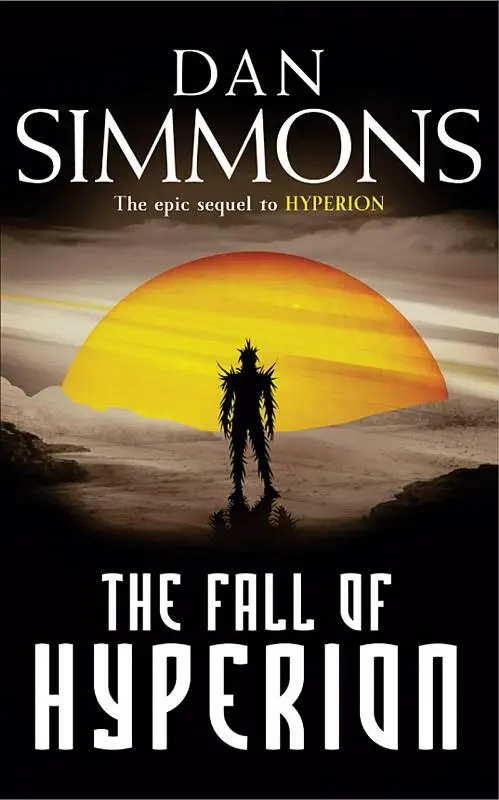
- Название:The Fall of Hyperion
- Автор:
- Издательство:Orion Publishing Group
- Жанр:
- Год:2006
- Город:London
- ISBN:9780575076389
- Рейтинг книги:5 / 5. Голосов: 1
-
Избранное:Добавить в избранное
- Отзывы:
-
Ваша оценка:
The Fall of Hyperion: краткое содержание, описание и аннотация
Предлагаем к чтению аннотацию, описание, краткое содержание или предисловие (зависит от того, что написал сам автор книги «The Fall of Hyperion»). Если вы не нашли необходимую информацию о книге — напишите в комментариях, мы постараемся отыскать её.
The Fall of Hyperion — читать онлайн бесплатно полную книгу (весь текст) целиком
Ниже представлен текст книги, разбитый по страницам. Система сохранения места последней прочитанной страницы, позволяет с удобством читать онлайн бесплатно книгу «The Fall of Hyperion», без необходимости каждый раз заново искать на чём Вы остановились. Поставьте закладку, и сможете в любой момент перейти на страницу, на которой закончили чтение.
Интервал:
Закладка:
General Morpurgo looked down and shuffled papers as if to hide the sudden flash of anger in his eyes. “Senator, less than ten standard days remain until the second wave completes its target list. Renaissance Minor will fall under attack within ninety hours. What I am saying is that with the current size, structure, and technology available to FORCE, it would be doubtful if we could hold one system… say, TC 2.”
Senator Kakinuma rose. “This is not acceptable. General.”
Morpurgo looked up. “I agree, Senator. But it is true.”
President Pro Tern Denzel-Hiat-Amin sat shaking his gray and mottled head. “It makes no sense. Were there no plans to defend the Web?”
Admiral Singh spoke from his seat. “The best estimates of the threat told us that we would have a minimum of eighteen months should the Swarms ever turn toward the attack.”
Minister of Diplomacy Persov cleared his throat. “And… if we were to concede these twenty-five worlds to the Ousters, Admiral, how long until the first or second wave could attack other Web worlds?”
Singh did not have to refer to his notes or comlog. “Depending upon their target, M. Persov, the nearest Web world—Esperance—would be nine standard months away from the closest Swarm. The most distant target—Home System—would be some fourteen years by Hawking drive.”
“Time enough to shift to a war economy,” said Senator Feldstein.
Her constituency on Barnard’s World had less than forty standard hours to live. Feldstein had vowed to be with them when the end came. Her voice was precise and passionless. “It makes sense. Cut your losses. Even with TC 2and two dozen more worlds lost, the Web can produce incredible quantities of war materiel… even in nine months. Within the years it will take for the Ousters to penetrate farther into the Web, we should be able to beat them through sheer industrial mass.”
Defense Minister Imoto shook his head. “There are irreplaceable raw materials being lost in this first and second wave. The disruption to Web economy will be staggering.”
“Do we have a choice?” asked Senator Peters from Deneb Drei.
All eyes turned toward the person sitting next to AI Councilor Albedo.
As if to underline the importance of the moment, a new AI persona had been admitted to the War Council and had given the presentation on the awkwardly labeled “deathwand device.” Councilor Nansen was tall, male, tanned, relaxed, impressive, convincing, trustworthy, and imbued with that rare charisma of leadership that made one both like and respect the person on sight.
Meina Gladstone feared and loathed the new Councilor at once. She felt as if this projection had been designed by AI experts to create just the response of trust and obedience she sensed others at the table already granting. And Nansen’s message, she feared, meant death.
The deathwand had been Web technology for centuries—designed by the Core and limited to FORCE personnel and a few specialized security forces such as Government House’s and Gladstone’s Praetorians.
It did not burn, blast, shoot, slag, or incinerate. It made no sound and projected no visible ray or sonic footprint. It simply made the target die.
If the target were human, that is. A deathwand’s range was limited—no more than fifty meters—but within that range, a targeted human died, while other animals and property were totally safe. Autopsies showed scrambled synapses but no other damage. Deathwands merely made one cease to be. FORCE officers had carried them as short-range personal weapons and symbols of authority for generations.
Now, Councilor Nansen revealed, the Core had perfected a device that utilized the deathwand principle on a larger scale. They had hesitated to reveal its existence, but with the imminent and terrible threat of the Ouster invasion…
The questioning had been energetic and sometimes cynical, with the military more skeptical than the politicians. Yes, the deathwand device could rid us of Ousters, but what about the Hegemony population?
“Remove them to shelter on one of the labyrinthine worlds,” Nansen had replied, repeating the earlier plan of Councilor Albedo. “Five kilometers of rock would shield them from any effects of the widening deathwand ripples.”
“How far did these death rays propagate?”
“Their effect diminished to below the lethal level at just under three light-years,” Nansen responded calmly, confidently, the ultimate salesman in the penultimate sales pitch. “A wide enough radius to rid any system of the attacking Swarm. Small enough to protect all but the nearest neighboring star systems. Ninety-two percent of the Web worlds had no other inhabited world within five light-years.”
“And what about those who can’t be evacuated?” Morpurgo had demanded.
Councilor Nansen had smiled and opened his palm as if to show there was nothing hidden there. “Do not activate the device until your authorities are sure that all Hegemony citizens are evacuated or shielded, he had said. It will be, after all, totally under your control.”
Feldstein, Sabenstorafen, Peters, Persov, and many of the others had been instantly enthusiastic. A secret weapon to end all secret weapons.
The Ousters could be warned… a demonstration could be arranged.
“I’m sorry,” Councilor Nansen had said. His teeth when he smiled were as pearly white as his robes. “There can be no demonstration. The weapon works just as a deathwand, only across a much wider region. There will be no property damage or blast effect, no measurable shock wave above the neutrino level. Merely dead invaders.”
“To demonstrate it,” Councilor Albedo had explained, “you must use it on at least one Ouster Swarm.”
The excitement of the War Council had not been lessened. “Perfect,” said All Thing Speaker Gibbons, “choose one Swarm, test the device, fatline the results to the other Swarms, and give them a one-hour deadline to break off their attacks. We didn’t provoke this war. Better millions of the enemy dead than a war that claims tens of billions over the next decade.”
“Hiroshima,” Gladstone had said, her only comment of the day. It had been said too softly for anyone except her aide Sedeptra to hear.
Morpurgo had asked: “Do we know that the killing rays will become ineffective at three light-years? Have you tested it?”
Councilor Nansen smiled. If he answered yes, there were heaps of dead humans somewhere. If he said no, the device’s reliability was seriously at stake. “We are certain that it will work,” said Nansen. “Our simulation runs were foolproof.”
The Kiev Team AIs said that about the first farcaster singularity, thought Gladstone. The one that destroyed Earth. She said nothing aloud.
Still, Singh and Morpurgo and Van Zeidt and their specialists had spiked Nansen’s guns by showing that Mare Infinitus could not be evacuated quickly enough and that the only first-wave Web world that had its own labyrinth was Armaghast, which was within a light-year of Pacem and Svoboda.
Councilor Nansen’s earnest, helpful smile did not fade. “You want a demonstration, and that would be only sensible,” he said quietly. “You need to show the Ousters that invasion will not be tolerated, while focusing on the minimum loss of life. And you need to shelter your indigenous Hegemony population.” He paused, folded his hands on the tabletop. “What about Hyperion?”
The buzz around the table deepened in tone.
“It’s not really a Web world,” said Speaker Gibbons.
“Yet it is in the Web now, with the FORCE farcaster still in place!” cried Garion Persov of Diplomacy, obviously a convert to the idea.
General Morpurgo’s stern expression did not shift. “That will be there only another few hours. We’re protecting the singularity sphere now, but it could fall at any time. Much of Hyperion itself is already in Ouster hands.”
Читать дальшеИнтервал:
Закладка:
Похожие книги на «The Fall of Hyperion»
Представляем Вашему вниманию похожие книги на «The Fall of Hyperion» списком для выбора. Мы отобрали схожую по названию и смыслу литературу в надежде предоставить читателям больше вариантов отыскать новые, интересные, ещё непрочитанные произведения.







Обсуждение, отзывы о книге «The Fall of Hyperion» и просто собственные мнения читателей. Оставьте ваши комментарии, напишите, что Вы думаете о произведении, его смысле или главных героях. Укажите что конкретно понравилось, а что нет, и почему Вы так считаете.