Дэн Симмонс - The Fall of Hyperion
Здесь есть возможность читать онлайн «Р”СЌРЅ РЎРёРјРјРѕРЅСЃ - The Fall of Hyperion» весь текст электронной книги совершенно бесплатно (целиком полную версию без сокращений). В некоторых случаях можно слушать аудио, скачать через торрент в формате fb2 и присутствует краткое содержание. Город: London, Год выпуска: 2006, ISBN: 2006, Издательство: Orion Publishing Group, Жанр: Эпическая фантастика, Космическая фантастика, на английском языке. Описание произведения, (предисловие) а так же отзывы посетителей доступны на портале библиотеки ЛибКат.
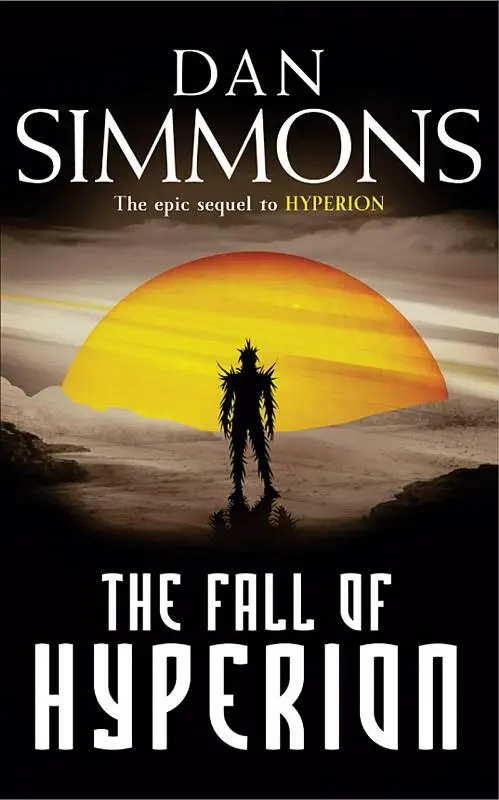
- Название:The Fall of Hyperion
- Автор:
- Издательство:Orion Publishing Group
- Жанр:
- Год:2006
- Город:London
- ISBN:9780575076389
- Рейтинг книги:5 / 5. Голосов: 1
-
Избранное:Добавить в избранное
- Отзывы:
-
Ваша оценка:
The Fall of Hyperion: краткое содержание, описание и аннотация
Предлагаем к чтению аннотацию, описание, краткое содержание или предисловие (зависит от того, что написал сам автор книги «The Fall of Hyperion»). Если вы не нашли необходимую информацию о книге — напишите в комментариях, мы постараемся отыскать её.
The Fall of Hyperion — читать онлайн бесплатно полную книгу (весь текст) целиком
Ниже представлен текст книги, разбитый по страницам. Система сохранения места последней прочитанной страницы, позволяет с удобством читать онлайн бесплатно книгу «The Fall of Hyperion», без необходимости каждый раз заново искать на чём Вы остановились. Поставьте закладку, и сможете в любой момент перейти на страницу, на которой закончили чтение.
Интервал:
Закладка:
“But Hegemony personnel have been evacuated?” said Persov.
Singh answered. “All but the Governor-General. He could not be found in the confusion.”
“A pity,” said Minister Persov without much conviction, “but the point is that the remaining population is mostly Hyperion indigenie, with easy access to the labyrinth there, correct?”
Barbre Dan-Gyddis of the Ministry of Economy, whose son had been a fiberplastic plantation manager near Port Romance, said, “Within three hours? Impossible.”
Nansen stood. “I think not,” he said. “We can fatline the warning to the remaining Home Rule Authorities in the capital, and they can begin the evacuation immediately. There are thousands of entrances to the labyrinth on Hyperion.”
“The capital of Keats is under siege,” growled Morpurgo. “The entire planet is under attack.”
Councilor Nansen nodded sadly. “And soon will be put to the sword by the barbarian Ousters. A difficult choice, gentlemen and ladies. But the device will work. The invasion will simply cease to exist in Hyperion space. Millions might be saved on the planet, and the effect on the Ouster invasion forces elsewhere would be significant. We know that their so-called Sister Swarms communicate by fatline. The termination of the first Swarm to invade Hegemony space—the Hyperion Swarm —may be the perfect deterrent.”
Nansen shook his head again and looked around with an expression of almost paternal concern. There could be no simulating such pained sincerity. “It has to be your decision. The weapon is yours to use or disregard. It pains the Core to take any human life… or, through inaction, allow any human life to come to harm. But in this case, where the lives of billions are at risk…” Nansen opened his hands again, shook his head a final time, and sat back, obviously leaving the decision to human minds and hearts.
Babble around the long table rose. Debate grew almost violent.
“CEO!” called General Morpurgo.
In the sudden silence, Gladstone lifted her gaze to the holographic displays in the darkness above them. The Mare Infinitus Swarm fell toward that ocean world like a torrent of blood aimed toward a small blue sphere. Only three of the orange Task Force 181.2 embers remained, and even as the silent Council watched, two of these winked out. Then the final one was extinguished.
Gladstone whispered into her comlog. “Communications, any last message from Admiral Lee?”
“None to the command center, CEO,” came the response. “Only standard fatline telemetry during the battle. It appears they did not reach the center of the Swarm.”
Gladstone and Lee had held hopes of capturing Ousters, of interrogations, of establishing the identity of their enemy beyond a doubt.
Now that young man of such energy and ability was dead—dead at Meina Gladstone’s command—and seventy-four ships of the line were wasted.
“Mare Infinitus farcaster destroyed by preset plasma explosives,” reported Admiral Singh. “Forward elements of the Swarm now entering-cislunar defense perimeter.”
No one spoke. The holographies showed the tidal wave of blood-red lights engulfing the Mare Infinitus system, the final orange embers around that gold world blinking out.
A few hundred of the Ouster ships remained in orbit, presumably reducing Mare Infinitus’s elegant floating cities and ocean farms to burning debris, but the major part of the blood tide rolled on, out of the region projected above.
“Asquith System in three standard hours, forty-one minutes,” intoned a technician near the display board.
Senator Kolchev stood. “Let’s put the Hyperion demonstration to a vote,” he said, ostensibly addressing Gladstone but speaking to the crowd.
Meina Gladstone tapped her lower lip. “No,” she said at last, “no vote. We will use the device. Admiral, prepare the torchship armed with the device to translate to Hyperion space and then broadcast warnings to planet and Ouster alike. Give them three hours. Minister Imoto, send coded fatline signals to Hyperion telling them that they must… repeat, must… seek shelter in the labyrinths at once. Tell them that a new weapon is being tested.”
Morpurgo wiped sweat from his face. “CEO, we can’t run any risk that this device can fall into enemy hands.”
Gladstone looked at Councilor Nansen and tried to make her expression reveal nothing of what she felt. “Councilor, can this device be rigged so that it detonates automatically if our ship is captured or destroyed?”
“Yes, CEO.”
“Do it. Explain all necessary failsafe devices to the proper FORCE experts.” She turned toward Sedeptra. “Prepare a webwide broadcast for me, scheduled to commence ten minutes before the device is to be detonated. I have to tell our people about this.”
“Is that wise… ?” began Senator Feldstein.
“It is necessary,” said Gladstone. She rose, and the thirty-eight people in the room rose a second later. “I’m going to get a few minutes sleep while you people work. I want the device ready and in-system and Hyperion warned immediately. I want contingency plans and priorities for a negotiated settlement ready by the time I awaken in thirty minutes.”
Gladstone looked out at the group, knowing that one way or the other, most of the people there would be out of power and out of office within the next twenty hours. One way or the other, it was her last day as CEO, Meina Gladstone smiled. “Council dismissed,” she said and farcast to her private quarters to take a nap.
Forty-Three
Leigh Hunt had never seen anyone die before. The last day and night he spent with Keats—Hunt still thought of him as Joseph Severn but was sure that the dying man now thought of himself as John Keats—were the most difficult in Hunt’s life. The hemorrhages came frequently during Keat’s last day of life, and between these bouts of retching, Hunt could hear the phlegm boiling in the small man’s throat and chest as he fought for life.
Hunt sat next to the bed in the small front room in the Piazza di Spagna and listened to Keats babble as sunrise moved to midmorning and midmorning faded to early afternoon. Keats was feverish and moving in and out of consciousness, but he insisted that Hunt listen and write everything down—they had found ink, pen, and foolscap in the other room—and Hunt complied, scribbling furiously as the dying cybrid raved on about metaspheres and lost divinities, the responsibilities of poets and the passing of gods, and the Miltonic civil war in the Core.
Hunt had perked up then and squeezed Keats’s feverish hand. “Where is the Core, Sev– Keats? Where is it?”
The dying man had broken into a visible sweat and turned his face away. “Don’t breathe on me—it comes like ice!”
“The Core,” repeated Hunt, leaning back, feeling close to tears from pity and frustration, “where is the Core?”
Keats smiled, his head moving back and forth in pain. The effort he made to breathe sounded like wind through a ruptured bellows. “Like spiders in the web,” he muttered, “spiders in the web. Weaving… letting us weave it for them… then trussing us and draining us. Like flies caught by spiders in the web.”
Hunt quit writing as he listened to more of this seemingly senseless babble. Then he understood. “My God,” he whispered. “They’re in the farcaster system.”
Keats tried to sit up, grasped Hunt’s arm with a terrible strength.
“Tell your leader, Hunt. Have Gladstone rip it out. Rip it out. Spiders in the web. Man god and machine god… must find the union. Not me!” He dropped back on the pillows and started weeping without sound. “Not me.”
Keats slept some through the long afternoon, although Hunt knew that it was something closer to death than sleep. The slightest sound would start the dying poet awake and set him wrestling to breathe. By sunset Keats was too weak to expectorate, and Hunt had to help him lower his head over the basin to allow gravity to clear his mouth and throat of bloody mucus.
Читать дальшеИнтервал:
Закладка:
Похожие книги на «The Fall of Hyperion»
Представляем Вашему вниманию похожие книги на «The Fall of Hyperion» списком для выбора. Мы отобрали схожую по названию и смыслу литературу в надежде предоставить читателям больше вариантов отыскать новые, интересные, ещё непрочитанные произведения.







Обсуждение, отзывы о книге «The Fall of Hyperion» и просто собственные мнения читателей. Оставьте ваши комментарии, напишите, что Вы думаете о произведении, его смысле или главных героях. Укажите что конкретно понравилось, а что нет, и почему Вы так считаете.