Chris Moriarty - Spin Control
Здесь есть возможность читать онлайн «Chris Moriarty - Spin Control» весь текст электронной книги совершенно бесплатно (целиком полную версию без сокращений). В некоторых случаях можно слушать аудио, скачать через торрент в формате fb2 и присутствует краткое содержание. Год выпуска: 2006, ISBN: 2006, Издательство: Bantam Spectra, Жанр: Фантастика и фэнтези, на английском языке. Описание произведения, (предисловие) а так же отзывы посетителей доступны на портале библиотеки ЛибКат.
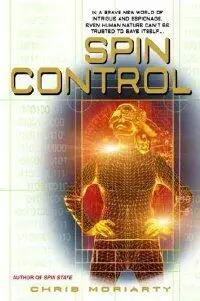
- Название:Spin Control
- Автор:
- Издательство:Bantam Spectra
- Жанр:
- Год:2006
- ISBN:978-0-553-58625-1
- Рейтинг книги:5 / 5. Голосов: 1
-
Избранное:Добавить в избранное
- Отзывы:
-
Ваша оценка:
Spin Control: краткое содержание, описание и аннотация
Предлагаем к чтению аннотацию, описание, краткое содержание или предисловие (зависит от того, что написал сам автор книги «Spin Control»). Если вы не нашли необходимую информацию о книге — напишите в комментариях, мы постараемся отыскать её.
As the auction heats up, the Artificial Life Emancipation Front sends in Major Catherine Li. Drummed out of the Peacekeepers for executing Syndicate prisoners, Li has now literally hooked up with an AI who has lived many lifetimes and shunted through many bodies. But while they have their own conflicting loyalties to contend with, together they’re just one player in a mysterious high-stakes game…
Spin Control — читать онлайн бесплатно полную книгу (весь текст) целиком
Ниже представлен текст книги, разбитый по страницам. Система сохранения места последней прочитанной страницы, позволяет с удобством читать онлайн бесплатно книгу «Spin Control», без необходимости каждый раз заново искать на чём Вы остановились. Поставьте закладку, и сможете в любой момент перейти на страницу, на которой закончили чтение.
Интервал:
Закладка:
“Well,” Li pointed out in a deceptively mild voice, “if you’re really concerned, you could always come along with us and make sure nothing happens to it.”
“—and, uh, I’m sure she’d be overjoyed for Arkady here to have it. Really. Be my guest. My shit is your shit.”
The boy emptied the pockets of his vest into a bag someone held out for the purpose, removed various pieces of detachable gear and equipment, unfastened what seemed like an inconveniently large number of buckles and snaps and Velcro strips, and finally pulled the vest over his head and lowered it over Arkady’s head in one smooth and almost anticlimactic movement.
The vest dropped onto Arkady’s shoulders with a soft thud, giving off a smell that was a combination of its normal owner’s masculine, and thankfully relatively clean, odor, and the sharp smells of dirt and machine oil and the khamsin. “It’s so light,” he said wonderingly.
“We’ll see if you still think that in five hours.”
And indeed, as the straps were fastened and tugged tight around his body he could already feel the ceramic plates digging and chafing around the edges.
When the thing had been strapped tight enough to feel thoroughly uncomfortable, the lieutenant stepped back and gave him a measuring once-over. “Well, that ought to protect everything but your balls,” she said in a satisfied tone. “And I hear you guys don’t use those anyway, so what do you care? Move around for me, will you?”
Arkady moved. “It’s too tight,” he complained.
“Too tight is just right. As the general said to the whore.”
Arkady had no idea what that meant, but everyone else seemed to think it was hysterically funny.
A noncom snaked through the crowded room with what looked like a roll of lilac purple tape. “Line up, ladies. Color of the day.”
“God! Purple again? Who picks these colors, a vengeful homosexual field-training-school washout?”
“Hey it’s better than the hot pink. Remember the pink? Took me a month to peel that shit off.”
“Hey, guys,” drawled the next guy over, “didn’t your mother ever tell you not to look a gift Mat’Kal in the mouth?”
“And the real tragedy is that he thinks he’s funny!”
As Arkady watched, people began ripping off strips of the brightly colored tape and wrapping it around the grips of their assault rifles or sticking strips of it onto their vests and helmets.
“What’s the tape for?” he asked Osnat, who had reappeared beside him in full combat gear.
“Idiot-proofing.” She’d ripped a section off the roll when it passed them by and was taping her own weapon and vest. She eyeballed him for a minute, stuck a strip of tape across his vested chest and pressed it briskly into place. “The tactical AIs are programmed not to fire on anyone with the right color tape on.”
“But couldn’t someone just copy the tape? Or steal it?”
“Not that easy. It’s interactive, talks back and forth with the AIs’ sensors, and they change the colors every few patrols, mix them up between zones and so forth to try to stay ahead of infiltrators. Anyway, it’s not an absolute interdiction. It just kicks the AI into a different decision tree or something. It can still waste you if it wants to. And don’t forget that.” She gave him her fiercest look. “’Cause if you get yourself shot out there, I’m going to personally kick your ass!”
“Okay, I’m in,” Cohen said, emerging out of the hallucinatory visions of streamspace like a messenger from the afterlife.
“What does he mean?” Arkady whispered, leaning into Osnat to speak in her ear.
They were still in the abandoned house. Through the ragged window frames Arkady could see the house’s sagging back porch, the rich green slopes of Mount Herzl, the precise geometric lines of the tombs in the military cemetery, the tall trees of Yad Vashem’s Avenue of the Righteous Gentile. Mount Herzl was the heart of the Line, the thickest part of the thickness.
Arkady looked out over the dusty scrubland that separated them from the mountain and thought of the deadly tide of AI-controlled weaponry and human muscle patrolling its paths and riverbeds and crumbling roadways. He remembered the figures of tonnage of land mines buried on the Line per year and shuddered. It was hell. Hell masquerading as an earthly paradise. What sort of beings could evade the patrols and the trip wires long enough to live out there?
Down in the valley bottom a patrol—Israeli? Palestinian?—threaded its way along the riverbed, olive drab ghosts in an olive drab landscape. The wind shifted, and the thick cold smell of gun oil drifted up from the valley bottom.
The soldiers fell silent, watching. The patrol snaked down the valley bottom and vanished. A few minutes passed. Someone heaved a sigh. People around Arkady began to talk again, then to get up and move around and go back to the tasks they’d been engaged in before the patrol appeared.
Cohen stood up, stretching stiff muscles, and walked over to look down at Arkady, who was still crouched on the floor where Osnat had left him.
“How can they not see us?” Arkady asked.
“Because they’re not really here,” the machine explained. “They’re under full-immersion shunts, just like my bodies are. Each one is under the control of an Emergent AI operating in a three-dimensional game space that exactly mirrors the real Green Line.”
“Why?”
“Suicide.” The machine smiled. “And not the romantic kind that Syndicate novelists write about. An Emergent AI’s personality architecture is a lot brittler than the human variety. And Emergents don’t have the benefit of the human hypothalamic-limbic system to help them rationalize killing in wartime. They have to live with it in cold blood, so to speak. And a lot of them turned out not to want to do that. So now we tell them they’re just playing a game in streamspace.”
“And the AIs think the Palestinians are doing the same? I mean, they don’t know there are actual people on the other side of the gun?”
“Right.”
“And what happens if one of the AIs figures it out?”
“Bye-bye, little AI.”
“Oh.”
“Cheer up. That’s what’s going to get us through the Line safe and more or less sound. Because the game can’t look too realistic, of course. The gamespace in which the Emergents think they’re operating is only a simplified model of the real Green Line. And you know the old saying about how there’s many a slip ’twixt cup and lip? Well, we’re going to engineer a few slips between gamespace and realspace.”
The captain eyed Cohen from across the room. “You know what time it is, right?”
“If that’s a polite way of telling me to hurry up, then allow me to point out, equally politely, that your equipment stinks.”
“Tell it to the Knesset.”
“Nothing’s stopping you from buying it below the line.”
“Are you kidding me? What kind of putz buys legal equipment with below-the-line money? What the hell’s the point of having a covert ops budget if you waste it on stuff you’re allowed to have?”
Cohen snorted and went back to pecking at the keyboard and peering into the blue depths of the monitor.
Meanwhile the captain straightened up from the monitor and turned to face the room at large. “Listen up, everyone. From here on in we’re in the thickness of the Line and we’re flying below radar as far as IDF’s concerned. You know what that means. We do not want to be sending any nice young reservists home to their mothers in body bags today, so be bloody damn careful. But if it comes down to choosing who’s going to fill up a body bag, the State of Israel has a hell of a lot more invested in each of you than it does in any eighteen-year-old AI puppet. So act accordingly…and you can cry on my shoulder when we’re all safe at home again. That’s a promise.”
Читать дальшеИнтервал:
Закладка:
Похожие книги на «Spin Control»
Представляем Вашему вниманию похожие книги на «Spin Control» списком для выбора. Мы отобрали схожую по названию и смыслу литературу в надежде предоставить читателям больше вариантов отыскать новые, интересные, ещё непрочитанные произведения.










Обсуждение, отзывы о книге «Spin Control» и просто собственные мнения читателей. Оставьте ваши комментарии, напишите, что Вы думаете о произведении, его смысле или главных героях. Укажите что конкретно понравилось, а что нет, и почему Вы так считаете.