Steve LeVine - Putin's Labyrinth
Здесь есть возможность читать онлайн «Steve LeVine - Putin's Labyrinth» весь текст электронной книги совершенно бесплатно (целиком полную версию без сокращений). В некоторых случаях можно слушать аудио, скачать через торрент в формате fb2 и присутствует краткое содержание. Город: New York, Год выпуска: 2008, ISBN: 2008, Издательство: Random House, Жанр: Публицистика, на английском языке. Описание произведения, (предисловие) а так же отзывы посетителей доступны на портале библиотеки ЛибКат.
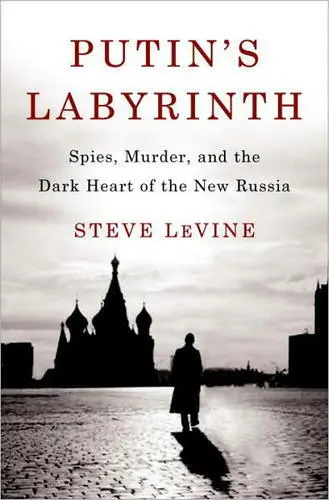
- Название:Putin's Labyrinth
- Автор:
- Издательство:Random House
- Жанр:
- Год:2008
- Город:New York
- ISBN:978-1-58836-815-7
- Рейтинг книги:3 / 5. Голосов: 1
-
Избранное:Добавить в избранное
- Отзывы:
-
Ваша оценка:
Putin's Labyrinth: краткое содержание, описание и аннотация
Предлагаем к чтению аннотацию, описание, краткое содержание или предисловие (зависит от того, что написал сам автор книги «Putin's Labyrinth»). Если вы не нашли необходимую информацию о книге — напишите в комментариях, мы постараемся отыскать её.
Drawing on new interviews with eyewitnesses and the families of victims, LeVine documents the bloodshed that has stained Putin’s two terms as president. Among the incidents chronicled in these pages: The 2002 terrorist takeover of a crowded Moscow theater—which led to the government gassing the building, and the deaths of more than a hundred terrified hostages–seen here from new angles, through the riveting words of those who survived; and the murder of courageous investigative reporter Anna Politkovskaya, shot in the elevator of her apartment building on Putin’s birthday, purportedly as a malicious “gift” for the president from supporters. Finally, a shocking story that made international headlines–the 2006 death of defector Alexander Litvinenko in London—is dramatized as never before. LeVine traces the steps of this KGB-spy-turned-dissident on his way to being poisoned with polonium-210, a radioactive isotope. And in doing so, LeVine is granted a rare series of interviews with a KGB defector who was nearly killed in strangely similar circumstances fifty years earlier. Through LeVine’s exhaustive research, we come to know the victims as real people, not just names in brief news accounts of how they died.
Putin’s Labyrinth
Putin's Labyrinth — читать онлайн бесплатно полную книгу (весь текст) целиком
Ниже представлен текст книги, разбитый по страницам. Система сохранения места последней прочитанной страницы, позволяет с удобством читать онлайн бесплатно книгу «Putin's Labyrinth», без необходимости каждый раз заново искать на чём Вы остановились. Поставьте закладку, и сможете в любой момент перейти на страницу, на которой закончили чтение.
Интервал:
Закладка:
But the whistle-blowers had underestimated Putin’s fealty to the intelligence community. When Litvinenko provided a briefing on questionable events at the FSB, Putin listened silently without committing to any action. Whatever had been said about killing Berezovsky reflected “thoughtless statements,” but “did not constitute an intent to commit murder.” Putin reassigned all members of the anti-crime unit—except the Litvinenko group. Litvinenko and his men seemed not to grasp it, but they had become outcasts within the FSB.
It was clear that Putin cared most about being solidly loyal to the intelligence agency he held dear, and less about changing the FSB’s practices.
One day in November—almost a year after the original threat to Berezovsky—Russian émigré Yuri Felshtinsky flew in to Moscow to assume his new duties as a political adviser to the oligarch. Felshtinsky, now a scholar living in Boston, was no fan of the FSB. When, some two years hence, Russia would be shocked by a string of apartment house bombings, he would become a proponent of the theory that the FSB had been involved and that Vladimir Putin had been in on the planning.
But for now, his main interest was “a strange-looking man who was talking and talking and talking” while Felshtinsky and Berezovsky looked on. The talkative man was Litvinenko, who was preparing his men for a press conference the next day at which they would air their grievances against the FSB in public for the first time. There was much cursing and raising of voices as they debated whether to wear masks, weighed the risk of arrest, and wondered if their wardrobes were suitable for such an event. Litvinenko set about writing an opening statement to be handed to reporters.
“Do you mind if I look over the text?” Felshtinsky asked. Berezovsky agreed, and the new man concluded that Litvinenko could write pretty well.
The next day, Litvinenko and five FSB colleagues faced the press. Litvinenko was one of two who did not wear masks. He told reporters that he was deeply troubled by his unit’s activities, and he recounted kidnapping and murder plans to which he had been witness. The FSB had become a criminal organization, “used for settling scores and carrying out private and criminal orders for payments. Sometimes the FSB is being used solely for the purpose of earning money.” Senior officials within the agency were complicit, he said.
There simply was no precedent for such a public confession, at least not in Moscow itself. (Nikolai Khokhlov’s dramatic 1954 news conference had been at a safe distance, in Frankfurt.) The Litvinenko event was televised and widely reported around Russia and in the West as well. The London Independent called it “extraordinary” and a New York Times report said later that “Moscow has talked of little else since.”
What had brought matters to such a remarkable turn? Berezovsky, Litvinenko, and his men had lost faith that the FSB would reform itself and decided their only hope was a dramatic gesture that would marshal public opinion. But still they were not blaming Putin, and indeed shielded him by only citing events that had occurred before he took over the agency. They blamed the system, not the man.
Before the end of the year, they had their answer. FSB chief Vladimir Putin fired Litvinenko and the others for making “internal scandals public.”
Berezovsky stuck by Litvinenko and his men. The whistle-blowers continued to nurse the hope that they would prevail, and the relationship between Felshtinsky and Litvinenko warmed. The latter, prone to non-stop banter, “was glad to have me as a listener,” Felshtinsky recalled. They were opposites in physical appearance, as was apparent in the jacket photo of Blowing Up Russia, the book that they would later coauthor. Standing beside each other, the hulking Felshtinsky and the comparatively small, boyish Litvinenko reminded me of the broad-chested John Steinbeck and his diminutive Hungarian photographer, Robert Capa, in a snapshot taken during research for their classic Russian Journal. In the case of the two Russians, it was the smaller man who had the spellbinding stories to tell.
As Felshtinsky listened, Litvinenko described torture he witnessed during his months of service in Chechnya, including once when soldiers burned a Chechen captive alive over an open fire and another occasion when they flayed a Chechen man. A startled Felshtinsky wondered why he didn’t halt the outrages. Litvinenko replied that he couldn’t have even if he wanted to, and that if he had tried, his companions would surely have killed him.
Then and later, Felshtinsky heard Litvinenko defend himself against implied and direct accusations that he had blood on his hands. Litvinenko said he never broke any law, Russian or international. Felshtinsky interpreted this to mean that while he killed men in battle, as dutiful soldiers must do, he never tortured anyone, nor violated any other standard of civility such as the Geneva Conventions.
But Felshtinsky decided there was something over the edge about these whistle-blowers. Hearing them bicker, he thought they sounded much like the gangsters they were trained to round up.
Berezovsky was providing them with monthly stipends of $500 to $1,000, good pay for Moscow. But that wasn’t how the whistle-blowers—indeed, almost anyone around the oligarch—saw things. His retainers clung to the largely unsupported belief that anyone working for him inevitably would become rich, even super-rich. “When you are dealing with Boris, you are not thinking of tens of thousands of dollars, but hundreds of thousands or millions of dollars,” Felshtinsky said. “Even if you are getting enough or a lot, you are disappointed or getting angry at him.”
When one of the whistle-blowers angrily demanded a lump sum payment of $100,000, Litvinenko replied that “We didn’t do it for money.” After a few more rounds of similar sniping, everyone calmed down and the men recovered much of their optimism. Berezovsky was the key to promotions for all; the big money would come eventually. All they needed to do was push the oligarch harder.
Litvinenko himself thought so, too, until the moment, around three p.m. on March 25, 1999, when he was imprisoned.
The FSB charged him with beating up a suspect about two years earlier and planting bomb-making evidence to force the man to confess he was a terrorist. Litvinenko spent seven months in prison before being acquitted, then was jailed again, this time for three weeks. According to Death of a Dissident, Berezovsky obtained his release the second time by intervening with Putin.
One had to question Litvinenko’s judgment in pursuing the FSB corruption matter so assertively. For instance, if the threat against Berezovsky was so serious, why didn’t he call the oligarch at once and tell him the details? After all, he and the oligarch had developed “a special kind of loyalty” to each other, according to Death of a Dissident. And if the order to kill the oligarch was genuine, didn’t the whistle-blowers think it odd that no superior officer demanded to know whether it was being carried out? Perhaps one answer is that, like Nikolai Khokhlov, Litvinenko wasn’t satisfied with quietly saving a life. Rather than remaining behind the scenes, he had indulged a flair for the dramatic and an appetite for the public spotlight.
Almost everyone involved seemed to be looking out mainly for his own interests—the whistle-blowers hoping for enhanced status and more money, and Berezovsky seeking to tame the FSB and extend his political influence. When FSB boss Kovalev was fired and replaced by Putin, the dissidents saw it as evidence that “Berezovsky was winning,” Felshtinsky recalled. Instead, “Litvinenko was fired and imprisoned…. Put in was not Berezovsky’s friend, and Berezovsky was the last person who knew this.”
Читать дальшеИнтервал:
Закладка:
Похожие книги на «Putin's Labyrinth»
Представляем Вашему вниманию похожие книги на «Putin's Labyrinth» списком для выбора. Мы отобрали схожую по названию и смыслу литературу в надежде предоставить читателям больше вариантов отыскать новые, интересные, ещё непрочитанные произведения.










Обсуждение, отзывы о книге «Putin's Labyrinth» и просто собственные мнения читателей. Оставьте ваши комментарии, напишите, что Вы думаете о произведении, его смысле или главных героях. Укажите что конкретно понравилось, а что нет, и почему Вы так считаете.