Brian Williams - Predators
Здесь есть возможность читать онлайн «Brian Williams - Predators» весь текст электронной книги совершенно бесплатно (целиком полную версию без сокращений). В некоторых случаях можно слушать аудио, скачать через торрент в формате fb2 и присутствует краткое содержание. Город: Dulles, Virginia, Год выпуска: 2013, ISBN: 2013, Издательство: Potomac Books, Жанр: nonf_military, Публицистика, на английском языке. Описание произведения, (предисловие) а так же отзывы посетителей доступны на портале библиотеки ЛибКат.
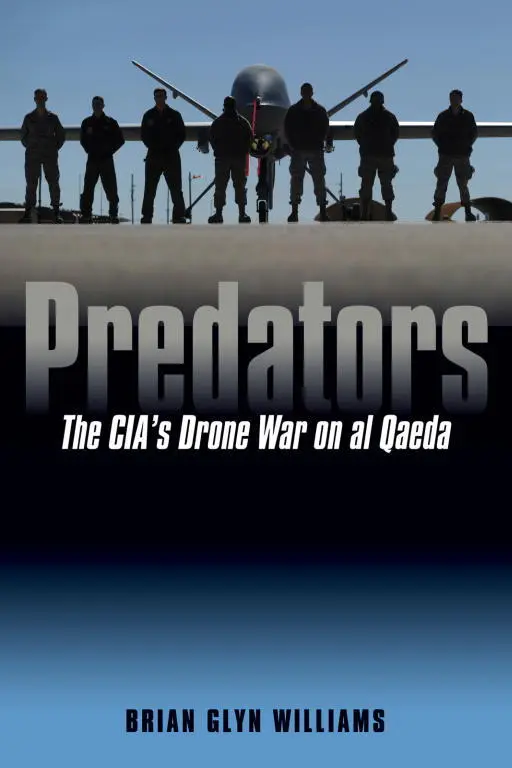
- Название:Predators
- Автор:
- Издательство:Potomac Books
- Жанр:
- Год:2013
- Город:Dulles, Virginia
- ISBN:978-1-61234-617-5
- Рейтинг книги:3 / 5. Голосов: 1
-
Избранное:Добавить в избранное
- Отзывы:
-
Ваша оценка:
Predators: краткое содержание, описание и аннотация
Предлагаем к чтению аннотацию, описание, краткое содержание или предисловие (зависит от того, что написал сам автор книги «Predators»). Если вы не нашли необходимую информацию о книге — напишите в комментариях, мы постараемся отыскать её.
, the cigarette lighter–size homing beacons spies plant on their unsuspecting targets to direct drone missiles to them, the author describes the drone arsenal in full.
Evaluating the ethics of targeted killings and drone technology, Williams covers more than a hundred drone strikes, analyzing the number of slain civilians versus the number of terrorists killed to address the claims of antidrone activists. In examining the future of drone warfare, he reveals that the U.S. military is already building more unmanned than manned aerial vehicles. Predators helps us weigh the pros and cons of the drone program so that we can decide whether it is a vital strategic asset, a “frenemy,” or a little of both.
Predators — читать онлайн бесплатно полную книгу (весь текст) целиком
Ниже представлен текст книги, разбитый по страницам. Система сохранения места последней прочитанной страницы, позволяет с удобством читать онлайн бесплатно книгу «Predators», без необходимости каждый раз заново искать на чём Вы остановились. Поставьте закладку, и сможете в любой момент перейти на страницу, на которой закончили чтение.
Интервал:
Закладка:
The former Taliban minster and his civilian family were not the only ones to die in the attack. At the time they were hosting an important guest named Abu Suleiman “al Jazairi” (the Algerian). Al Jazairi was al Qaeda’s director of external operations and was responsible for running the terrorist group’s European and British operations. 28He was said to have trained British Muslims who traveled to Pakistan to learn how to carry out terrorist operations. 29His death was a remarkable example of how the drones could help preempt future terrorism by killing HVTs who were plotting future attacks from remote hideouts.
A Reaper may well have been involved in the next drone strike, which occurred in the Wana region of South Waziristan on May 16. According to an al Qaeda video that eulogized those killed in the strike, the attack killed a prominent Pakistani jihadi trainer named Dr. Arshad Waheed and twenty other Taliban and al Qaeda militants. 30Once again there were no civilian deaths on this occasion.
The next air strike, in early June, came about in more confusing circumstances and actually involved the death of Pakistani Frontier Constabulary troops. Probably delivered by a piloted U.S. aircraft, the strike took place after Afghan troops were ambushed by Taliban near the Afghan-Pakistani border. Another air strike was called in to support the troops, but it inadvertently hit a nearby Pakistani Constabulary post killing eleven Pakistani paramilitaries. Eight Taliban were killed and eleven wounded in the strike. 31The Pakistanis were understandably furious.
This mishap was not, however, enough to damage the joint U.S.-Pakistani war on al Qaeda and the Taliban, and the drone campaign went on. Several days later a drone struck again, this time in Makeen, South Waziristan, on June 14. Pakistan news reports claimed the strike was an attempt to kill the newly appointed Pakistani Taliban leader Baitullah Mehsud. 32No civilians were reported killed at this time.
The next drone strike took place in the village of Azam Warsak on July 27. Between five and six people, including a notorious al Qaeda weapons of mass destruction expert, Abu Khabab “al Masri” (the Egyptian), were said to have been killed in the attack. 33Abu Khabab was described as al Qaeda’s “mad scientist,” and he had filmed himself killing dogs in a lab using hydrogen cyanide. the same agent used by the Nazis in their gas chambers. 34He was also said to have been involved in making the explosives used in the terrorist bombing of the USS Cole and in the training of Richard Reid, the failed al Qaeda “shoe bomber” (a Brit who tried to set off a shoe bomb on a civilian-packed airliner over the Atlantic in December 2001). 35Khabab, who had a $5 million bounty on his head, was trained to develop chemical and biological weapons to be used in mass-casualty terrorism against the West and was a major threat. 36His death was cause for celebration among the counterterrorism experts trying to protect the United States from mass-casualty, chemical-biological terrorism. 37
The strikes continued on August 13, 2008, with a drone attack on a militant training camp in South Waziristan run by Gulbuddin Hekmatyar, the ex-Afghan mujahideen warlord who was waging a terror campaign in Afghanistan. The strike killed a commander named Abdur Rehman and between nine and twenty-four other militants, including Turks and Arabs, according to Pakistani and U.S. sources. 38
The barrage continued a week later on August 20 with a strike on a house in Wana, South Waziristan, that a Pakistani source described as a “known hideout for militants.” Eight people, including “foreign extremists,” were killed by missiles that a Pakistani official said “came from Afghanistan.” Locals who were interviewed said of the wounded owner of the house, “Arabs often stayed with him.” 39No civilians were reported killed in this strike.
The number of drone strikes may have surged at this time because of the concurrent power vacuum in Pakistan; President Musharraf had been forced to resign on August 18,2008. 40The accelerated pace of strikes may have also come as a result of increased pressure on the White House and CIA from a recently released Government Accountability Office (GAO) report on the FATA region that found, “The United States has not met its national security goals to destroy terrorist threats and close the safe haven in Pakistan’s FATA. According to U.S. officials and intelligence documents, since 2002, al Qaeda and the Taliban have used Pakistan’s FATA and the border region to attack Pakistani, Afghan, as well as U.S. and coalition troops; plan and train for attacks against U.S. interests; destabilize Pakistan; and spread radical Islamist ideologies that threaten U.S. interests.” 41
As the pressure mounted on the CIA, it took advantage of the political vacuum in Pakistan, and according to Dawn , on August 30 it launched an attack on a house that had been rented out to “foreigners” in the Korzai area of South Waziristan. The Pakistani Daily Times reported that five people, including two Arabs with Canadian passports, were killed in the strike and several Punjabis were wounded. 42By this time Waziristan was home to hundreds, if not thousands, of Punjabi militants who had gradually become known as the “Punjabi Taliban.” At their base in Waziristan, the Punjabi Taliban began to train suicide bombers for missions throughout Punjab and the rest of Pakistan.
One aspect of preceding strike accounts deserves attention, namely, the fact that most of the details on the strikes (such as claims that the owner of a targeted house “rented out to foreigners”) came from Pakistani journalists interviewing locals at the scene. Over and over again Pakistani sources described the attacks as drone strikes on houses or compounds with ties to the Taliban and al Qaeda foreigners. Note that these same Pakistani sources did not describe the targets of the strikes as “innocent civilian residences,” even though Pakistani journalists tend to display anti-American attitudes. According to one study carried out by the Pakistani newspaper Dawn , a full 67 percent of Pakistani journalists interviewed in an opinion poll found the drone strikes to be “acts of terrorism.” 43Yet the Pakistani media sources seemed remarkably frank in providing details that would indicate that the targets of the drone strikes were invariably linked directly or indirectly to al Qaeda terrorism or, less often, to Taliban terrorist-insurgency activities.
On the following day, August 31, a drone hit a house near Miram Shah in North Waziristan. Once again Pakistani sources reported that several “foreigners” were killed in the strike, but so were a woman and a child, the third pair of civilian casualties that year. 44By this time the drone strikes had become such an accepted part of the battle rhythm of the FATA zone that they did not cause much of an uproar in Pakistan. In my interviews with Pakistanis in the tribal zones and in parts of Pakistan proper in the summer of 2010, I found that this apathy was a product of two unique circumstances. First, most Pakistanis considered the autonomous FATA region to be removed from the rest of Pakistan proper, like a U.S. territory, such as Samoa, Guam, or Puerto Rico, or the Wild West in the 1800s. Second, U.S. combatants or pilots were not directly involved in the assassinations, which targeted people the locals knew were involved in militancy or terrorism. Because unmanned “robot” planes carried out the strikes, the CIA’s violation of Pakistani sovereignty was somehow more palatable than it would have been had they been carried out by manned bombers, like the Soviet air strikes of the 1980s.
Although the powerful pro-Taliban Islamist parties occasionally criticized the strikes—and even those on the Pakistani secular left who despised the Taliban fundamentalists criticized the strikes as “acts of imperialist aggression”—there were no mass protests like those following the Chenagai and Damadola strikes. Seemingly, by the summer of 2008 the Pakistani leadership had accepted the drone strikes in the FATA as an unfortunate but necessary evil in the state’s new war on the Taliban. If Pakistan wanted billions of dollars in U.S. aid, it had to allow the CIA to kill the common enemy by using its drones. But there would be no U.S. ground forces in the FATA. The hunt would be limited to remote-control planes.
Читать дальшеИнтервал:
Закладка:
Похожие книги на «Predators»
Представляем Вашему вниманию похожие книги на «Predators» списком для выбора. Мы отобрали схожую по названию и смыслу литературу в надежде предоставить читателям больше вариантов отыскать новые, интересные, ещё непрочитанные произведения.












Обсуждение, отзывы о книге «Predators» и просто собственные мнения читателей. Оставьте ваши комментарии, напишите, что Вы думаете о произведении, его смысле или главных героях. Укажите что конкретно понравилось, а что нет, и почему Вы так считаете.