Brian Williams - Predators
Здесь есть возможность читать онлайн «Brian Williams - Predators» весь текст электронной книги совершенно бесплатно (целиком полную версию без сокращений). В некоторых случаях можно слушать аудио, скачать через торрент в формате fb2 и присутствует краткое содержание. Город: Dulles, Virginia, Год выпуска: 2013, ISBN: 2013, Издательство: Potomac Books, Жанр: nonf_military, Публицистика, на английском языке. Описание произведения, (предисловие) а так же отзывы посетителей доступны на портале библиотеки ЛибКат.
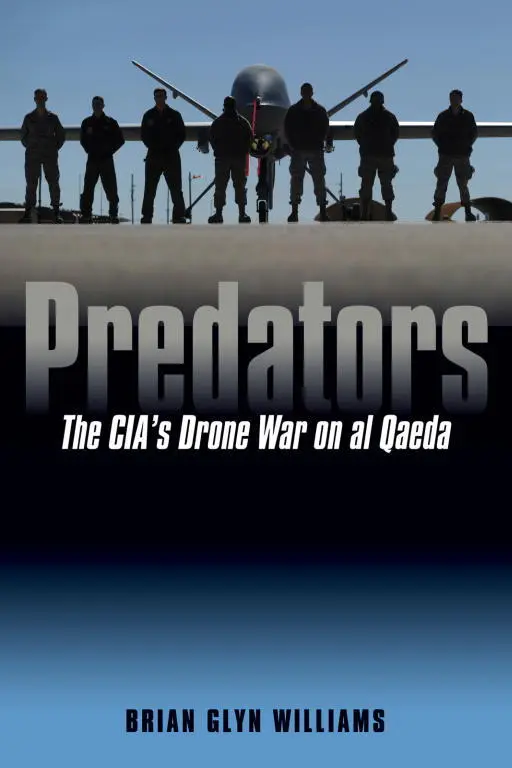
- Название:Predators
- Автор:
- Издательство:Potomac Books
- Жанр:
- Год:2013
- Город:Dulles, Virginia
- ISBN:978-1-61234-617-5
- Рейтинг книги:3 / 5. Голосов: 1
-
Избранное:Добавить в избранное
- Отзывы:
-
Ваша оценка:
Predators: краткое содержание, описание и аннотация
Предлагаем к чтению аннотацию, описание, краткое содержание или предисловие (зависит от того, что написал сам автор книги «Predators»). Если вы не нашли необходимую информацию о книге — напишите в комментариях, мы постараемся отыскать её.
, the cigarette lighter–size homing beacons spies plant on their unsuspecting targets to direct drone missiles to them, the author describes the drone arsenal in full.
Evaluating the ethics of targeted killings and drone technology, Williams covers more than a hundred drone strikes, analyzing the number of slain civilians versus the number of terrorists killed to address the claims of antidrone activists. In examining the future of drone warfare, he reveals that the U.S. military is already building more unmanned than manned aerial vehicles. Predators helps us weigh the pros and cons of the drone program so that we can decide whether it is a vital strategic asset, a “frenemy,” or a little of both.
Predators — читать онлайн бесплатно полную книгу (весь текст) целиком
Ниже представлен текст книги, разбитый по страницам. Система сохранения места последней прочитанной страницы, позволяет с удобством читать онлайн бесплатно книгу «Predators», без необходимости каждый раз заново искать на чём Вы остановились. Поставьте закладку, и сможете в любой момент перейти на страницу, на которой закончили чтение.
Интервал:
Закладка:
Although the Pakistanis did not allow the CIA to use their drones to kill Taliban leaders in Quetta because the city was part of Pakistan proper, they did occasionally move against Afghan Taliban when pushed. This had happened on December 19, 2006, when Pakistani agents informed the Americans that a high-ranking member of the Taliban’s Shura (Inner Council), Mullah Akhtar Usmani, was crossing into Afghanistan. Usmani was said to be in charge of Taliban operations in Afghanistan and was designated as Mullah Omar’s successor should he be killed. 94His location was determined when his telephone communications were intercepted by a drone. The CIA dispatched a Predator to his location, and the drone killed him and two of his deputies with missiles while they were driving in their car. 95
Although ties between the CIA and ISI remained strained as the year 2007 drew to an end, such examples of occasional cooperation boded well for the uneasy Pakistani-American alliance. It became clear that further cooperation would be needed if the CIA was going to expand its drone operations further into the FATA region, which was obviously the agency’s intent. Still, few could have envisioned the upsurge in killings that began in 2008.
6
The Drone War Begins
The political consensus in support of the drone program, its antiseptic, high-tech appeal and its secrecy have obscured just how radical it is. For the first time in history, a civilian intelligence agency is using robots to carry out a military mission, selecting people for killing in a country where the United States is not officially at war.
—Scott Shane, New York Times , December 3, 2009There was nothing to indicate that in 2008 the CIA would transform its limited targeted assassination campaign of just a few strikes per year (between one and five) into a full-blown aerial campaign of thirty-four strikes. In just a few years the CIA had gone from having deep reservations about using drones to becoming, in the words of one agency official, “one hell of a killing machine.” 1But as the campaign stepped up, the growing perception in Pakistan was that the drones seemed to have a unique capacity to kill innocent civilians, not their actual targets, al Qaeda and Taliban militants.
A case-by-case analysis of the strikes sheds some much needed light on the nature of the drones’ targets. Contrary to claims that “99 percent” of those killed in drone attacks are civilians and “1 percent” terrorists, a systematic analysis of the 2008 strikes shows that the vast majority of those killed were terrorists. Over and over again the drones seemed to find their targets with unprecedented accuracy and take them out cleanly.
THE FEDERALLY ADMINISTERED TRIBAL AGENCIES OF PAKISTAN, 2008
The first drone strike of 2008 fit the limited HVT assassination pattern of previous years. It took place in North Waziristan and targeted an Arab, Abu Laith al Libbi, a top al Qaeda leader who directed a February 2007 suicide bombing outside a gate at Bagram Airfield, Afghanistan, that killed twenty-three people, mainly civilians, while Vice President Richard Cheney was visiting. 2Libbi was al Qaeda’s main liaison to Afghan Taliban fighters. In one of his videos he called for Westerners to be kidnapped, and in another he called for an assault on Israel. 3
Fully aware of Libbi’s growing importance to al Qaeda, American forces tried killing him in a rocket attack while he was in Afghanistan’s Paktia Province in 2007, but he survived. 4On January 29, 2008, however, his luck ran out. The notorious Libyan terrorist leader who was said to be al Qaeda’s new number three was tracked down by the CIA and killed alongside twelve Arabs, Taliban fighters, and Central Asian Turkmen militants by a drone near Mir Ali in North Waziristan. 5There were no reported civilian deaths from the strike.
Although jihadist websites around the world hailed the martyrdom of Libbi as a success, his death was perhaps the greatest loss for the terrorists since the drone assassination of the previous al Qaeda number three, Muhammad Atef, in 2001. After his death, local Taliban militants took Libbi away for burial—but only after cordoning off the destroyed compound, a practice they would continue in upcoming strikes.
The second strike of the new year took place on February 28, 2008, near the village of Kaloosha, an area in South Waziristan believed to have significant al Qaeda activity. 6The missiles hit a house belonging to a tribesman with “well-known links to fighters in the area,” according to Al Jazeera. Both Al Jazeera and the Arab newspaper the Gulf News reported that ten of the thirteen victims were Arabs, presumably fighters or terrorists with ties to al Qaeda. 7There were no HVTs involved in the strike, but it was nonetheless against Arabs, which in the FATA context meant al Qaeda terrorists or fighters. Once again the strike was surgically precise, and no civilians were killed.
The third recorded strike of the year took place on March 16, 2008, in the village of Shahnawaz Kot near the town of Wana in South Waziristan. At least eighteen people were killed in this strike on a home belonging to a Noorullah Wazir, who was described by local residents as a Taliban supporter. Local residents claimed that “foreigners linked with Taliban and Al-Qaeda militants” were staying in the targeted compound at the time of the attack (thus far all the attacks in 2008 were on Arabs). 8Although there was no proof that the attack was carried out by a drone, the Washington Post reported the following details based on interviews with local sources: “Local residents said they heard the sound of a warplane overhead, then three successive explosions. The strike, which demolished the house, also left several people wounded. ‘When I heard the explosions, I rushed to the place where it happened. I saw dead bodies scattered everywhere,’ said Aziz Ullah Wazir, a village resident. ‘There were scores of people surrounding the collapsed building.’” 9Drones often attack in waves, which could explain the multiple explosions.
By now very few people in the FATA did not know that American drones were hunting Arabs. The stepped-up pace of CIA drone strikes in the first three months of 2008 (one per month, the fastest pace by far up to this point) had finally also begun to garner considerable attention in the United States. Six days after the March 16 attack, Newsweek revealed that the pace of strikes had accelerated after high-level U.S. officials had reached a new understanding with President Musharraf. CIA director Michael Hayden and Director of National Intelligence Mike McConnell had convinced Musharraf that updated targeting rules were needed because the militants in the FATA were now at war with both the U.S. and Pakistani governments. 10Hayden reportedly told Musharraf, “Mr. President, we’ve seen a merger. You’ve been slow in recognizing this merger between Al Qaeda and Pashtun extremists. Now they’re coming out of the tribal areas not just to kill us, but to kill you. They’re after you now.” 11Convinced that the Pakistani Taliban were now the enemy of Pakistan, Musharraf agreed to expand the parameters of the drone strikes. The new agreement gave the CIA “virtually unrestricted authority to hit targets in the border areas.” 12
In addition, a New York Times article mentioned a “relaxation” of the rules under which the CIA could launch strikes on al Qaeda targets. According to this article, instead of having to confirm the identity of a suspected Taliban or al Qaeda leader before attacking him with a drone, the CIA could strike convoys of vehicles that bore “the characteristics of al Qaeda or Taliban leaders on the run.” 13Further details of this extraordinary development were revealed in a book by New York Times journalist David Sanger. Sanger wrote, “In a process that had taken months, Bush had expanded what Hayden and McConnell called ‘the permissions.’ He simply lowered the standard of proof needed before the Predators could strike. For the first time the CIA no longer had to identify its target by name; now the ‘signature’ of a typical al Qaeda motorcade, or of a group entering a known al Qaeda safe house was enough to authorize a strike.” 14
Читать дальшеИнтервал:
Закладка:
Похожие книги на «Predators»
Представляем Вашему вниманию похожие книги на «Predators» списком для выбора. Мы отобрали схожую по названию и смыслу литературу в надежде предоставить читателям больше вариантов отыскать новые, интересные, ещё непрочитанные произведения.










Обсуждение, отзывы о книге «Predators» и просто собственные мнения читателей. Оставьте ваши комментарии, напишите, что Вы думаете о произведении, его смысле или главных героях. Укажите что конкретно понравилось, а что нет, и почему Вы так считаете.