Brian Williams - Predators
Здесь есть возможность читать онлайн «Brian Williams - Predators» весь текст электронной книги совершенно бесплатно (целиком полную версию без сокращений). В некоторых случаях можно слушать аудио, скачать через торрент в формате fb2 и присутствует краткое содержание. Город: Dulles, Virginia, Год выпуска: 2013, ISBN: 2013, Издательство: Potomac Books, Жанр: nonf_military, Публицистика, на английском языке. Описание произведения, (предисловие) а так же отзывы посетителей доступны на портале библиотеки ЛибКат.
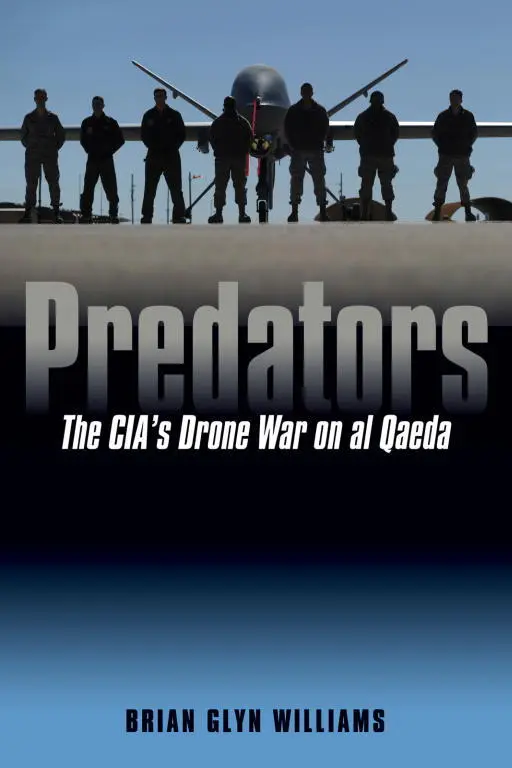
- Название:Predators
- Автор:
- Издательство:Potomac Books
- Жанр:
- Год:2013
- Город:Dulles, Virginia
- ISBN:978-1-61234-617-5
- Рейтинг книги:3 / 5. Голосов: 1
-
Избранное:Добавить в избранное
- Отзывы:
-
Ваша оценка:
Predators: краткое содержание, описание и аннотация
Предлагаем к чтению аннотацию, описание, краткое содержание или предисловие (зависит от того, что написал сам автор книги «Predators»). Если вы не нашли необходимую информацию о книге — напишите в комментариях, мы постараемся отыскать её.
, the cigarette lighter–size homing beacons spies plant on their unsuspecting targets to direct drone missiles to them, the author describes the drone arsenal in full.
Evaluating the ethics of targeted killings and drone technology, Williams covers more than a hundred drone strikes, analyzing the number of slain civilians versus the number of terrorists killed to address the claims of antidrone activists. In examining the future of drone warfare, he reveals that the U.S. military is already building more unmanned than manned aerial vehicles. Predators helps us weigh the pros and cons of the drone program so that we can decide whether it is a vital strategic asset, a “frenemy,” or a little of both.
Predators — читать онлайн бесплатно полную книгу (весь текст) целиком
Ниже представлен текст книги, разбитый по страницам. Система сохранения места последней прочитанной страницы, позволяет с удобством читать онлайн бесплатно книгу «Predators», без необходимости каждый раз заново искать на чём Вы остановились. Поставьте закладку, и сможете в любой момент перейти на страницу, на которой закончили чтение.
Интервал:
Закладка:
This second scenario seems even more plausible in light of writer Jeremy Scahill’s revelations about the existence of a limited U.S. military drone campaign in Pakistan. In a piece for the Nation he described “a secret US military drone bombing campaign that runs parallel to the well-documented CIA predator strikes.” One insider military source speaking of the JSOC drone campaign described it as “a parallel operation to the CIA” and called the CIA and JSOC campaigns “two separate beasts.” 64Another referred to the military campaign as “a separate fleet of U.S. drones operated by the Defense Department [that] will be free for the first time to venture beyond the Afghan border under the direction of Pakistani military officials.” 65
Scahill further reported, “In 2006, the United States and Pakistan struck a deal that authorized JSOC to enter Pakistan to hunt Osama bin Laden with the understanding that Pakistan would deny it had given permission. Officially, the United States is not supposed to have any active military operations in the country.” 66According to one account, JSOC Navy SEAL teams had raided Pakistan as many as twelve times before raids were stopped after the assault on Angoor Ada in September 2008. 67Following this public relations fiasco, there were several instances in which Taliban fighters who had attacked U.S. troops were chased by U.S. airpower into Pakistan and killed. In the most notable of such incidents, fifty Haqqani Network fighters were killed after fleeing into Pakistan. 68
Further evidence of an ultrasecret drone campaign led by Gen. Stanley McChrystal’s JSOC (McChrystal later became head of all NATO forces in Afghanistan) came from Noah Shachtman writing for Wired.com. During a visit to a secret U.S. military base (most likely in Karshi-Khanabad, or K2, Uzbekistan), he reported,
Today, those [cross-border JSOC drone] missions have become a regular occurrence. The U.S. Air Force has a fleet of Predator and heavily armed Reaper drones, stationed at Kandahar and Jalalabad Air Fields in Afghanistan. All of these robotic aircraft are allowed to venture occasionally into Pakistani airspace to pursue militants. The government in Islamabad just has to be notified first. Some of the Predators also fly into Pakistan on operations in conjunction with or in support of Islamabad’s military.
These missions are remotely flown by U.S. Air Force pilots at Creech Air Force Base, Nevada; the footage is shared with the Pakistani government, including at joint coordination centers on the border.
In addition, some of the military’s Predators and Reapers are placed under the operational control of the CIA, which uses them to conduct their own strike and surveillance missions. Some of those drones take off from Jalalabad, others from within Pakistan itself, at a remote base called Shamshi. According to the New York Times , those aircraft are operated out of CIA headquarters in Langley, Virginia…. From what I can tell, these CIA missions comprise the bulk of the drone flights over Pakistan. And the military has, at times, encouraged the notion that operating the unmanned aircraft was the spy agency’s job. 69
Regardless of whether the source of the upswing in drone strikes in September 2008 was the military’s JSOC or the CIA, there were few criticisms from the Pakistani authorities, who were caught up in the election of their new president, Ali Asaf al Zardari. Zardari was the widower of the recently slain presidential candidate Benazir Bhutto, who had been killed by a Baitullah Mehsud Taliban suicide bomber upon her return to Pakistan in 2007. For this reason the Americans hoped Zardari would be a strong ally, and in this expectation they were not disappointed. Zardari seemed to be willing to stand by the Americans and the war on the terrorists who threatened his state, even if it cost him some popularity among his own people. Zardari referred to the Taliban as a “cancerous” threat to Pakistan and told the Americans that he would “take the heat” if the United States launched a cross-border raid to capture an HVT like bin Laden or Zawahiri. 70
On September 30 the CIA took advantage of the new climate of cooperation, and a drone struck again, this time in Mir Ali, North Waziristan. The drone missile struck the house of a “local Taliban commander” and killed six people. 71On the night of October 3–4 a drone struck yet again. A senior Pakistani military official said of the attack, “Our reports suggest that around 20 suspected militants were killed when a missile hit a house in Mohammad Khel village in North Waziristan. Most were foreigners.” 72There were no recorded civilian deaths on this occasion.
On October 9 a house east of Miranshah, North Waziristan, whose owner was hosting foreigners, was hit by a drone. At least six people, including three Arabs, were killed in the attack. 73Three days later a drone struck again in Miranshah, killing five people, but there were no reports on the victims’ identities. 74Just four days later, on October 16, a drone struck in the village of Taparghai, South Waziristan. This strike killed four people, “some of them Arabs,” including Khalid Habib, the number four in al Qaeda and head of their operations in the Pakistani tribal regions. 75Habib and the other Arabs were killed in their Toyota station wagon in one of the first recorded hits on a vehicle in Pakistan.
On the night of October 22–23 a drone struck again, this time against the Haqqani Network in a village just outside Miranshah, North Waziristan. Locals reported, “One missile hit a room in the compound where the militants were sleeping.” 76Three days later a drone struck a “facility/alleged militant compound” in a village near Wana, South Waziristan. 77Twenty people were killed in this strike, among them Mohammad Omar, a Taliban commander who had been close to Nek Muhammad. 78Interestingly enough, the drone missile completely destroyed Omar’s compound but only “damaged” two neighboring houses.
Five days later, on October 31, a drone struck again in Wana, killing six foreigners and a local tribesman who was hosting them. 79That same day a drone also struck in neighboring North Waziristan, killing a prominent al Qaeda leader named Abu Jihad al Masri and two other “rebels” who were traveling in a car with him. Masri was an Egyptian and a high-ranking propaganda expert who appeared in a video with Ayman al Zawahiri. 80There were no civilian bystander casualties in this strike.
Shortly after these strikes, on November 4, the Americans chose a new president, Barack Obama. But this did not slow down the pace of the kills in Bush’s final months in office. On November 7 a drone attacked an al Qaeda training camp located near the Afghan border in the village of Kumsham, North Waziristan. According to a Pakistani source, “Between 11 and 14 militants, mainly foreigners, were killed in the strike.” 81Among those killed were seven al Qaeda operatives and one Taliban commander. Once again there were no reports of civilian casualties in the attack.
On November 14 a drone attacked again, this time in the village of Garyom near Miranshah, North Waziristan, an area described as a “hotbed of Al Qaeda and Taliban support.” 82In this strike twelve people, including “nine foreign militants, believed to be Al Qaeda fighters,” the homeowner, and two of his family members, were also killed. 83The message for other Pashtuns who might have been tempted to host foreign al Qaeda fighters in their houses was clear: You run the risk of having your home and family destroyed if you provide sanctuary to foreign terrorists-militants.
At this time President Zardari, who was visiting New York, publicly claimed that the drone strikes were “counter-productive and violated Pakistan’s sovereignty.” 84This pro forma statement was obviously meant to garner support among his own people, who strongly disliked the idea of a foreign power operating with impunity on their own soil, killing what many believed were almost exclusively innocent Pakistani citizens. The Pakistani people wanted their leaders to publicly stand up to the American “invaders.” But secretly Zardari was said to have told the Americans, “Kill the seniors. Collateral damage worries you Americans. It does not worry me.” 85He also said, “There are no differences between Pakistan and the US over any issue, including drone attacks.” 86He even made a plea for the United States to give his country access to the drones. He told a U.S. delegation, “Give me the drones so my forces can take out the militants.” That way, “we cannot be criticized by the media or anyone else for actions our Army takes to protect our sovereignty.” 87
Читать дальшеИнтервал:
Закладка:
Похожие книги на «Predators»
Представляем Вашему вниманию похожие книги на «Predators» списком для выбора. Мы отобрали схожую по названию и смыслу литературу в надежде предоставить читателям больше вариантов отыскать новые, интересные, ещё непрочитанные произведения.











Обсуждение, отзывы о книге «Predators» и просто собственные мнения читателей. Оставьте ваши комментарии, напишите, что Вы думаете о произведении, его смысле или главных героях. Укажите что конкретно понравилось, а что нет, и почему Вы так считаете.