Robert Wittman - Priceless
Здесь есть возможность читать онлайн «Robert Wittman - Priceless» весь текст электронной книги совершенно бесплатно (целиком полную версию без сокращений). В некоторых случаях можно слушать аудио, скачать через торрент в формате fb2 и присутствует краткое содержание. Город: New York, Год выпуска: 2010, ISBN: 2010, Издательство: Crown Publishers, Жанр: Биографии и Мемуары, на английском языке. Описание произведения, (предисловие) а так же отзывы посетителей доступны на портале библиотеки ЛибКат.
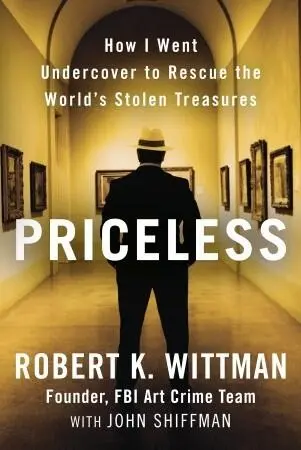
- Название:Priceless
- Автор:
- Издательство:Crown Publishers
- Жанр:
- Год:2010
- Город:New York
- ISBN:978-0-307-46149-0
- Рейтинг книги:3 / 5. Голосов: 1
-
Избранное:Добавить в избранное
- Отзывы:
-
Ваша оценка:
Priceless: краткое содержание, описание и аннотация
Предлагаем к чтению аннотацию, описание, краткое содержание или предисловие (зависит от того, что написал сам автор книги «Priceless»). Если вы не нашли необходимую информацию о книге — напишите в комментариях, мы постараемся отыскать её.
The London Times
In
Robert K. Wittman, the founder of the FBI’s Art Crime Team, pulls back the curtain on his remarkable career for the first time, offering a real-life international thriller to rival
.
Rising from humble roots as the son of an antique dealer, Wittman built a twenty-year career that was nothing short of extraordinary. He went undercover, usually unarmed, to catch art thieves, scammers, and black market traders in Paris and Philadelphia, Rio and Santa Fe, Miami and Madrid.
In this page-turning memoir, Wittman fascinates with the stories behind his recoveries of priceless art and antiquities: The golden armor of an ancient Peruvian warrior king. The Rodin sculpture that inspired the Impressionist movement. The headdress Geronimo wore at his final Pow-Wow. The rare Civil War battle flag carried into battle by one of the nation’s first African-American regiments.
The breadth of Wittman’s exploits is unmatched: He traveled the world to rescue paintings by Rockwell and Rembrandt, Pissarro, Monet and Picasso, often working undercover overseas at the whim of foreign governments. Closer to home, he recovered an original copy of the Bill of Rights and cracked the scam that rocked the PBS series By the FBI’s accounting, Wittman saved hundreds of millions of dollars worth of art and antiquities. He says the statistic isn’t important. After all, who’s to say what is worth more—a Rembrandt self-portrait or an American flag carried into battle? They're both priceless.
The art thieves and scammers Wittman caught run the gamut from rich to poor, smart to foolish, organized criminals to desperate loners. The smuggler who brought him a looted 6th-century treasure turned out to be a high-ranking diplomat. The appraiser who stole countless heirlooms from war heroes’ descendants was a slick, aristocratic con man. The museum janitor who made off with locks of George Washington's hair just wanted to make a few extra bucks, figuring no one would miss what he’d filched.
In his final case, Wittman called on every bit of knowledge and experience in his arsenal to take on his greatest challenge: working undercover to track the vicious criminals behind what might be the most audacious art theft of all.
Priceless — читать онлайн бесплатно полную книгу (весь текст) целиком
Ниже представлен текст книги, разбитый по страницам. Система сохранения места последней прочитанной страницы, позволяет с удобством читать онлайн бесплатно книгу «Priceless», без необходимости каждый раз заново искать на чём Вы остановились. Поставьте закладку, и сможете в любой момент перейти на страницу, на которой закончили чтение.
Интервал:
Закладка:
We met in the late afternoon at Laurenz’s favorite haunt, a Thai-Japanese joint just off the 79th Street Causeway. Laurenz and Sunny were already there, phones on the table, batteries out.
I sat down and removed my phone battery. “ Ça va? Good to see you, Sunny.”
“ Ça va , Bob.”
I slapped Laurenz on the back and gave him a big wink. “Nice work, buddy. We’re going to celebrate tonight, right?”
Laurenz beamed. “Absolutely. Already doing it.” He pointed to the bowl of green tea ice cream, topped with whipped cream, Laurenz’s idea of a celebration. He held up a glass of water in toast. “To the next deal!”
I said, “Amen, mon ami.”
Sunny cocked his head, confused—reacting just as we had hoped. The “deal” we were celebrating was a complete fabrication, one that Laurenz and I concocted the night before. It was part of our play, designed to impress Sunny.
Laurenz leaned close to Sunny and whispered rapidly in French. He explained that he and I had just completed an $8 million deal for a stolen Raphael. We’d each cleared $500,000, he said. Laurenz was a pretty good liar. Sunny nodded, duly impressed.
The fake deal was all part of an expanding wilderness of mirrors: I was playing Laurenz, and Laurenz thought that he and I were playing Sunny. I’m sure Laurenz had his own angles thought out. And Sunny? Who knew what really went through his mind?
Laurenz and I continued to banter about the fake Raphael deal until Sunny finally broke in, taking the bait. “All right,” Sunny said. “The paintings in Europe—we are ready. It can only be the three of us. We must work together to not get caught.”
“Of course,” I said.
“Yes, yes,” Laurenz said impatiently.
“Just the three of us,” Sunny repeated. “We’ll go to the south of France and…” He launched into a convoluted scenario for the exchange, one that included a series of rotating hotel rooms—the money in one room, the paintings in another, a human life as collateral in a third. With Sunny’s accent, I couldn’t understand every word, but it didn’t matter. We could clarify everything later. I just wanted to get things moving.
Sunny was quite clear on one point. “When you see the paintings, you will know that they are real. But once you see them, you must buy them. So let me say again that you must be serious about having the money. You see the paintings, you must buy them.”
“I want to buy them,” I said. “Vermeer and Rembrandt?”
“Yes, yes, we have,” Sunny said. “The important point is not the money or the painting, but that we are all happy, all safe. Nobody wants trouble. Very important, from here on out, nobody gets involved in this except us.”
Sunny grabbed a napkin and took out a pen.
“Now,” he said, and he drew a triangle and scribbled a letter in each corner— S, L , and B . “This is Sunny, this is Laurenz, this is Bob. We are in this together. We cannot let anyone else in the triangle. This is all it can be, ever. This way, if anything goes wrong, we’ll know it’s one of us who betrayed.”
Chapter 22
ALLIES AND ENEMIES
Paris. October 2006 .
THE TROUBLE BEGAN A WEEK LATER, JUST MINUTES into our first formal Gardner case meeting with the French police.
An FBI supervisor from Boston—I will call him Fred—began with an impolitic demand. “Since we’ll be going along on the surveillances, we’re going to need to be armed.”
Fred spoke louder than necessary, clumsily enunciating every syllable. Just to be sure the French understood, he cocked his thumb and index finger in the shape of a gun. “So we need to take care of that, right off the bat.”
Fred liked to be in charge and because of the FBI’s sacrosanct protocols he was considered the lead supervisor on the Gardner case—back in 1990, the heist had been assigned to the Boston FBI’s bank robbery/violent crime squad, and Fred now led that unit. He’d been an FBI agent for seventeen years, but his expertise was SWAT and chasing bank robbers, not investigating art crime or running international undercover investigations. This was his first trip to a foreign country. It didn’t seem to occur to him that we were guests on someone else’s turf.
“We’re here to get our paintings back,” Fred said severely, as if puffing up his resolve would help get the job done. “The people who have our paintings will be armed. So will we.”
It was such an outrageous thing to say that everyone else in the room—the six French police officials, six other FBI agents, and an American prosecutor—simply ignored it. Fred had been watching too many movies. As I knew from my experiences in Brazil, Denmark, Spain, and other nations, most countries don’t allow foreign police officers to carry weapons.
One of the FBI agents stationed at the embassy politely cut Fred off, directing the conversation back to the matter at hand, our joint American-French sting operation.
This first major meeting raised the stakes on both sides. The French police had gotten into the spirit and hosted the meeting at the new Musée du Quai Branly, which showcased artifacts crafted by the indigenous peoples of Asia, Australia, the Americas, Africa, and the Polynesian region. It was one of the most interesting and confounding museums I’d ever visited—designed with a jungle theme, a thicket of trees and grass on the outside, dark passageways and dimly lit displays on the inside. It was easy to lose one’s bearings.
The Gendarmerie lieutenant colonel chairing the meeting was Pierre Tabel, the chief of the national art crime squad. Andre, the undercover French police officer who’d provided me the initial tip, had spoken highly of Pierre, describing him as a rising star in the Gendarmerie, savvy with keen political instincts, a future general. The art crime job Pierre held was a sensitive one because the unit often became involved in international cases and investigations in which the victim was a celebrity, wealthy, or politically connected. Pierre understood that these cases sometimes called for discretion, or off-the-book methods in which the supervising magistrates agreed to look the other way.
Pierre and I had been talking shop over the phone since September, and I liked him. We’d built a tight working relationship, one I felt would be crucial to our success. I could immediately tell he was a good supervisor—someone who encouraged his people to get things done, without micromanaging or throwing up bureaucratic barriers. He understood that art crime cases could not be handled like other undercover cases, and we agreed that the goal here was to rescue the Boston paintings, not necessarily to arrest anyone in France. Besides, he explained to me, the maximum penalty in France for property theft of any kind was a mere three years in prison.
When I had arrived at Charles de Gaulle Airport from Philadelphia the previous day, Pierre had picked me up, a gesture both courteous and shrewd. He intercepted me before I could speak with anyone else, including my FBI colleagues at the U.S embassy, and on the ride into the city we talked over the case. Based on my undercover work in the United States and Pierre’s phone tap and surveillance successes in France, we had agreed that Sunny and Laurenz would probably arrange for the sale of the Gardner paintings somewhere in France.
Pierre had cautioned that he would not be able to control every facet of operations in France. In a case with the potential for such huge headlines, he said, many supervisors from many agencies will want to play a role, claim credit, stand at the podium at the press conference, get their picture taken. “Everyone will want a piece of the cake,” Pierre liked to say. Pierre warned me that the SIAT undercover chief would probably now demand a major role. Because the undercover laws in France were so new, the SIAT chief often acted cautiously, and this sometimes placed him at odds with Pierre’s more adventurous art crime team. I warned Pierre about the FBI’s pecking order and protocols, and we agreed that turf wars and intra-agency rivalries on both sides of the Atlantic were going to complicate things.
Читать дальшеИнтервал:
Закладка:
Похожие книги на «Priceless»
Представляем Вашему вниманию похожие книги на «Priceless» списком для выбора. Мы отобрали схожую по названию и смыслу литературу в надежде предоставить читателям больше вариантов отыскать новые, интересные, ещё непрочитанные произведения.










Обсуждение, отзывы о книге «Priceless» и просто собственные мнения читателей. Оставьте ваши комментарии, напишите, что Вы думаете о произведении, его смысле или главных героях. Укажите что конкретно понравилось, а что нет, и почему Вы так считаете.