Robert Wittman - Priceless
Здесь есть возможность читать онлайн «Robert Wittman - Priceless» весь текст электронной книги совершенно бесплатно (целиком полную версию без сокращений). В некоторых случаях можно слушать аудио, скачать через торрент в формате fb2 и присутствует краткое содержание. Город: New York, Год выпуска: 2010, ISBN: 2010, Издательство: Crown Publishers, Жанр: Биографии и Мемуары, на английском языке. Описание произведения, (предисловие) а так же отзывы посетителей доступны на портале библиотеки ЛибКат.
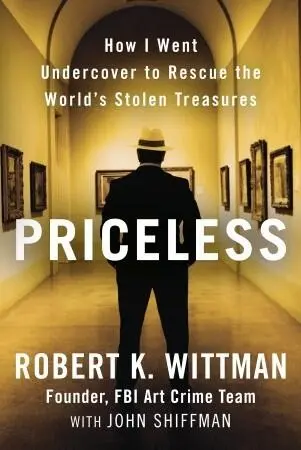
- Название:Priceless
- Автор:
- Издательство:Crown Publishers
- Жанр:
- Год:2010
- Город:New York
- ISBN:978-0-307-46149-0
- Рейтинг книги:3 / 5. Голосов: 1
-
Избранное:Добавить в избранное
- Отзывы:
-
Ваша оценка:
Priceless: краткое содержание, описание и аннотация
Предлагаем к чтению аннотацию, описание, краткое содержание или предисловие (зависит от того, что написал сам автор книги «Priceless»). Если вы не нашли необходимую информацию о книге — напишите в комментариях, мы постараемся отыскать её.
The London Times
In
Robert K. Wittman, the founder of the FBI’s Art Crime Team, pulls back the curtain on his remarkable career for the first time, offering a real-life international thriller to rival
.
Rising from humble roots as the son of an antique dealer, Wittman built a twenty-year career that was nothing short of extraordinary. He went undercover, usually unarmed, to catch art thieves, scammers, and black market traders in Paris and Philadelphia, Rio and Santa Fe, Miami and Madrid.
In this page-turning memoir, Wittman fascinates with the stories behind his recoveries of priceless art and antiquities: The golden armor of an ancient Peruvian warrior king. The Rodin sculpture that inspired the Impressionist movement. The headdress Geronimo wore at his final Pow-Wow. The rare Civil War battle flag carried into battle by one of the nation’s first African-American regiments.
The breadth of Wittman’s exploits is unmatched: He traveled the world to rescue paintings by Rockwell and Rembrandt, Pissarro, Monet and Picasso, often working undercover overseas at the whim of foreign governments. Closer to home, he recovered an original copy of the Bill of Rights and cracked the scam that rocked the PBS series By the FBI’s accounting, Wittman saved hundreds of millions of dollars worth of art and antiquities. He says the statistic isn’t important. After all, who’s to say what is worth more—a Rembrandt self-portrait or an American flag carried into battle? They're both priceless.
The art thieves and scammers Wittman caught run the gamut from rich to poor, smart to foolish, organized criminals to desperate loners. The smuggler who brought him a looted 6th-century treasure turned out to be a high-ranking diplomat. The appraiser who stole countless heirlooms from war heroes’ descendants was a slick, aristocratic con man. The museum janitor who made off with locks of George Washington's hair just wanted to make a few extra bucks, figuring no one would miss what he’d filched.
In his final case, Wittman called on every bit of knowledge and experience in his arsenal to take on his greatest challenge: working undercover to track the vicious criminals behind what might be the most audacious art theft of all.
Priceless — читать онлайн бесплатно полную книгу (весь текст) целиком
Ниже представлен текст книги, разбитый по страницам. Система сохранения места последней прочитанной страницы, позволяет с удобством читать онлайн бесплатно книгу «Priceless», без необходимости каждый раз заново искать на чём Вы остановились. Поставьте закладку, и сможете в любой момент перейти на страницу, на которой закончили чтение.
Интервал:
Закладка:
“The FBI agents in Boston are experts in art crime?”
“No. Bank robbery. SWAT, that kind of thing.”
Andre cocked his head, confused.
“That’s the FBI, my friend,” I said. I didn’t want to go into too much detail because Andre still seemed to be sizing me up, deciding how much to tell me about the Florida tip. So I did not explain that despite my expertise, Eric Ives’s enthusiasm from headquarters, and the Art Crime Team’s worldwide successes, the Gardner case would almost certainly remain under the control of the Boston office. I would work for them. In theory, Headquarters could overrule a field supervisor or wrest a case away from a field office. But in reality, that rarely happened. It would be viewed as an insult to the field office supervisor and create a blot on his record, a slight he and his friends would never forget. The FBI is a giant bureaucracy—middle-management supervisors are rotated to new jobs every three to five years, between the field offices and Washington. This dynamic makes supervisors at Headquarters reluctant to make waves. The supervisor you cross today may become your boss tomorrow.
“But don’t worry about it,” I said. “I’ve been doing this a long time and never had a problem with that sort of thing. I just do my cases.”
We kept walking, crossing another busy boulevard.
The Frenchman said, “You know, Bob, you must be subtle in art crime. It is important to use discreet methods, sometimes methods that are not illegal but not by the book. Our chief understands that in some situations you have to be subtle.”
I nodded.
The French cop stopped on the sidewalk and looked me in the eye. “These are dangerous people, the guys who have your paintings. Corsicans. I’m going to put you in touch with someone in Florida.” Andre said his French contact in Florida did not know he was a cop, and that he had discreetly used the man’s information in the past. “All very quietly, you understand?”
“Of course.”
“I will give him your number in the U.S. What name will you use when he calls?”
“Bob Clay, art broker from Philadelphia.”
“Good.”
I said, “Let me ask you—just so I’m clear, the paintings for sale are…?
“ Oui , a Vermeer and a Rembrandt.”
“A Vermeer, huh?”
“ Oui,” he said, and walked off.
ANDRE RANG MY cell phone a short while later.
“Now,” he said. “I’ve told this guy you deal in fine art, big, multimillion-dollar deals. You’re based in Philadelphia and we’ve done business, made a lot of money.”
It was the vouch.
“Excellent,” I said, “I appreciate it. So, he’ll call me?”
“ Oui,” he said. “This guy, his name is Laurenz Cogniat.”
“You know him well?”
“Laurenz? He is a fugitive. An accountant for many years in Paris. Worked with organized crime. Money laundering. Very smart, very rich. Moved to Florida. Big house, big car, Rolls-Royce. Knows many people still, here in France, Spain, Corsica.”
“Can I trust him?”
The Frenchman laughed. “He is a criminal.”
“If he says he can get the Vermeer—”
“Let me tell you something about Laurenz,” the cop said. “I do not think he will lie to you about this. Laurenz is not a con man. He is an opportunist. He views himself as a businessman, a man who makes deals in the space between the black and the white. You understand?”
“Sure.”
“But this man Laurenz can be trouble if you try to control him too much,” Andre said. “Be patient. He will take you in many directions, but I think he will lead you to what you want.”
Chapter 21
LAURENZ AND SUNNY
Miami. June 19, 2006 .
LAURENZ DID NOT DISAPPOINT.
Two weeks after we began speaking by phone, I flew to Miami to meet him. He took me for a ride in his Rolls, an FBI surveillance team in slow pursuit.
Laurenz wore a salmon Burberry dress shirt with a cursive LC monogram on his breast, blue jeans, brown sandals; and a gold Rolex Cosmograph Daytona. He was forty-one years old, trim, with short-cropped curly brown hair.
“Nice car. New?” I asked because I knew the answer—I’d checked his motor vehicle records—and was curious if he’d tell the truth.
Laurenz answered honestly. “A year old. I get a new one every eighteen months. I don’t like to drive a car with more than twenty thousand miles on it. Not good for the image.”
I admired the cherrywood console, running a finger across the frosted silver lettering, PHANTOM. I said what he wanted to hear. “Very nice.”
Laurenz nodded. “If it’s good enough for the Queen…”
I laughed, and realized I couldn’t tell if he was joking.
“Her Majesty drives one just like this,” Laurenz added. He spoke English fluently, but with such a thick accent that it sometimes took an extra moment for what he said to register. “If you’ve never driven this car, you will never understand how smooth it is. You hear nothing outside. You speed up to seventy and you feel nothing. You go to one-ten and you feel like you are driving seventy. Everything is top of the line. The sunroof, the steering, the brakes. There are two DVD players in backseat. For many years, this was an old car for old people. But the new ones are magnificent. I have a guy who comes every month to do the leather. And a boy who washes the car every two weeks.”
He rapped the window with his knuckles. “Bulletproof glass. Custom armor-plated exterior. Four hundred and fifty thousand dollars.”
“Impressive.”
He sniffed. “That’s the point.”
Laurenz steered the Rolls onto the Dolphin Expressway, headed west toward the airport. An irritating pop song played on the radio—all synthesizer and falsetto. Laurenz cranked it up. “Good sound, huh?”
I studied Laurenz and wished I’d been carrying a recorder. What my handling agents and supervisors would make of such banter! Two weeks into the Gardner case and the FBI agents involved were already falling into two camps—those who believed Laurenz might be able to deliver the stolen Boston paintings and those who were skeptical. I fell squarely in the middle, not yet ready to pass judgment, still working him. With undercover cases, especially art crime, you never know until you vet it out. Was Laurenz a fool? A con artist? The real deal? We wouldn’t know until I sized him up.
Clearly, Laurenz liked to talk about himself and I didn’t mind listening. It was an easy way to ingratiate myself with him, and so far, I hadn’t caught him in a lie. His claim that he was worth $140 million was impossible to verify because his holdings were scattered across Florida, Colorado, and Europe in a variety of names and corporations, and Laurenz seemed to spell his first and last names a variety of ways, probably on purpose. But our most basic checks of public records showed that he was worth millions, if not tens of millions, of dollars, at least on paper. What really mattered was that the French police confirmed Laurenz’s connections to the Western European underworld, particularly gangs that dealt in stolen art.
Laurenz and I didn’t directly discuss my background on the phone. With the vouch from his friend in Paris—the undercover cop—it wasn’t necessary to talk about such things on an open line. After a few calls, Laurenz had asked me to fly down to meet him. He said he had a friend arriving from France, someone I should meet.
At Miami International Airport, Laurenz pulled the Rolls into the short-term parking and we walked toward the international arrivals terminal. We had forty-five minutes to kill and Laurenz bought two bottles of Fiji water.
I took a sip. “Looks like you’ve done all right for yourself. How long have you been in Florida?”
Читать дальшеИнтервал:
Закладка:
Похожие книги на «Priceless»
Представляем Вашему вниманию похожие книги на «Priceless» списком для выбора. Мы отобрали схожую по названию и смыслу литературу в надежде предоставить читателям больше вариантов отыскать новые, интересные, ещё непрочитанные произведения.











Обсуждение, отзывы о книге «Priceless» и просто собственные мнения читателей. Оставьте ваши комментарии, напишите, что Вы думаете о произведении, его смысле или главных героях. Укажите что конкретно понравилось, а что нет, и почему Вы так считаете.