Robert Wittman - Priceless
Здесь есть возможность читать онлайн «Robert Wittman - Priceless» весь текст электронной книги совершенно бесплатно (целиком полную версию без сокращений). В некоторых случаях можно слушать аудио, скачать через торрент в формате fb2 и присутствует краткое содержание. Город: New York, Год выпуска: 2010, ISBN: 2010, Издательство: Crown Publishers, Жанр: Биографии и Мемуары, на английском языке. Описание произведения, (предисловие) а так же отзывы посетителей доступны на портале библиотеки ЛибКат.
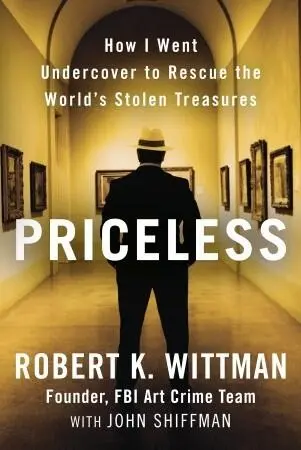
- Название:Priceless
- Автор:
- Издательство:Crown Publishers
- Жанр:
- Год:2010
- Город:New York
- ISBN:978-0-307-46149-0
- Рейтинг книги:3 / 5. Голосов: 1
-
Избранное:Добавить в избранное
- Отзывы:
-
Ваша оценка:
Priceless: краткое содержание, описание и аннотация
Предлагаем к чтению аннотацию, описание, краткое содержание или предисловие (зависит от того, что написал сам автор книги «Priceless»). Если вы не нашли необходимую информацию о книге — напишите в комментариях, мы постараемся отыскать её.
The London Times
In
Robert K. Wittman, the founder of the FBI’s Art Crime Team, pulls back the curtain on his remarkable career for the first time, offering a real-life international thriller to rival
.
Rising from humble roots as the son of an antique dealer, Wittman built a twenty-year career that was nothing short of extraordinary. He went undercover, usually unarmed, to catch art thieves, scammers, and black market traders in Paris and Philadelphia, Rio and Santa Fe, Miami and Madrid.
In this page-turning memoir, Wittman fascinates with the stories behind his recoveries of priceless art and antiquities: The golden armor of an ancient Peruvian warrior king. The Rodin sculpture that inspired the Impressionist movement. The headdress Geronimo wore at his final Pow-Wow. The rare Civil War battle flag carried into battle by one of the nation’s first African-American regiments.
The breadth of Wittman’s exploits is unmatched: He traveled the world to rescue paintings by Rockwell and Rembrandt, Pissarro, Monet and Picasso, often working undercover overseas at the whim of foreign governments. Closer to home, he recovered an original copy of the Bill of Rights and cracked the scam that rocked the PBS series By the FBI’s accounting, Wittman saved hundreds of millions of dollars worth of art and antiquities. He says the statistic isn’t important. After all, who’s to say what is worth more—a Rembrandt self-portrait or an American flag carried into battle? They're both priceless.
The art thieves and scammers Wittman caught run the gamut from rich to poor, smart to foolish, organized criminals to desperate loners. The smuggler who brought him a looted 6th-century treasure turned out to be a high-ranking diplomat. The appraiser who stole countless heirlooms from war heroes’ descendants was a slick, aristocratic con man. The museum janitor who made off with locks of George Washington's hair just wanted to make a few extra bucks, figuring no one would miss what he’d filched.
In his final case, Wittman called on every bit of knowledge and experience in his arsenal to take on his greatest challenge: working undercover to track the vicious criminals behind what might be the most audacious art theft of all.
Priceless — читать онлайн бесплатно полную книгу (весь текст) целиком
Ниже представлен текст книги, разбитый по страницам. Система сохранения места последней прочитанной страницы, позволяет с удобством читать онлайн бесплатно книгу «Priceless», без необходимости каждый раз заново искать на чём Вы остановились. Поставьте закладку, и сможете в любой момент перейти на страницу, на которой закончили чтение.
Интервал:
Закладка:
Almost every new twist and detail from the Gardner investigation made the papers and the eleven o’clock news—from the dead, indicted, and fugitive mobsters to the false sightings in Japan. The Herald reporter recounted his story for a national audience in Vanity Fair and inked an option for a movie deal. Harold Smith, a respected private art detective, was featured in a well-received documentary film about the heist.
Even the normally tight-lipped FBI joined the fray, feeding the hype. For a story marking the anniversary of the crime in the mid-1990s, the lead FBI agent in Boston gave an on-the-record interview—highly unusual for a street agent working an active case. He told the New York Times , “I can’t imagine a whodunit as nightmarish as this, considering the pool of potential suspects. It’s mind-boggling.”
Mind-boggling, perhaps. Frustrating, for sure.
And then, in 2006, sixteen years after the crime, after all the false leads and con games, the FBI received a credible lead.
That tip landed on my desk.
Chapter 20
A FRENCH CONNECTION
Paris, June 1, 2006 .
A LITTLE OVER A CENTURY AFTER GARDNER WON THE Concert at auction in Paris, I traveled there to give a lecture. And to follow up on the hot tip.
Each year, the men and women who supervise the world’s undercover law-enforcement operatives convene in a major capital. The conference goes by a secret name as bland as Universal Exports.
The agenda includes lectures on crime trends, updates on important international legal developments and treaties, and presentations on successful operations—war stories told by undercover agents on famous cases. In the spring of 2006, the group invited me to give a lecture on the Rembrandt sting in Copenhagen. I flew to Paris with an old Philadelphia colleague, Daniel DeSimone, the FBI’s unit chief for Undercover and Sensitive Operations. We looked forward to meeting and socializing with our counterparts, making the kind of personal connections that can be invaluable during international investigations. The undercover group planned a Seine dinner cruise and a behind-the-scenes tour of the Paris Opera, the venue immortalized by Renoir.
During one of the luncheons, I introduced myself to DeSimone’s counterpart in Paris, the chief of the French undercover unit called SIAT. The SIAT chief was busy hosting the conference, shaking lots of hands, making small talk, but when we met, he arched an eyebrow.
He put down his glass of red wine. “You’ve of course heard what we heard about these paintings?”
We spoke in vague, veiled terms. There were a lot of people around. But I knew he was referring to the tip that the French had just passed to the FBI: Two Frenchmen living in Miami appeared to be trying to broker the sale of two stolen masterpieces. One was a Rembrandt, the other a Vermeer. The world was missing only one Vermeer—the one from Boston.
“You should meet the officer who received the tip.”
“I’d like that.”
“Good. He works for another department, but I will find you his mobile number.”
I MET THE SIAT contact at the tourist entrance to the Louvre, outside the large glass pyramid.
We spied each other easily in the thick crowd of tourists in T-shirts and shorts—we were the only ones wearing suits. He was a grizzled Police Nationale officer who worked the busy undercover art crime beat in Paris. He was heavyset with a leathered face and narrow blue eyes, and introduced himself as Andre. We shook hands and laughed at ourselves: two hotshot undercover art sleuths meeting in coat and tie at France’s best-known museum! Andre and I strolled away from the mob in the warm sun, tossing back and forth the names of cops and museum chiefs we both knew.
Three minutes later, we were turning right on the cobblestones, following the sidewalk through one of the great arches and out of the palace complex. We crossed Rue de Rivoli and its cheap souvenir shops, moving north up Rue de Richelieu. I was eager to dive in, start peppering him with questions about the Gardner tip. But this was his town, his tip. I let him lead.
After two blocks, the crowds thinned. We kept walking, and Andre said, “You know in France, we have two different national police departments, the Police Nationale and the Gendarmerie Nationale?”
I did, but treaded carefully, having heard about the rivalries. “Kind of a complicated arrangement, huh?”
“ Oui . There are important differences and it is important for you to understand.” Andre laid it out for me: The Gendarmerie, created during medieval times, is an arm of the Defense Ministry. [1] This changed in August 2009, long after this case ended.
Their officers carry themselves with military bearing and discipline, and are deployed mostly in rural regions and the ports, but by tradition the gendarmes also keep a strong presence in Paris. The Police Nationale, created in the 1940s, is an arm of the French Interior Ministry. The force focuses mostly on urban crime. Andre worked for the Police Nationale.
“Sometimes the Police Nationale and Gendarmerie investigate the same case, compete, and this gives us headaches,” he said.
There was one other important nuance I needed to know, Andre said. “You must understand SIAT.”
SIAT was a division of the Police Nationale created in 2004, the same year the French repealed a decades-long ban on the use of evidence obtained by undercover officers. During the ban, France had used undercover officers sparingly, but in an informal, no-paperwork-involved manner, often with a wink and nod from the local magistrate. Back then, each unit in the Gendarmerie and Police Nationale had used their own people to go undercover. When the law changed and the SIAT was created, many undercover officers had transferred to the new unit. But some veterans, like Andre, had stayed where they were. They found the rule-heavy SIAT culture and configuration too bureaucratic and turf-conscious to be effective. Andre was warning me that SIAT would insist on running the show if this case involved any undercover operations inside France.
“Who runs the art crime team?” I asked.
“Complicated also: It is under the jurisdiction of the Police Nationale, but for political reasons the chief is always a Gendarme.”
“How’s the chief?”
“This one we have now is very good, very smart,” Andre said. “He would rather return an important statue to a church or a painting to a museum than put a man in jail. The problem was that Sarkozy, before he became President of France, was the Minister of the Interior and he didn’t agree. He was very much about law and order. For the Police Nationale, Sarkozy cared only about results—arrests, arrests, arrests. Sarkozy cared only about the statistics. He wanted to show he is fighting the criminals.”
“Sounds like the FBI. We’re not wired to recover stolen property, art. We’re wired to count convictions in court because that’s how you’re measured. We’ve got guys so cynical they call cases and convictions a ‘stat.’ We have arguments over which FBI office gets credit for the ‘stat.’” I smiled at Andre. “You have your Police Nationale-Gendarmerie-SIAT issues, we have our own problems.”
“Yes, I have heard this, though I thought all this changed after 9/11.”
“That’s what everyone thinks, but it’s probably only true in terrorism cases,” I said. “When it comes to everything else, not much has changed.” The FBI remains a largely decentralized law enforcement agency, divided into fifty-six field offices spread across the country. Each of these fifty-six field offices operates as its own fiefdom. Once a field office begins an investigation, it rarely cedes its turf. The FBI’s investigatory protocol is sacrosanct: Absent extraordinary circumstances, investigations are run and supervised by the agents in the field office in the city where the crime was committed—not by anyone at headquarters. “The case we’re talking about now is being run out of Boston because the paintings were stolen from Boston.”
Читать дальшеИнтервал:
Закладка:
Похожие книги на «Priceless»
Представляем Вашему вниманию похожие книги на «Priceless» списком для выбора. Мы отобрали схожую по названию и смыслу литературу в надежде предоставить читателям больше вариантов отыскать новые, интересные, ещё непрочитанные произведения.












Обсуждение, отзывы о книге «Priceless» и просто собственные мнения читателей. Оставьте ваши комментарии, напишите, что Вы думаете о произведении, его смысле или главных героях. Укажите что конкретно понравилось, а что нет, и почему Вы так считаете.