Robert Wittman - Priceless
Здесь есть возможность читать онлайн «Robert Wittman - Priceless» весь текст электронной книги совершенно бесплатно (целиком полную версию без сокращений). В некоторых случаях можно слушать аудио, скачать через торрент в формате fb2 и присутствует краткое содержание. Город: New York, Год выпуска: 2010, ISBN: 2010, Издательство: Crown Publishers, Жанр: Биографии и Мемуары, на английском языке. Описание произведения, (предисловие) а так же отзывы посетителей доступны на портале библиотеки ЛибКат.
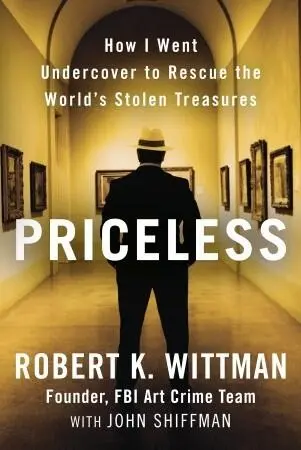
- Название:Priceless
- Автор:
- Издательство:Crown Publishers
- Жанр:
- Год:2010
- Город:New York
- ISBN:978-0-307-46149-0
- Рейтинг книги:3 / 5. Голосов: 1
-
Избранное:Добавить в избранное
- Отзывы:
-
Ваша оценка:
Priceless: краткое содержание, описание и аннотация
Предлагаем к чтению аннотацию, описание, краткое содержание или предисловие (зависит от того, что написал сам автор книги «Priceless»). Если вы не нашли необходимую информацию о книге — напишите в комментариях, мы постараемся отыскать её.
The London Times
In
Robert K. Wittman, the founder of the FBI’s Art Crime Team, pulls back the curtain on his remarkable career for the first time, offering a real-life international thriller to rival
.
Rising from humble roots as the son of an antique dealer, Wittman built a twenty-year career that was nothing short of extraordinary. He went undercover, usually unarmed, to catch art thieves, scammers, and black market traders in Paris and Philadelphia, Rio and Santa Fe, Miami and Madrid.
In this page-turning memoir, Wittman fascinates with the stories behind his recoveries of priceless art and antiquities: The golden armor of an ancient Peruvian warrior king. The Rodin sculpture that inspired the Impressionist movement. The headdress Geronimo wore at his final Pow-Wow. The rare Civil War battle flag carried into battle by one of the nation’s first African-American regiments.
The breadth of Wittman’s exploits is unmatched: He traveled the world to rescue paintings by Rockwell and Rembrandt, Pissarro, Monet and Picasso, often working undercover overseas at the whim of foreign governments. Closer to home, he recovered an original copy of the Bill of Rights and cracked the scam that rocked the PBS series By the FBI’s accounting, Wittman saved hundreds of millions of dollars worth of art and antiquities. He says the statistic isn’t important. After all, who’s to say what is worth more—a Rembrandt self-portrait or an American flag carried into battle? They're both priceless.
The art thieves and scammers Wittman caught run the gamut from rich to poor, smart to foolish, organized criminals to desperate loners. The smuggler who brought him a looted 6th-century treasure turned out to be a high-ranking diplomat. The appraiser who stole countless heirlooms from war heroes’ descendants was a slick, aristocratic con man. The museum janitor who made off with locks of George Washington's hair just wanted to make a few extra bucks, figuring no one would miss what he’d filched.
In his final case, Wittman called on every bit of knowledge and experience in his arsenal to take on his greatest challenge: working undercover to track the vicious criminals behind what might be the most audacious art theft of all.
Priceless — читать онлайн бесплатно полную книгу (весь текст) целиком
Ниже представлен текст книги, разбитый по страницам. Система сохранения места последней прочитанной страницы, позволяет с удобством читать онлайн бесплатно книгу «Priceless», без необходимости каждый раз заново искать на чём Вы остановились. Поставьте закладку, и сможете в любой момент перейти на страницу, на которой закончили чтение.
Интервал:
Закладка:
“I don’t make you nervous,” Kostov said loudly. “Don’t worry.”
Kadhum got curious. “You know each other long time?”
Kostov, again helpful: “We know each other from Los Angeles.”
I cut him off. “Nah, I don’t know him too well. I’m an art dealer.”
Kostov nodded. “He’s an art dealer in Los Angeles.” The guy could not keep his trap shut. He was going to blow it. He was breaking the cardinal rule—needlessly spouting lies we couldn’t back up. I didn’t know L.A. well enough to cover us. It was as dumb as my mistake of telling the backflap smugglers I was a lawyer.
I masked my growing irritation with a laugh. “And New York and Philadelphia. Everywhere.” I tried to change the subject to the matter at hand, the string. “It’s not coming off.”
Kostov leaned closer, crowding me. I dug my nails into the knots, bit with my teeth and then, finally, the string came undone. I peeled away the velvet cloth and lifted the frame. I checked the back. All six back clips were still in place, two slightly skewed, just like in the museum photographs.
I looked up. “The frame is correct. You never took it out of the frame, huh?”
Kadhum was incredulous. “We wouldn’t dare. It’s a Rembrandt.”
I kept a straight face. “Are you an art lover?”
“No, I just want the money.”
I stood up and grabbed my tools, ready to inspect the painting. “I need to go in a dark room. I can’t see it in the light.”
Kostov mumbled something. I couldn’t understand him, but I played along anyway. “Could be,” I said. “But the varnish is a little thick.”
Kostov, still the fool: “Yes, the varnish, it’s very fresh. You can see for yourself.”
Gently, I lifted the painting and carried it toward the bathroom. I motioned to Kadhum to follow me. I pulled a tiny ultraviolet scope from my pocket, and flipped the lights off in the bathroom. I squinted as I raked the ultraviolet light across the painting, about an inch from the surface. An untouched, original work carries the same uniform dull glow throughout the surface. If the painting has been retouched, then the paint fluoresces unevenly. The test is simple, but it can catch the most frequent frauds—usually sloppy attempts by sellers who try to fake a signature or a date. So far, so good. If this was not the real thing, it was a great fake.
With Kadhum over my shoulder, I put the scope by the sink and took out a thirty-power magnifier and a ten-power jeweler’s loupe. Every painting has a fingerprint: the crackling that forms over the years as the varnish dries, creating a random and distinct pattern. From enlargements of museum photographs, I had studied the right-hand corner of Self-Portrait , just above Rembrandt’s ear, and memorized the pattern. It matched, but I didn’t let on. I pretended to keep studying the painting, waiting for the Iraqi to grow bored and walk away. When the sting went down, I wanted to be alone in the bathroom. In a firefight, it would be the safest place. Bathroom doors lock. Most have tubs made of steel or some other hard composite capable of slowing bullets.
A few seconds later, Kadhum’s cell phone buzzed and he drifted into the bedroom to check a text message.
I gave the signal to the SWAT team. “OK,” I said loudly. “This is good. We’ve got a done deal.”
I heard footsteps in the hallway and leaned out of the bathroom to check the door.
The key-card clicked, the handle turned, and then—the door jammed.
Shit.
Kadhum whirled and our eyes locked.
We started to race for the door and heard the key-card click again. This time, it banged open violently. Six large Danes with bulletproof vests dashed past me, gang-tackling Kadhum and Kostov onto the bed.
I raced out, the Rembrandt pressed to my chest, down the hall, to the stairwell, where I found Calarco and Ives.
THE NEXT DAY we met the U.S. ambassador and Copenhagen police chief for a round of atta-boys. We posed for trophy photographs with the cash and the Rembrandt. I stood in the background, doing my best to keep my face out of the pictures.
That afternoon, I took a stroll into Tivoli Gardens with one of the FBI agents from California. We found a table in a café and lit Cuban cigars. He ordered a round of beers and I took one, my first in fifteen years.
THE REMBRANDT CASE garnered headlines worldwide, raising the Art Crime Team’s profile to new heights, inside and outside the FBI. Within weeks, our tiny squad would have trouble keeping up with all the attention.
On the flight home, I thought about all I’d accomplished in a little less than a decade. I’d gone undercover a dozen times, solved cases on three continents, and recovered art and antiquities worth more than $200 million. At this point in my career, I felt prepared to overcome almost any obstacle any case might present, foreign or domestic.
Indeed, just nine months later, I embarked on the most challenging case of my career: I would go undercover to try to solve the most spectacular art crime in American history, the $500 million theft from the Isabella Stewart Gardner Museum.
It is a story that begins with an auction in Paris in 1892.
OPERATION MASTERPIECE
Chapter 18
MRS. GARDNER
Paris, 1892 .
ON THE AFTERNOON OF DECEMBER 4, 1892, THE AUCtion at the famed Hôtel Drouot reached item No. 31.
The Dutch painting was offered without fanfare. No one could know that it was destined to become the centerpiece of the twentieth century’s largest and most mysterious art heist.
As the bidding began, Isabella Stewart Gardner of Boston held a lace handkerchief to her face. This was the signal to her broker to keep bidding. No. 31 was an oil on canvas, a work by Johannes Vermeer, the seventeenth-century Dutchman whose genius was not yet universally recognized. He called the painting The Concert . The work portrayed a young lady in an ivory skirt with black and gold bodice playing the harpsichord. A second woman in an olive, fur-trimmed housecoat stood by the edge of the instrument, studying a note card as she sang. At the center of the painting, in more muted hues of brown and green, a gentleman with long black hair, his back to the painter, sat sideways in a bright terra-cotta-backed chair.
Although works by Vermeer were not nearly as popular or as valuable then as they are today, Gardner faced tough competition as she vied for No. 31. The other bidders making a play for The Concert were agents representing the Louvre and the National Gallery in London.
From her seat in the auction room, Gardner could not see her straw bidder. She simply trusted that he could see her.
The bids climbed steadily past twenty-five thousand francs and Gardner kept her handkerchief in place. The bidding slowed, rising in smaller and smaller increments, until Gardner’s man won it with a final bid of twenty-nine thousand. Afterward, she learned that the Louvre and the National Gallery had dropped out because each wrongly presumed that Gardner’s bidding agent also worked for a large museum—in that day, it was considered bad manners for one museum to drive up the price against another. The museums were dismayed to hear that the winner, this cheeky woman with the healthy checkbook, was an American, and that she planned to take The Concert home to Boston.
I DON’T KNOW if Isabella Stewart Gardner ever met Albert C. Barnes—she died in 1924, the year before he opened his museum outside Philadelphia.
But Dr. Barnes and Mrs. Gardner strike me as kindred souls: Each assembled an astounding private art collection. Each built a museum to showcase these works to the public, displaying them in an eclectic, educational style. Each lived on the grounds of the museum, and each left a strict will that stipulated that the galleries remain precisely as arranged, not one frame moved, not ever.
Читать дальшеИнтервал:
Закладка:
Похожие книги на «Priceless»
Представляем Вашему вниманию похожие книги на «Priceless» списком для выбора. Мы отобрали схожую по названию и смыслу литературу в надежде предоставить читателям больше вариантов отыскать новые, интересные, ещё непрочитанные произведения.












Обсуждение, отзывы о книге «Priceless» и просто собственные мнения читателей. Оставьте ваши комментарии, напишите, что Вы думаете о произведении, его смысле или главных героях. Укажите что конкретно понравилось, а что нет, и почему Вы так считаете.