Robert Wittman - Priceless
Здесь есть возможность читать онлайн «Robert Wittman - Priceless» весь текст электронной книги совершенно бесплатно (целиком полную версию без сокращений). В некоторых случаях можно слушать аудио, скачать через торрент в формате fb2 и присутствует краткое содержание. Город: New York, Год выпуска: 2010, ISBN: 2010, Издательство: Crown Publishers, Жанр: Биографии и Мемуары, на английском языке. Описание произведения, (предисловие) а так же отзывы посетителей доступны на портале библиотеки ЛибКат.
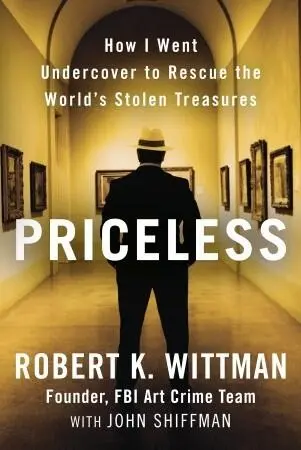
- Название:Priceless
- Автор:
- Издательство:Crown Publishers
- Жанр:
- Год:2010
- Город:New York
- ISBN:978-0-307-46149-0
- Рейтинг книги:3 / 5. Голосов: 1
-
Избранное:Добавить в избранное
- Отзывы:
-
Ваша оценка:
Priceless: краткое содержание, описание и аннотация
Предлагаем к чтению аннотацию, описание, краткое содержание или предисловие (зависит от того, что написал сам автор книги «Priceless»). Если вы не нашли необходимую информацию о книге — напишите в комментариях, мы постараемся отыскать её.
The London Times
In
Robert K. Wittman, the founder of the FBI’s Art Crime Team, pulls back the curtain on his remarkable career for the first time, offering a real-life international thriller to rival
.
Rising from humble roots as the son of an antique dealer, Wittman built a twenty-year career that was nothing short of extraordinary. He went undercover, usually unarmed, to catch art thieves, scammers, and black market traders in Paris and Philadelphia, Rio and Santa Fe, Miami and Madrid.
In this page-turning memoir, Wittman fascinates with the stories behind his recoveries of priceless art and antiquities: The golden armor of an ancient Peruvian warrior king. The Rodin sculpture that inspired the Impressionist movement. The headdress Geronimo wore at his final Pow-Wow. The rare Civil War battle flag carried into battle by one of the nation’s first African-American regiments.
The breadth of Wittman’s exploits is unmatched: He traveled the world to rescue paintings by Rockwell and Rembrandt, Pissarro, Monet and Picasso, often working undercover overseas at the whim of foreign governments. Closer to home, he recovered an original copy of the Bill of Rights and cracked the scam that rocked the PBS series By the FBI’s accounting, Wittman saved hundreds of millions of dollars worth of art and antiquities. He says the statistic isn’t important. After all, who’s to say what is worth more—a Rembrandt self-portrait or an American flag carried into battle? They're both priceless.
The art thieves and scammers Wittman caught run the gamut from rich to poor, smart to foolish, organized criminals to desperate loners. The smuggler who brought him a looted 6th-century treasure turned out to be a high-ranking diplomat. The appraiser who stole countless heirlooms from war heroes’ descendants was a slick, aristocratic con man. The museum janitor who made off with locks of George Washington's hair just wanted to make a few extra bucks, figuring no one would miss what he’d filched.
In his final case, Wittman called on every bit of knowledge and experience in his arsenal to take on his greatest challenge: working undercover to track the vicious criminals behind what might be the most audacious art theft of all.
Priceless — читать онлайн бесплатно полную книгу (весь текст) целиком
Ниже представлен текст книги, разбитый по страницам. Система сохранения места последней прочитанной страницы, позволяет с удобством читать онлайн бесплатно книгу «Priceless», без необходимости каждый раз заново искать на чём Вы остановились. Поставьте закладку, и сможете в любой момент перейти на страницу, на которой закончили чтение.
Интервал:
Закладка:
Bennett and Sterle reported that Kostov was offering to sell the painting for $300,000 and a sale appeared imminent. The FBI faced a swift decision: Keep the drug investigation going or save the painting. It was not a difficult decision.
The agents rushed to stake out his house. A few hours later, Kostov came out carrying a square package about the size of the Renoir and put it in his trunk. As he walked to the car door, the agents moved. They cut Kostov off and ordered him to the ground. They asked to see the package in the trunk. Sure, he said. The excited agents popped the trunk and pulled the package out. Inside, they found dry cleaning. Kostov laughed.
Unamused, the agents took Kostov back to the FBI office for questioning. They sat him down in a windowless room and latched one of his handcuffs to a ring bolted to the top of the Formica interrogation table. They grilled him about the drugs, the stolen goods, and the painting.
The Bulgarian professed innocence and played tough guy. Sterle and Bennett persisted: They calmly explained that they had hours of wiretaps. They told Kostov he faced ten years in prison. He’d get out when he was seventy-seven, if he lived that long. Once they had him sweating, the agents used a standard police interrogation tactic—they gave him an “out,” a way to stay out of prison. They promised that if he helped the FBI find the painting, they would urge the judge to go easy on him. The first step is yours, the agents told Kostov. Tell us where the painting is.
Kostov melted slowly, like an ice sculpture in the L.A. heat. Ultimately, he admitted that his son had smuggled the Renoir to him from Sweden to sell on the American black market. Kostov sent the agents to a pawnshop, where they found Young Parisian hidden against a dusty wall, wrapped in towels and grocery shopping bags. The Renoir had a slight superficial scratch but otherwise looked OK.
We were thrilled but kept the recovery secret. We planned to use Kostov as our vouch to try to rescue the remaining missing painting, the Rembrandt.
We asked Kostov to call his son and say that he’d found a buyer willing to purchase the Renoir and the Rembrandt. Kostov agreed, promising to betray his son to save his own skin.
Throughout the summer, I received updates on Kostov’s negotiations. I winced as I read the transcripts of calls with his son, the middleman in the talks with the thieves.
“These guys are crazy,” the son warned from Stockholm.
The father in Los Angeles seemed unimpressed, heartless even. “What are they going to do, kill you?” he said sarcastically. “Will they shoot you?”
The son sounded resigned. “I don’t know. I don’t give a shit anymore.”
Kostov did a nice job haggling the sellers down from $1.2 million to $600,000. Although we’d be getting the cash back, we had to negotiate as if real money was at stake. We agreed to pay $245,000 in cash up front and provide the balance once the paintings were sold. Kostov told them he would fly to Stockholm with an American art broker and the cash in September.
Everything seemed lined up—until we contacted the Swedish authorities. International police operations are never easy. Every country has its own laws and procedures, of course, and they have to be respected. Whenever you work overseas, you have to remind yourself that you’re a guest of a foreign country. You can negotiate diplomatically but you can’t dictate terms. You’ve got to play by the host nation’s rules.
Though extremely grateful to hear about the Renoir and eager to rescue the Rembrandt, the Swedes lamented that they simply could not grant permission for Kostov to enter the country. He was still a wanted man there, albeit for minor, decades-old crimes. Under Swedish law, the warrants could not be suspended for any reason, even temporarily.
We’d have to find another way.
THE DIPLOMATS’ SEARCH for a solution gave me time to brush up on the Old Master.
There is a romantic notion that Rembrandt rose from tough roots to greatness. It makes for a nice story, but I doubt it’s true. I say I doubt it’s true because most of what’s been written about Rembrandt is educated speculation. He didn’t keep a diary or copies of his letters and he gave no interviews. The artist compared most often to Mozart and Shakespeare had no contemporary biographer. In the twentieth century, historians wrote dozens of thick books about Rembrandt, many with differing accounts. Scholars can’t even agree on how many siblings he had. In recent years, some of Rembrandt’s later paintings have become suspect. Did the master really paint them? Or did his students? Was he playing games with us? I like all this uncertainty. It just adds to the Rembrandt mystique. In the months that I chased his Self-Portrait , I enjoyed getting to know the man.
Rembrandt Harmenszoon van Rijn was just twenty-four years old when he painted Self-Portrait (1630). The painting isn’t significant because it’s a self-portrait—Rembrandt painted or sketched more than sixty self-portraits in his lifetime. It’s significant because he painted it during a seminal period in his life, within a year of his father’s death and of his decision to leave the comfort of his hometown for Amsterdam. Within four years, Rembrandt would be married and famous.
He lived in what was arguably Holland’s greatest century, in a prosperous and peaceful democratic country between major wars. He was born in the Dutch town of Leiden, just south of Amsterdam and about a day’s walk from the North Sea coast. His father was an earnest fourth-generation miller who owned several plots of land, making him semi-prosperous. His mother was pious and bore nine children (or ten, depending on which scholar you believe). Five (or three) of them died at an early age. Rembrandt was among the youngest siblings and he spent more time in the classroom than working for his father. He attended the Latin School in Leiden from ages seven to fourteen, and then enrolled at the University of Leiden.
Rembrandt didn’t last long in college. He knew it couldn’t prepare him for life as a painter. After one year, he quit to begin a three-year apprenticeship with a mediocre architectural painter, notable mostly because the artist taught him to sketch using stuffed animals. He took a second apprenticeship with the artist Pieter Lastman, who would become his more important mentor. Lastman worked with Rembrandt for about a year and is credited with teaching him how to paint with emotion.
The Dutch master began his professional career at age nineteen or twenty, sharing a Leiden studio with Jan Lievens, a slightly older, more accomplished painter and a former child prodigy. Lievens and Rembrandt shared models, mimicked one another’s style, and began a lifelong friendship. Later, Rembrandt would be wrongly credited as the painter of some of Lievens’s best pieces.
By 1630, the year Self-Portrait was painted, Rembrandt and Lievens began attracting notice as rising stars. That year, the poet Constantijn Huygens, secretary to the Prince of Orange, ruler of Holland, visited their studio. Afterward, Huygens wrote effusively of Rembrandt’s talent: “All this I compare with all the beauty that has been produced throughout the ages. This is what I would have those naïve beings know, who claim (and I have rebuked them for it before) that nothing created or expressed in words today has not been expressed or created in the past. I maintain that it did not occur to Protogenes, Apelles, or Parrhasius, nor could it occur to them, were they to return to earth, that a youth, a Dutchman, a beardless miller, could put so much into one human figure and depict it all.”
The stolen Rembrandt might be the most significant self-portrait from the master’s final years in Leiden. In 1630, he was experimenting with what would become a signature technique—chiaroscuro, painting in light and shadow, varying shades of darkness to project shape on three-dimensional figures. The colors and shades are subtle.
Читать дальшеИнтервал:
Закладка:
Похожие книги на «Priceless»
Представляем Вашему вниманию похожие книги на «Priceless» списком для выбора. Мы отобрали схожую по названию и смыслу литературу в надежде предоставить читателям больше вариантов отыскать новые, интересные, ещё непрочитанные произведения.











Обсуждение, отзывы о книге «Priceless» и просто собственные мнения читателей. Оставьте ваши комментарии, напишите, что Вы думаете о произведении, его смысле или главных героях. Укажите что конкретно понравилось, а что нет, и почему Вы так считаете.