Robert Wittman - Priceless
Здесь есть возможность читать онлайн «Robert Wittman - Priceless» весь текст электронной книги совершенно бесплатно (целиком полную версию без сокращений). В некоторых случаях можно слушать аудио, скачать через торрент в формате fb2 и присутствует краткое содержание. Город: New York, Год выпуска: 2010, ISBN: 2010, Издательство: Crown Publishers, Жанр: Биографии и Мемуары, на английском языке. Описание произведения, (предисловие) а так же отзывы посетителей доступны на портале библиотеки ЛибКат.
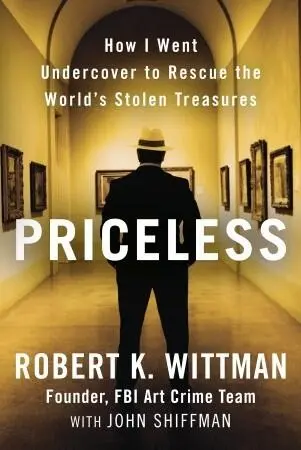
- Название:Priceless
- Автор:
- Издательство:Crown Publishers
- Жанр:
- Год:2010
- Город:New York
- ISBN:978-0-307-46149-0
- Рейтинг книги:3 / 5. Голосов: 1
-
Избранное:Добавить в избранное
- Отзывы:
-
Ваша оценка:
Priceless: краткое содержание, описание и аннотация
Предлагаем к чтению аннотацию, описание, краткое содержание или предисловие (зависит от того, что написал сам автор книги «Priceless»). Если вы не нашли необходимую информацию о книге — напишите в комментариях, мы постараемся отыскать её.
The London Times
In
Robert K. Wittman, the founder of the FBI’s Art Crime Team, pulls back the curtain on his remarkable career for the first time, offering a real-life international thriller to rival
.
Rising from humble roots as the son of an antique dealer, Wittman built a twenty-year career that was nothing short of extraordinary. He went undercover, usually unarmed, to catch art thieves, scammers, and black market traders in Paris and Philadelphia, Rio and Santa Fe, Miami and Madrid.
In this page-turning memoir, Wittman fascinates with the stories behind his recoveries of priceless art and antiquities: The golden armor of an ancient Peruvian warrior king. The Rodin sculpture that inspired the Impressionist movement. The headdress Geronimo wore at his final Pow-Wow. The rare Civil War battle flag carried into battle by one of the nation’s first African-American regiments.
The breadth of Wittman’s exploits is unmatched: He traveled the world to rescue paintings by Rockwell and Rembrandt, Pissarro, Monet and Picasso, often working undercover overseas at the whim of foreign governments. Closer to home, he recovered an original copy of the Bill of Rights and cracked the scam that rocked the PBS series By the FBI’s accounting, Wittman saved hundreds of millions of dollars worth of art and antiquities. He says the statistic isn’t important. After all, who’s to say what is worth more—a Rembrandt self-portrait or an American flag carried into battle? They're both priceless.
The art thieves and scammers Wittman caught run the gamut from rich to poor, smart to foolish, organized criminals to desperate loners. The smuggler who brought him a looted 6th-century treasure turned out to be a high-ranking diplomat. The appraiser who stole countless heirlooms from war heroes’ descendants was a slick, aristocratic con man. The museum janitor who made off with locks of George Washington's hair just wanted to make a few extra bucks, figuring no one would miss what he’d filched.
In his final case, Wittman called on every bit of knowledge and experience in his arsenal to take on his greatest challenge: working undercover to track the vicious criminals behind what might be the most audacious art theft of all.
Priceless — читать онлайн бесплатно полную книгу (весь текст) целиком
Ниже представлен текст книги, разбитый по страницам. Система сохранения места последней прочитанной страницы, позволяет с удобством читать онлайн бесплатно книгу «Priceless», без необходимости каждый раз заново искать на чём Вы остановились. Поставьте закладку, и сможете в любой момент перейти на страницу, на которой закончили чтение.
Интервал:
Закладка:
The group walked into the next gallery. “Now, in this room, can you tell which one is the Cézanne and which is the Renoir?”
The emboldened students began throwing out answers, and I could not have been prouder. I was no longer the sole FBI agent who cared about art crime.
THE FBI’S COMMITMENT to art crime was entering a new era. The creation of the Art Crime Team marked a great leap forward for the Bureau—and a natural progression from our successes following the high-profile Rockwell, Koplowitz, Antiques Roadshow , and Bill of Rights cases.
The FBI had assigned eight agents scattered across the country to the Art Crime Team, and I was named senior investigator. The agents would not work art crime full-time as I did, but they would take cases as they developed in their regions, and would be prepared to deploy rapidly. The FBI’s new commitment did not compare to the Italian art crime effort—the Carabinieri force numbered three hundred. But it was a start.
Gone, or so it seemed, were the days when the FBI would get by with one or two agents who expressed an interest in art crime—when an agent like Bob Bazin would handle cases, then informally pass the mantle to someone like me. Historically speaking, I knew of only two other FBI art crime experts beside Bazin and both had worked in New York. In the sixties and seventies, it was Donald Mason, probably best known for his recovery of a stolen Kandinsky, and in the seventies and eighties, Thomas McShane, who once recovered a stolen van Gogh in the carport of a New York gas station.
To bolster the new Art Crime Team, the Department of Justice provided a team of prosecutors—one of whom was Bob Goldman. They were granted special authority to prosecute art crime cases anywhere in the country. With great fanfare and a series of public events, the FBI unveiled an Art Crime Team website, a logo, and even created special souvenir coins. The press exposure and the accolades kept piling up. Just before the Art Crime Team was officially launched, I was awarded the Smithsonian Institution’s highest honor for the protection of cultural property, the Robert Burke Memorial Award. Two years later, Goldman won the same honor. While we welcomed media coverage, I was careful to keep my identity secret so I could continue to work undercover. I never let photographers take my picture and I always remained in the back of the room, out of view, during press conferences. Whenever I appeared on television, I did so with my face blacked out.
In the months after the Art Crime Team’s formation, we kept busy with smaller cases, using each to raise our profile. In Pennsylvania, I recovered eight Babylonian stone signature seals purchased by a U.S. marine as souvenirs at a flea market near Baghdad, the first such FBI case of recovered Iraqi artifacts in the United States. In a St. Louis hotel-room sting, I arrested a fake Arab sheik who tried to sell me a forged Rembrandt for $1 million. In a federal courtroom in Philadelphia, Goldman and I squared off against two antiques dealers who defrauded a wealthy collector during the sale of historic Colt revolvers.
Perhaps most important to our cause, we gained two earnest and well-placed advocates at Headquarters in Washington. The first was Bonnie Magness-Gardiner, a veteran State Department cultural property analyst with a Ph.D. in Near Eastern archaeology. She became the Art Crime Team’s program manager. Magness-Gardiner was well-versed in the ways of Washington and international diplomacy and, as it happened, was the spouse of an accomplished artist. She ably spearheaded our public outreach and education efforts and played an advisory role during investigations.
The second boost came when Eric Ives, a forward-thinking supervisor with a strong background in a wide range of property crimes, was named chief of the Major Theft Unit, the section that supervised the Art Crime Team. Ives asked me to visit him in Washington his first week as unit chief. I met him in a windowless office on the third floor of the J. Edgar Hoover Building, and in minutes I knew we would become good partners, despite the differences in age and experience. He was a former U.S. Marine with close-cropped sandy hair and intense green eyes, eager for action. Before Ives joined the FBI, he had worked for the Target retail store chain, chasing thieves who targeted bulk shipments. As an FBI agent in Los Angeles, he went after the same kind of thief, and came up with a marketing gimmick that helped catch a few. To solve the crimes, he posted pictures of wanted thieves on highway billboards, figuring this was a great way to get the photos in front of the most likely witnesses, truckers. Ives and I soon found that we shared a passion for property theft and a knack for taking chances that paid off.
In Washington, Ives came up with another novel approach. He proposed to aggressively promote—in effect, market—the Art Crime Team, raising awareness inside and outside the FBI. “The Bureau has thirteen thousand agents and we have fewer than a dozen working part-time on art crime,” he said to me. “We need to exploit two things we have working to our advantage—one, the notion that the FBI was founded in 1908 to stop the interstate transport of stolen property, and two, this romantic allure of art crime, the Hollywood view, as projected by The Thomas Crown Affair and National Treasure.” He knew that the Hollywood version was a caricature, but believed we could leverage the misconception to our advantage. In our first marketing venture, Ives, Magness-Gardiner, and I drew up a Top Ten Art Crimes list. Written in the style of the FBI’s Ten Most Wanted, our list generated a nice, moderate wave of publicity. I liked Ives’s style; for a supervisor, he didn’t think like a bureaucrat. All the better, my new boss was a fellow salesman.
Ives and I spoke nearly every other day, and he traveled as my handler on my undercover cases, watching my back, a rare role for such a senior supervisor. Traditionally, unit chiefs at Headquarters stuck to administrative and supervisory duties and rarely ventured into the field. But Ives took a special interest in art crime. My direct supervisor in Philadelphia, Michael Carbonell, was wise and secure enough to let me work independently and with Ives. It wasn’t always easy for Carbo—his bosses in Philadelphia, who paid my salary, were always pestering him to ask where I was and what I was doing, and how the hell art crime was relevant to the local division’s mission. A legendary fugitive hunter and no-bullshit supervisor, Carbo shared my work credo: Just get the job done and the office politics will take care of itself.
By the fall of 2005, with support from Carbo, Ives and I were ready to cut our ambitions loose.
And we aimed high.
Chapter 17
THE OLD MASTER
Copenhagen, 2005 .
“IS IT ALL THERE?”
The Iraqi counting stacks of $100 bills on the narrow Danish hotel bed didn’t answer or even look up. So I asked again. “All there?”
Baha Kadhum grunted. He didn’t lift his eyes. He just kept flipping through the inch-high piles of cash I’d brought him, $245,000 neatly arrayed on a rumpled white bed sheet. In exchange, Kadhum had promised to bring me a stolen Rembrandt worth $35 million. Presumably, one of his colleagues held it downstairs or just outside the hotel. It was always possible the thug would offer a forgery—or worse, rob me. I kept my eyes on his hands.
Kadhum looked younger than his twenty-seven years, certainly younger than I had expected. Olive-skinned, with an aquiline nose and a mound of tousled black hair, he wore tight jeans, a pink polo shirt, black buckled leather shoes, and a gold chain around his neck. I doubted he was armed, but I took him for an amateur—desperate, and worse, unpredictable.
Читать дальшеИнтервал:
Закладка:
Похожие книги на «Priceless»
Представляем Вашему вниманию похожие книги на «Priceless» списком для выбора. Мы отобрали схожую по названию и смыслу литературу в надежде предоставить читателям больше вариантов отыскать новые, интересные, ещё непрочитанные произведения.











Обсуждение, отзывы о книге «Priceless» и просто собственные мнения читателей. Оставьте ваши комментарии, напишите, что Вы думаете о произведении, его смысле или главных героях. Укажите что конкретно понравилось, а что нет, и почему Вы так считаете.