Robert Wittman - Priceless
Здесь есть возможность читать онлайн «Robert Wittman - Priceless» весь текст электронной книги совершенно бесплатно (целиком полную версию без сокращений). В некоторых случаях можно слушать аудио, скачать через торрент в формате fb2 и присутствует краткое содержание. Город: New York, Год выпуска: 2010, ISBN: 2010, Издательство: Crown Publishers, Жанр: Биографии и Мемуары, на английском языке. Описание произведения, (предисловие) а так же отзывы посетителей доступны на портале библиотеки ЛибКат.
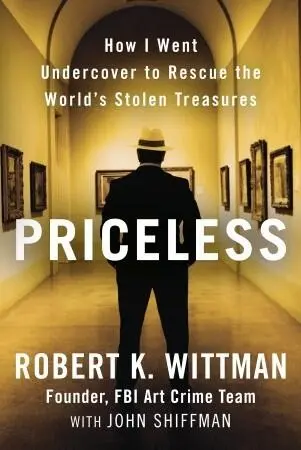
- Название:Priceless
- Автор:
- Издательство:Crown Publishers
- Жанр:
- Год:2010
- Город:New York
- ISBN:978-0-307-46149-0
- Рейтинг книги:3 / 5. Голосов: 1
-
Избранное:Добавить в избранное
- Отзывы:
-
Ваша оценка:
Priceless: краткое содержание, описание и аннотация
Предлагаем к чтению аннотацию, описание, краткое содержание или предисловие (зависит от того, что написал сам автор книги «Priceless»). Если вы не нашли необходимую информацию о книге — напишите в комментариях, мы постараемся отыскать её.
The London Times
In
Robert K. Wittman, the founder of the FBI’s Art Crime Team, pulls back the curtain on his remarkable career for the first time, offering a real-life international thriller to rival
.
Rising from humble roots as the son of an antique dealer, Wittman built a twenty-year career that was nothing short of extraordinary. He went undercover, usually unarmed, to catch art thieves, scammers, and black market traders in Paris and Philadelphia, Rio and Santa Fe, Miami and Madrid.
In this page-turning memoir, Wittman fascinates with the stories behind his recoveries of priceless art and antiquities: The golden armor of an ancient Peruvian warrior king. The Rodin sculpture that inspired the Impressionist movement. The headdress Geronimo wore at his final Pow-Wow. The rare Civil War battle flag carried into battle by one of the nation’s first African-American regiments.
The breadth of Wittman’s exploits is unmatched: He traveled the world to rescue paintings by Rockwell and Rembrandt, Pissarro, Monet and Picasso, often working undercover overseas at the whim of foreign governments. Closer to home, he recovered an original copy of the Bill of Rights and cracked the scam that rocked the PBS series By the FBI’s accounting, Wittman saved hundreds of millions of dollars worth of art and antiquities. He says the statistic isn’t important. After all, who’s to say what is worth more—a Rembrandt self-portrait or an American flag carried into battle? They're both priceless.
The art thieves and scammers Wittman caught run the gamut from rich to poor, smart to foolish, organized criminals to desperate loners. The smuggler who brought him a looted 6th-century treasure turned out to be a high-ranking diplomat. The appraiser who stole countless heirlooms from war heroes’ descendants was a slick, aristocratic con man. The museum janitor who made off with locks of George Washington's hair just wanted to make a few extra bucks, figuring no one would miss what he’d filched.
In his final case, Wittman called on every bit of knowledge and experience in his arsenal to take on his greatest challenge: working undercover to track the vicious criminals behind what might be the most audacious art theft of all.
Priceless — читать онлайн бесплатно полную книгу (весь текст) целиком
Ниже представлен текст книги, разбитый по страницам. Система сохранения места последней прочитанной страницы, позволяет с удобством читать онлайн бесплатно книгу «Priceless», без необходимости каждый раз заново искать на чём Вы остановились. Поставьте закладку, и сможете в любой момент перейти на страницу, на которой закончили чтение.
Интервал:
Закладка:
Today, the Franklin portrait hangs in the White House.
IN 1897, NORTH Carolina’s missing copy of the Bill of Rights surfaced in the most unlikely of places.
Incredibly, an inquisitive newspaper reporter noticed it hanging on an office wall at the Indianapolis Board of Trade building.
The parchment was displayed inside a frame in the office of Charles Albert Shotwell, a handsome and well-respected businessman who ran a grain, flour, and feed service. In May 1897 he welcomed a reporter from the Indianapolis News into his office for an interview. When the curious reporter asked about the Bill of Rights hanging on the wall, Shotwell told him an astounding story that began three decades earlier.
It was the year after the Civil War had ended, Shotwell explained, and he’d gone home to visit relatives in Ohio. He took time to visit boyhood friends in a neighboring town to see how they’d fared in battle.
“I went into one of the stores of the town that day, where I met one of the boys that I had known before the war,” Shotwell recalled. “He told me several of his experiences as a soldier, and one was of his being in Sherman’s army when it marched thru Georgia to the sea. He told me of that Army going into the City of Raleigh, North Carolina… and he was one of a company of soldiers that went thru the State House and helped themselves to whatever they pleased to take. They went into the Office of the Secretary of State and forcibly took… the parchment that is now in my possession. He told me he brought it with him as a Soldier out of the state, so it was contraband of war and lawfully his possession.”
Shotwell told the reporter he’d bought the Bill of Rights from the soldier for five dollars, and the astute reporter knew he had a helluva story on his hands.
The Raleigh newspaper reprinted the Indianapolis News story in its entirety, playing it huge. STOLEN HISTORICAL RELIC, TAKEN FROM THE CAPITOL HERE BY A YANKEE, the headline screamed.
Walter Clark, a justice of the North Carolina Supreme Court, became infuriated when he read the story. A Confederate veteran who fought at Antietam, Clark urged North Carolina officials to go after the purloined parchment. The state treasurer tried, approaching Indiana cabinet officers, but Shotwell refused to cooperate and he soon took the war trophy underground.
The Bill of Rights didn’t surface again for twenty-eight years.
In 1925, a friend of Shotwell’s son contacted North Carolina officials and proposed to sell the document back to the state. “The old gentleman who bought it off the soldier did so in the belief that it was contraband of war…” wrote the friend, Charles Reid of Harrisburg, Pennsylvania. “The possessor is a very old man and has treasured this manuscript for the past fifty-nine years. I believe a need of money has prompted him to offer it for sale. I believe he would be disposed to consider and accept any reasonable honorarium…” The secretary of the state historical commission wrote back on behalf of the state. Essentially, he told Reid that the man holding the Bill of Rights hostage was a dishonorable possessor of stolen state history. “So long as it remains away from the official custody of North Carolina,” the official wrote in a high-minded tone, “it will serve as a memorial of individual theft.”
When his father died, Shotwell’s son inherited the framed Bill of Rights. He made no attempt to sell it; instead, he and his wife proudly but discreetly hung it in their living room in Indianapolis. When they died, their daughters, Anne Shotwell Bosworth and Sylvia Shotwell Long, secured the piece in an Indiana bank vault.
In 1995, more than a century after its long, strange exile from North Carolina’s state capitol, the two Shotwell women took their first steps toward selling the Bill of Rights.
Very quietly, they enlisted an Indianapolis attorney. He is said to have unsuccessfully approached several wealthy and famous collectors, including the likes of Michael Jordan, Steven Spielberg, and Oprah Winfrey. A prominent Connecticut art broker, Wayne Pratt, known for appearances on Antiques Roadshow , showed interest. Pratt hired a prominent and politically connected Washington, D.C., lawyer, John L. Richardson, who was a fund-raiser for President Clinton and whose wife was commissioner of the Internal Revenue Service. Pratt and Richardson did not immediately buy the Bill of Rights, but they began to work as discreetly as possible to try to broker it.
In October 1995, Richardson contacted senior North Carolina officials and proposed a complicated deal cloaked in mystery, refusing to identify his clients. He said the price would be $3 million to $10 million, depending upon a set of independent appraisals. In a long fax to the state secretary of cultural resources, Richardson warned of dire consequences if the deal failed or became public. “Please let me emphasize again how important it is that we proceed quickly and with maximum confidentiality. I have no direct relationship with the people who have the article, and there are at least three intermediaries between me and these people…. The people insist on anonymity. We are warned they are nervous, and if they believe their identity may be disclosed against their will, they may act in a manner which will not be in any of our interests.”
North Carolina officials debated the offer internally, and even quietly approached a private foundation about buying the document. Ultimately, they abandoned the idea, coming to the same conclusion as their predecessors had: The state would not pay ransom for stolen government property. Stymied, Richardson broke off contact with North Carolina officials.
Five years later, North Carolina’s Bill of Rights made a brief surprise appearance in Washington.
In February 2000, a woman who did not identify herself called one of the nation’s foremost authorities on documents from the era, Charlene Bangs Bickford, the codirector of the First Federal Congress Project at George Washington University. The caller claimed to have a copy of the Bill of Rights and asked Bickford to take a look. The historian agreed and one afternoon a short while later the woman appeared at the university offices with three men and a large box. Bickford introduced herself and her staff, and found it odd when the four visitors refused to give their names. The visitors unveiled the package and within minutes the scholars concluded that it was likely genuine. But because the parchment was framed and behind glass—and the visitors refused to remove it—they could not view the back to scrutinize the telltale docket information that would reveal which state had received it in 1789.
Bickford asked the visitors about provenance. They remained silent.
“Well,” she said, “this document is priceless and at the same time worthless. You can’t legally sell it.”
Without a word, or even so much as a thank-you, the mysterious visitors packed up the parchment and hustled out, taking the Bill of Rights underground again.
THREE YEARS LATER, in March 2003, I received an urgent call from my Philadelphia colleague, Special Agent Jay Heine.
It was a Thursday evening, an otherwise unremarkable day at work. I was driving home and he caught me on my cell phone.
“You’re not going to believe this,” Heine said.
“Believe what, buddy?”
Heine said he didn’t have all the details but summarized what he did know: The FBI office in Raleigh needed our help, urgently, and it was tied to our home turf in Philly. It concerned the new National Constitution Center, the state-of-the-art museum under construction opposite the Liberty Bell and Independence Hall. The museum, dedicated to celebrating the Constitution and the Amendments, was a private, nonpartisan, and nonprofit venture, and anticipated to become one of Philadelphia’s largest tourist attractions. The Constitution Center was backed by powerful politicians, including Governor Ed Rendell and U.S. Senator Arlen Specter. Supreme Court Justice Sandra Day O’Connor was scheduled to preside over the ribbon cutting in just a few months on July 4, and museum officials were still scrambling to make last-minute acquisitions. In recent weeks, Heine told me, the Constitution Center had come across an original copy of the Bill of Rights. The seller wanted $4 million.
Читать дальшеИнтервал:
Закладка:
Похожие книги на «Priceless»
Представляем Вашему вниманию похожие книги на «Priceless» списком для выбора. Мы отобрали схожую по названию и смыслу литературу в надежде предоставить читателям больше вариантов отыскать новые, интересные, ещё непрочитанные произведения.






Обсуждение, отзывы о книге «Priceless» и просто собственные мнения читателей. Оставьте ваши комментарии, напишите, что Вы думаете о произведении, его смысле или главных героях. Укажите что конкретно понравилось, а что нет, и почему Вы так считаете.