Robert Wittman - Priceless
Здесь есть возможность читать онлайн «Robert Wittman - Priceless» весь текст электронной книги совершенно бесплатно (целиком полную версию без сокращений). В некоторых случаях можно слушать аудио, скачать через торрент в формате fb2 и присутствует краткое содержание. Город: New York, Год выпуска: 2010, ISBN: 2010, Издательство: Crown Publishers, Жанр: Биографии и Мемуары, на английском языке. Описание произведения, (предисловие) а так же отзывы посетителей доступны на портале библиотеки ЛибКат.
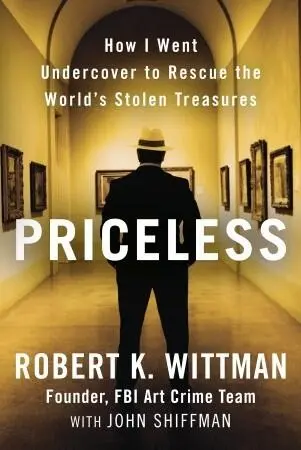
- Название:Priceless
- Автор:
- Издательство:Crown Publishers
- Жанр:
- Год:2010
- Город:New York
- ISBN:978-0-307-46149-0
- Рейтинг книги:3 / 5. Голосов: 1
-
Избранное:Добавить в избранное
- Отзывы:
-
Ваша оценка:
Priceless: краткое содержание, описание и аннотация
Предлагаем к чтению аннотацию, описание, краткое содержание или предисловие (зависит от того, что написал сам автор книги «Priceless»). Если вы не нашли необходимую информацию о книге — напишите в комментариях, мы постараемся отыскать её.
The London Times
In
Robert K. Wittman, the founder of the FBI’s Art Crime Team, pulls back the curtain on his remarkable career for the first time, offering a real-life international thriller to rival
.
Rising from humble roots as the son of an antique dealer, Wittman built a twenty-year career that was nothing short of extraordinary. He went undercover, usually unarmed, to catch art thieves, scammers, and black market traders in Paris and Philadelphia, Rio and Santa Fe, Miami and Madrid.
In this page-turning memoir, Wittman fascinates with the stories behind his recoveries of priceless art and antiquities: The golden armor of an ancient Peruvian warrior king. The Rodin sculpture that inspired the Impressionist movement. The headdress Geronimo wore at his final Pow-Wow. The rare Civil War battle flag carried into battle by one of the nation’s first African-American regiments.
The breadth of Wittman’s exploits is unmatched: He traveled the world to rescue paintings by Rockwell and Rembrandt, Pissarro, Monet and Picasso, often working undercover overseas at the whim of foreign governments. Closer to home, he recovered an original copy of the Bill of Rights and cracked the scam that rocked the PBS series By the FBI’s accounting, Wittman saved hundreds of millions of dollars worth of art and antiquities. He says the statistic isn’t important. After all, who’s to say what is worth more—a Rembrandt self-portrait or an American flag carried into battle? They're both priceless.
The art thieves and scammers Wittman caught run the gamut from rich to poor, smart to foolish, organized criminals to desperate loners. The smuggler who brought him a looted 6th-century treasure turned out to be a high-ranking diplomat. The appraiser who stole countless heirlooms from war heroes’ descendants was a slick, aristocratic con man. The museum janitor who made off with locks of George Washington's hair just wanted to make a few extra bucks, figuring no one would miss what he’d filched.
In his final case, Wittman called on every bit of knowledge and experience in his arsenal to take on his greatest challenge: working undercover to track the vicious criminals behind what might be the most audacious art theft of all.
Priceless — читать онлайн бесплатно полную книгу (весь текст) целиком
Ниже представлен текст книги, разбитый по страницам. Система сохранения места последней прочитанной страницы, позволяет с удобством читать онлайн бесплатно книгу «Priceless», без необходимости каждый раз заново искать на чём Вы остановились. Поставьте закладку, и сможете в любой момент перейти на страницу, на которой закончили чтение.
Интервал:
Закладка:
Candela agreed, but for different reasons. “Yes, it’s one of my favorites. You can see people fucking. Il faut jouir de la vie —one must enjoy life, no?”
He started rambling, talking about the sale of the first set of paintings, sold to a Colombian drug dealer. “They paid in euros, a huge amount of small bills.”
I engaged him as I studied the painting in my hands. “Huge quantity, huh?”
“Phew, yeah. They filled the whole back of an SUV.”
Everyone laughed.
I walked the painting to the darkest corner of the room.
Candela followed, interested in my examination. “Four hundred and fifty years old,” I said, whistling. “Painted on board, not canvas.”
Candela nodded. He, of course, didn’t have any doubts about authenticity, and seemed to be dropping his guard. “It’s good to verify the merchandise because you might imagine that we could be putting copies out there—make ten copies and sell to ten different people.” As he hovered, he bragged about his exploits. “I make things happen. I’ve been robbing banks and taking things from museums for eighteen years and I’ve never been caught.”
“No kidding?” I sounded impressed.
He laughed. “Everyone knows it’s me. When the paintings are stolen, they arrest me but don’t have proof. The papers were saying it couldn’t be me! I could not pull off a job this big. This”—he pointed to the painting—“is the proof and would be the end for me. That’s why I was afraid to come with a big painting.” He looked around the room and then focused back on me. I was still hunched over the painting. “So,” he said, “you are happy?”
“Mmmm.”
Candela kept jabbering, and offered to hire me. “You work for me and I’ll pay you really, really well.”
I kept my eyes glued close to the painting.
He tried again. “I’m going to have four van Gogh and one Rembrandt in September.”
This got my attention. “Really? Four van Gogh?”
“I haven’t taken them yet.” As he said it, I saw the Spanish agent pick up the phone. I inched toward the bed with the Brueghel.
I turned to the undercover Spanish cop and gave the code word. “It’s real.”
He spoke into the phone.
In seconds, the connecting door swung open and a team in black riot gear swinging automatic weapons roared in. Candela cried out and the men in black piled on top of him, throwing punches into his soft midsection. Shielding the Brueghel with my body, I leaped out of the way and rolled to the side of the bed, yelling, “Bueno hombre! Good guy! Bueno hombre! Don’t shoot!”
Flat on the floor, I winced as the Spaniards pummeled Candela.
Downstairs, the Spanish police converged on Flores, who was waiting with nine paintings in the back of an SUV. Later, the police would recover the rest of the paintings at the Colombian drug dealer’s beach house.
MOTYKA AND G flew home, but I stayed behind to help create a cover story to protect the source.
I would be identified as an FBI agent, but the two “bodyguards” in the hotel room with me—Motyka and G—would be Russians named “Ivan” and “Oleg.” In the chaos and confusion of the takedown, the cover story went, the police mistakenly arrested me, allowing Ivan and Oleg to escape. The police planned to leak this story to the local media.
When we finished with the paperwork and cover story, I wandered into the sultry Madrid evening and caught up with Donna for a few minutes from my cell phone. After a few blocks, I found a bench and sat down. I unwrapped a Partágas cigar and lit it.
I puffed and watched a couple stroll by a newsstand. I thought about what tomorrow’s headlines might say. I also recalled that Koplowitz had willed the paintings to the state. Someday, these works by Goya, Foujita, Pissaro, and the others would hang in the Prado, the country’s most prestigious museum. I felt a calm sense of satisfaction.
I thought about how the case might be received back home. I was sure it would make a splash, both inside the FBI and in the media. The Madrid case would mark a new chapter for me and for the FBI’s art crime effort. I could feel it. I was sure that from now on, we could go anywhere, anytime in pursuit of priceless cultural treasures. We could deploy even when the stolen property wasn’t American. We could lend a helping hand across oceans and nations—and be welcomed.
I kicked back on the bench, stretched my legs, and soaked up the moment. I sat there until the embers on the fine Cuban cigar singed my fingers.
Chapter 15
NATIONAL TREASURE
Raleigh, North Carolina, 2003 .
THE UNMARKED BUSINESS JET PIERCED THE POWDER blue Carolina sky.
The FBI director’s plane is reserved for the bureau’s most sensitive missions. With a top speed of 680 miles per hour and a bank of secure radios, phones, and satellite connections, the Cessna Citation X can fly the director or the attorney general coast to coast in four hours. It is the jet the FBI uses to scramble its elite hostage rescue team and fly government experts to crime scenes at a moment’s notice. On occasion, the FBI deploys the Citation X for the secret rendition of terrorists.
Inside, I sprawled in one of six large leather chairs, sipping a Coke, across from my partner, Jay Heine, and our supervisor, Mike Thompson. The fragile cargo we guarded was strapped to the seat next to mine, snug inside a custom-built three-by-three-foot wooden box. Its appraised value was $30 million. We flew in silence.
A small computer screen embedded in the cherry wood bulkhead projected our arrival time in Raleigh. We were ten minutes out.
In a few hours, we would present our boxed cargo to the U.S. marshal in Raleigh, concluding a case in which we’d used an undercover sting to recover a seminal document of American history, a parchment stolen as a spoil of war more than a century ago.
Inside the box, we carried one of the fourteen original copies of the Bill of Rights—so valuable because it was the sole surviving copy missing from government archives.
The jet banked gracefully to the left and we began our descent. I glanced out the oval window and spotted the Confederate-gray dome of the North Carolina state capitol, the scene of the crime.
NORTH CAROLINA’S COPY of the Bill of Rights was no “copy.”
On September 26, 1789, a clerk of the First Session of the United States Congress took a quill pen to fourteen sheets of vellum. On each page, he crafted in large calligraphic hand identical versions of a proposed “bill of rights,” a series of amendments to the Constitution adopted just days earlier by the Senate and House of Representatives. The presiding officers of the chambers, Speaker of the House F. A. Muhlenberg and Vice President John Adams, signed each of the fourteen copies. On orders from President Washington, the clerk sent one copy to each of the thirteen states for consideration. The final copy remained with the new federal government.
The proposal Washington sent to the thirteen states was a working document, one that contained twelve proposed amendments, including the ten amendments most Americans associate with the Bill of Rights—freedom of religion, the right to due process, the right to trial by jury, etcetera. The two amendments that did not make the original cut were administrative, related to congressional pay raises and apportionment.
Remarkably, the twelve proposed amendments fit on a single sheet of parchment thirty inches high.
In early October 1789, Governor Samuel Johnston received North Carolina’s copy. Upon ratification of the Bill of Rights by the states, including North Carolina, the ten amendments to the Constitution took effect immediately, without additional paperwork. Thus, the fourteen original copies of the parchment with the twelve proposed amendments became the document we now recognize as the Bill of Rights—the one on display at the National Archives and commonly sold as a souvenir in tourist shops.
Читать дальшеИнтервал:
Закладка:
Похожие книги на «Priceless»
Представляем Вашему вниманию похожие книги на «Priceless» списком для выбора. Мы отобрали схожую по названию и смыслу литературу в надежде предоставить читателям больше вариантов отыскать новые, интересные, ещё непрочитанные произведения.









Обсуждение, отзывы о книге «Priceless» и просто собственные мнения читателей. Оставьте ваши комментарии, напишите, что Вы думаете о произведении, его смысле или главных героях. Укажите что конкретно понравилось, а что нет, и почему Вы так считаете.