Robert Wittman - Priceless
Здесь есть возможность читать онлайн «Robert Wittman - Priceless» весь текст электронной книги совершенно бесплатно (целиком полную версию без сокращений). В некоторых случаях можно слушать аудио, скачать через торрент в формате fb2 и присутствует краткое содержание. Город: New York, Год выпуска: 2010, ISBN: 2010, Издательство: Crown Publishers, Жанр: Биографии и Мемуары, на английском языке. Описание произведения, (предисловие) а так же отзывы посетителей доступны на портале библиотеки ЛибКат.
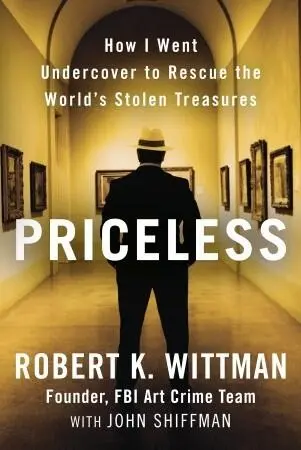
- Название:Priceless
- Автор:
- Издательство:Crown Publishers
- Жанр:
- Год:2010
- Город:New York
- ISBN:978-0-307-46149-0
- Рейтинг книги:3 / 5. Голосов: 1
-
Избранное:Добавить в избранное
- Отзывы:
-
Ваша оценка:
Priceless: краткое содержание, описание и аннотация
Предлагаем к чтению аннотацию, описание, краткое содержание или предисловие (зависит от того, что написал сам автор книги «Priceless»). Если вы не нашли необходимую информацию о книге — напишите в комментариях, мы постараемся отыскать её.
The London Times
In
Robert K. Wittman, the founder of the FBI’s Art Crime Team, pulls back the curtain on his remarkable career for the first time, offering a real-life international thriller to rival
.
Rising from humble roots as the son of an antique dealer, Wittman built a twenty-year career that was nothing short of extraordinary. He went undercover, usually unarmed, to catch art thieves, scammers, and black market traders in Paris and Philadelphia, Rio and Santa Fe, Miami and Madrid.
In this page-turning memoir, Wittman fascinates with the stories behind his recoveries of priceless art and antiquities: The golden armor of an ancient Peruvian warrior king. The Rodin sculpture that inspired the Impressionist movement. The headdress Geronimo wore at his final Pow-Wow. The rare Civil War battle flag carried into battle by one of the nation’s first African-American regiments.
The breadth of Wittman’s exploits is unmatched: He traveled the world to rescue paintings by Rockwell and Rembrandt, Pissarro, Monet and Picasso, often working undercover overseas at the whim of foreign governments. Closer to home, he recovered an original copy of the Bill of Rights and cracked the scam that rocked the PBS series By the FBI’s accounting, Wittman saved hundreds of millions of dollars worth of art and antiquities. He says the statistic isn’t important. After all, who’s to say what is worth more—a Rembrandt self-portrait or an American flag carried into battle? They're both priceless.
The art thieves and scammers Wittman caught run the gamut from rich to poor, smart to foolish, organized criminals to desperate loners. The smuggler who brought him a looted 6th-century treasure turned out to be a high-ranking diplomat. The appraiser who stole countless heirlooms from war heroes’ descendants was a slick, aristocratic con man. The museum janitor who made off with locks of George Washington's hair just wanted to make a few extra bucks, figuring no one would miss what he’d filched.
In his final case, Wittman called on every bit of knowledge and experience in his arsenal to take on his greatest challenge: working undercover to track the vicious criminals behind what might be the most audacious art theft of all.
Priceless — читать онлайн бесплатно полную книгу (весь текст) целиком
Ниже представлен текст книги, разбитый по страницам. Система сохранения места последней прочитанной страницы, позволяет с удобством читать онлайн бесплатно книгу «Priceless», без необходимости каждый раз заново искать на чём Вы остановились. Поставьте закладку, и сможете в любой момент перейти на страницу, на которой закончили чтение.
Интервал:
Закладка:
“On 4 December 2001, we searched their homes and the homes of four known associates. We found”—he turned to an aide—“ commo pruebas circunstanciales?”
“Circumstantial evidence.”
“Sí . We found circumstantial evidence but no paintings. In February this year, we were contacted by our American friends.”
The FBI agent sitting next to me took the cue and stood. Konrad Motyka was a towering figure with bulging forearms, a thin goatee, and a crew cut. He was assigned to a Eurasian organized crime squad in New York.
“OK,” he said, “here’s what we know: In February, an extraterritorial source”—a foreign FBI informant who lived overseas—“called me to report that Angel Flores had approached him about buying the stolen Koplowitz paintings for twenty million dollars. Flores called my source because the source has extensive organized crime contacts in the former Soviet Union. My source reported that Flores was growing desperate, was short of cash and worried about paying for chemotherapy treatments for his mother, who has cancer.
“All right,” the FBI agent continued, “at our direction, my source told Flores that he’s located a potential buyer, a wealthy Russian who works with a corrupt American art expert. After many phone calls and a visit here with the source, Flores has agreed to sell the paintings for $10 million, once the art expert authenticates the paintings.”
Motyka pointed to me. “This is Special Agent Robert Wittman. He has an extensive background in art and has worked undercover on many occasions. He will use his undercover name, Robert Clay. Flores will expect him to bring bodyguards when he inspects the paintings. I will play one of the bodyguards. The other will be Special Agent Geraldo Mora-Flores, sitting here next to Agent Wittman. We call him G .
“Angel Flores is expecting us to deliver one million euros in cash and transfer the rest by wire to his bank. Flores may demand routing numbers to verify that we have the funds in place. We have placed nine million U.S. in a foreign bank account.”
The FBI agent sat and the comisario continued. “We have one million euros, cash, from the Banco de España. For Señor Clay, we have reserved a suite on the eleventh floor of the Meliá Castilla Hotel, downtown. We will position agents in the next suite, in the lobby, and on the streets outside the hotel. One of my officers will deliver the money to the hotel room. He will be armed. I regret that under Spanish law, foreign police officers are not permitted to carry weapons.” We knew better than to try to argue the point.
Motyka wrapped up the briefing. “Tomorrow, they’re expecting a call by cell from a man calling himself Oleg. That’ll be me.”
“You speak Spanish?”
“French,” Motyka said. “I don’t speak Spanish and from what I understand, they don’t speak English. But we all understand French.”
“Which painting will you ask to see first?”
All eyes turned to me. “The Brueghel,” I said. “The Temptation of St. Anthony . It’s valuable, worth $4 million. It’s probably the hardest one to fake because it’s very complex—large and filled with tiny hobgoblins, wild fires, and satanic images—and because it’s painted on wood and attached to a cradle frame.”
When I got back to the hotel, the jet lag hit me hard. Motyka, fired up but also nervous because he was about to go undercover for the first time in his career, invited me to dinner. I begged off—“I’m an old man, I need to be well rested tomorrow”—and went to my room. I changed, poured a Coke from the minibar, and flipped on the TV. I found the BBC, the only channel in English. As I drifted off, I worried how the case was shaping up.
Tomorrow, if everything went according to plan:
I’d be entering another hotel room across town.
To meet a desperate, possibly homicidal gangster eager to close a $10 million deal.
Unarmed.
Dangling a million euros cash as bait.
Working with an FBI partner in his first undercover case.
Negotiating in French, a language I didn’t understand.
Swell.
I WOKE EARLY the next morning and rang up room service.
Stabbing at a plate of eggs, I paged through a stack of seventeen colored prints, pictures of the stolen works I’d downloaded from the FBI’s public art crime website: The Swing and The Donkey’s Fall by the Spanish master Francisco Goya. Girl with Hat and Dolls House by the Japanese modernist Leonard Tsuguharu Foujita. An Eragny landscape by the French Impressionist Camille Pissarro. Carnival Scene by the Madrid intellectual José Gutiérrez Solana.
The multimillion-dollar art was as intoxicating as any I’d chased.
Yet something nagged. Something felt different about this case.
It was the victim.
For the first time in my career, I wouldn’t be risking my life to return works of art to a museum or public institution. I’d be trying to rescue art stolen from a private home. For a lady I’d never met.
Who was she?
I pulled a dossier from my suitcase and opened it.
Esther Koplowitz was an heiress, a tycoon, a philanthropist, and a recluse.
A raven-haired beauty with chestnut eyes, Koplowitz was connected by birth and social status to Spain’s royal families. Her slightly younger sister, Alicia, was also a billionaire, and for decades they vied for the title of wealthiest woman in Spain. Together, their story was the stuff of Spanish legend. In business and charitable circles, the glamorous sisters were revered. In the tabloids that chronicled their soap-opera lives, the Koplowitzes drew comparisons to the Carringtons of the American television series Dynasty .
The sisters’ father was Ernesto Koplowitz, a Jew who fled Eastern Europe to Franco’s Spain before World War II and went on to run the cement and construction company Fomento de Construcciones y Contratas, a company he aquired in the 1950s, shortly before his daughters were born. The company was a public works behemoth. Founded in 1900, FCC had laid the tar for Madrid’s first paved roads in 1910, won the first contract to collect household trash in Madrid in 1915, and rebuilt bridges and railways blown up during the Civil War in the 1930s. When Ernesto Koplowitz took over FCC in the 1950s, he expanded efforts to win government contracts, in part by hiring executives with connections to the corrupt regime, including the father-in-law of Franco’s daughter. FCC laid the first kilometers of modern highway in Spain, built a U.S. Air Force base, and modernized Madrid’s telephone exchange. Ernesto Koplowitz died unexpectedly in 1962, after he fell off his horse while riding at the chic Club de Campo in Madrid. He left FCC to his daughters, who were not yet teenagers. A caretaker executive ran the company until 1969, when, to great fanfare, Esther and Alicia Koplowitz married a pair of dashing banker cousins, Alberto Alcocer and Alberto Cortina, and installed them as top executives at FCC. For two decades, the husbands grew FCC dramatically, winning major public works contracts across Spain.
Scandal struck in 1989. Paparazzi photographed Alicia Koplowitz’s husband dancing in the arms of the scantily clad wife of a Spanish marquis. Alicia promptly divorced her husband and fired him from FCC. When a second tabloid caught Esther Koplowitz’s husband cheating with his secretary, she too filed for divorce and expelled him from the family company. The publicity-shy sisters suddenly found themselves feminist heroes in Spain and majority owners of a $3 billion company. In 1998, Esther bought out Alicia’s stake in FCC for $800 million.
By the time I arrived in Madrid in the summer of 2002, Esther Koplowitz was principal shareholder of FCC and an accomplished businesswoman in her own right. The company’s annual revenues were approaching $6 billion and it employed ninety-two thousand people worldwide. FCC grew so large it was now one of the thirty-five publicly traded Spanish corporations whose stock price set the Ibex index, the local equivalent of the Dow Jones Industrial Average.
Читать дальшеИнтервал:
Закладка:
Похожие книги на «Priceless»
Представляем Вашему вниманию похожие книги на «Priceless» списком для выбора. Мы отобрали схожую по названию и смыслу литературу в надежде предоставить читателям больше вариантов отыскать новые, интересные, ещё непрочитанные произведения.












Обсуждение, отзывы о книге «Priceless» и просто собственные мнения читателей. Оставьте ваши комментарии, напишите, что Вы думаете о произведении, его смысле или главных героях. Укажите что конкретно понравилось, а что нет, и почему Вы так считаете.