Robert Wittman - Priceless
Здесь есть возможность читать онлайн «Robert Wittman - Priceless» весь текст электронной книги совершенно бесплатно (целиком полную версию без сокращений). В некоторых случаях можно слушать аудио, скачать через торрент в формате fb2 и присутствует краткое содержание. Город: New York, Год выпуска: 2010, ISBN: 2010, Издательство: Crown Publishers, Жанр: Биографии и Мемуары, на английском языке. Описание произведения, (предисловие) а так же отзывы посетителей доступны на портале библиотеки ЛибКат.
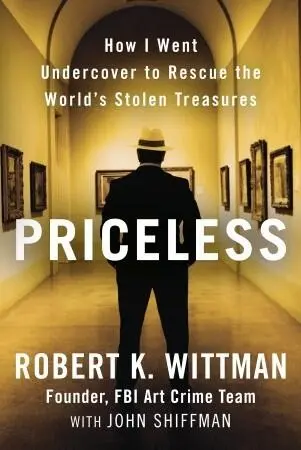
- Название:Priceless
- Автор:
- Издательство:Crown Publishers
- Жанр:
- Год:2010
- Город:New York
- ISBN:978-0-307-46149-0
- Рейтинг книги:3 / 5. Голосов: 1
-
Избранное:Добавить в избранное
- Отзывы:
-
Ваша оценка:
Priceless: краткое содержание, описание и аннотация
Предлагаем к чтению аннотацию, описание, краткое содержание или предисловие (зависит от того, что написал сам автор книги «Priceless»). Если вы не нашли необходимую информацию о книге — напишите в комментариях, мы постараемся отыскать её.
The London Times
In
Robert K. Wittman, the founder of the FBI’s Art Crime Team, pulls back the curtain on his remarkable career for the first time, offering a real-life international thriller to rival
.
Rising from humble roots as the son of an antique dealer, Wittman built a twenty-year career that was nothing short of extraordinary. He went undercover, usually unarmed, to catch art thieves, scammers, and black market traders in Paris and Philadelphia, Rio and Santa Fe, Miami and Madrid.
In this page-turning memoir, Wittman fascinates with the stories behind his recoveries of priceless art and antiquities: The golden armor of an ancient Peruvian warrior king. The Rodin sculpture that inspired the Impressionist movement. The headdress Geronimo wore at his final Pow-Wow. The rare Civil War battle flag carried into battle by one of the nation’s first African-American regiments.
The breadth of Wittman’s exploits is unmatched: He traveled the world to rescue paintings by Rockwell and Rembrandt, Pissarro, Monet and Picasso, often working undercover overseas at the whim of foreign governments. Closer to home, he recovered an original copy of the Bill of Rights and cracked the scam that rocked the PBS series By the FBI’s accounting, Wittman saved hundreds of millions of dollars worth of art and antiquities. He says the statistic isn’t important. After all, who’s to say what is worth more—a Rembrandt self-portrait or an American flag carried into battle? They're both priceless.
The art thieves and scammers Wittman caught run the gamut from rich to poor, smart to foolish, organized criminals to desperate loners. The smuggler who brought him a looted 6th-century treasure turned out to be a high-ranking diplomat. The appraiser who stole countless heirlooms from war heroes’ descendants was a slick, aristocratic con man. The museum janitor who made off with locks of George Washington's hair just wanted to make a few extra bucks, figuring no one would miss what he’d filched.
In his final case, Wittman called on every bit of knowledge and experience in his arsenal to take on his greatest challenge: working undercover to track the vicious criminals behind what might be the most audacious art theft of all.
Priceless — читать онлайн бесплатно полную книгу (весь текст) целиком
Ниже представлен текст книги, разбитый по страницам. Система сохранения места последней прочитанной страницы, позволяет с удобством читать онлайн бесплатно книгу «Priceless», без необходимости каждый раз заново искать на чём Вы остановились. Поставьте закладку, и сможете в любой момент перейти на страницу, на которой закончили чтение.
Интервал:
Закладка:
Hall called me in a fury. He was thinking about going over his supervisors’ heads.
I was equally angry and told him to go for it. I added, “If you don’t go to Brazil, Dave, I don’t go.” He was my partner. I had his back. Hall, Goldman, and I believed we were working together to change the long-held law-enforcement mentality that art crime isn’t a priority. To accomplish this, we needed each other.
Hall set up a private meeting with the new U.S. attorney’s top deputy, the true brains of the office. Hall gave a five-minute pitch, then pulled out a color print of The Spirit of ’76 . He pointed to the lower right-hand corner and the faint image of the twin towers. The second-ranking prosecutor in the U.S. attorney’s office smiled. He was a former Supreme Court clerk, a Bush appointee whose political instincts were as sharp as his considerable legal skills. He immediately recognized the public relations value. If we were successful in Rio, his boss would soon be standing before television cameras with the three Rockwells as backdrop, and the image of the towers.
HALL AND I arrived in Rio early on a Monday that first week in December, and rested up on Ipanema. We unpacked, uncoiled, and enjoyed feasting on two of the best steaks of our lives.
The next day, the FBI agent who worked at the U.S. embassy in Brasília, Gary Zaugg, met us in Rio. He drove us to meet the local prosecutors. The Brazilians were pleasant but not optimistic that we would be able to charge Carneiro. We freely acknowledged that we had an ancient case, thin evidence, and that our best witness, Lindberg in Minneapolis, was uncooperative. The prosecutors made clear that extradition was next to impossible. In Brazil, they explained, flight is considered as natural a right as freedom of speech. There’s no crime in Brazil for resisting arrest or fleeing prosecution.
Worse, the prosecutors said, no one seemed to know if Carneiro still held the paintings. The local police had already searched his home and business, and come up empty. Our weak hand grew even weaker.
On Wednesday, we returned to the prosecutor’s office to meet the man we’d waited so long to question.
Jose Carneiro was a short, wide man of fifty, with a broad face and thinning black hair that clumped by his ears. He owned an art gallery, a private school, and was the author of books on art and poetry. He greeted us warmly in English and with a hearty baritone. He came alone, showing great confidence.
The Brazilian prosecutors went first. They reminded Carneiro he was under investigation for failure to pay the national property tax for the purchase of the Rockwells. This was a minor crime, a mere financial nuisance, and Carneiro knew it. He shrugged.
Hall tried next, opening with a prosecutor’s traditional tack, threatening prison to get what he wants. “You’re in a lot of trouble,” he told Carneiro. “The evidence is strong. You’ve admitted you have stolen American property. This is a serious crime in the United States. If we charge you, we’ll extradite you, fly you back in handcuffs, put you in an American prison. You’ll be there a long time.”
Carneiro responded with a throaty laugh. At worst, he knew, a U.S. extradition request would limit him to travel inside Brazil, a country nearly as large as the continental United States. Carneiro swept an open palm arm toward a window and its majestic vista of Rio. “I can’t leave Brazil? Welcome to my beautiful prison!”
Hall sat back, done. He had firm constraints. As an assistant U.S. attorney, he needed to tread carefully. Department of Justice guidelines limited what he could say, even in a foreign country. He represented the U.S. government, and any offers or promises he made could be binding—and he was under strict orders to offer no more than a promise not to prosecute.
On the other hand, as an FBI agent I could say anything, promise anything. My promises were worthless, but Carneiro didn’t know that. I could lie, twist facts, make threats—do almost anything except beat a suspect to get the job done. I put on my salesman’s hat.
I opened by trying to even the playing field, framing the issue as a geopolitical dilemma, not a potential crime. “Jose, let’s see if we can fix this, maybe make it all go away. Let’s try to find a way to do that. We get what we want, you don’t get in any trouble, and the prosecutors here get what they want. We all look good, everybody’s happy. What do you say?”
“I like it when everybody is happy,” he said.
It was a start. “Why make it worse, Jose?” I said. “Why pay more taxes? What are you going to do with these paintings? What good are they to you? Are you a Norman Rockwell lover to the point that you want to have these on your walls forever and leave a problem for your children and everybody else? Because you know you can’t move them outside of Brazil. And let’s be honest, these paintings are far more valuable in the United States than anywhere else. You’d get twice the price for them in the U.S. than here, but that’s the one place you can’t sell them. What good are they to you, Jose? Why are you holding these pieces hostage against America?”
Carneiro raised a finger. “Oh, Bob. I love America! We’re good friends. I love United States. I go to buy art all the time.”
“Great, wonderful,” I said, leaning forward but keeping my voice friendly. “But I’ll tell you what, Jose. If you don’t do this for us, maybe we can’t do anything to you here, but I guarantee you I’ll put you on a list where they’ll never let you inside the United States again.” It was a bluff. In December 2001, the terrorist watch lists didn’t yet exist. “You say you love the United States, but you’re holding our art hostage. Norman Rockwell is the quintessential American artist. In my country, everyone knows his work. You’re holding one of the patron saints of American art hostage. And you think you’re going to make friends doing that?”
Carneiro didn’t appear moved by my appeal, but he didn’t reject me either. “Let me think about it,” he said. We agreed to meet again on the next day.
ON THURSDAY, CARNEIRO opened with an offer.
“Three hundred thousand,” he said. “And you promise not to arrest me.”
In Europe, it is not uncommon for governments to pay ransom and offer amnesty to recover kidnapped paintings. It’s a game the thieves, the insurance companies, and the governments play. No one publicly advertises this, because they don’t want to encourage more thefts. But the bottom line is that the museums get their paintings back, the insurance companies save millions on the true value, the thieves get their money, and the police get to close the case. The United States doesn’t play this game.
The $300,000 figure set Hall off. “That’s crazy,” he said. “We’re talking about stolen art.” The U.S. government would not pay a cent for the Rockwells, he said. Carneiro needed to know he was not negotiating with the deep pockets of the U.S. treasury. “Bob and I are here to help, to be the go-between for you and Brown & Bigelow. You make an offer and we’ll run it by them.”
While Carneiro considered that, I stepped out to call my contact at Brown & Bigelow in Minneapolis. The call was quick. The $300,000 offer was rejected out of hand and I returned to the negotiating table. We haggled for the bulk of the afternoon—pushing Carneiro lower and lower, ducking out to make calls to Minneapolis. When the price reached $100,000, I began to try to convince both sides that this was a good deal. I told the folks in Minnesota they’d be getting $1 million worth of paintings for $100,000. I told Carneiro he’d be getting enough to wipe out his debt and tax bill and walk away. I gave them both the same advice: “You’re not going to get a better deal. At $100,000, you’re going to walk away a winner.”
Читать дальшеИнтервал:
Закладка:
Похожие книги на «Priceless»
Представляем Вашему вниманию похожие книги на «Priceless» списком для выбора. Мы отобрали схожую по названию и смыслу литературу в надежде предоставить читателям больше вариантов отыскать новые, интересные, ещё непрочитанные произведения.










Обсуждение, отзывы о книге «Priceless» и просто собственные мнения читателей. Оставьте ваши комментарии, напишите, что Вы думаете о произведении, его смысле или главных героях. Укажите что конкретно понравилось, а что нет, и почему Вы так считаете.