Robert Wittman - Priceless
Здесь есть возможность читать онлайн «Robert Wittman - Priceless» весь текст электронной книги совершенно бесплатно (целиком полную версию без сокращений). В некоторых случаях можно слушать аудио, скачать через торрент в формате fb2 и присутствует краткое содержание. Город: New York, Год выпуска: 2010, ISBN: 2010, Издательство: Crown Publishers, Жанр: Биографии и Мемуары, на английском языке. Описание произведения, (предисловие) а так же отзывы посетителей доступны на портале библиотеки ЛибКат.
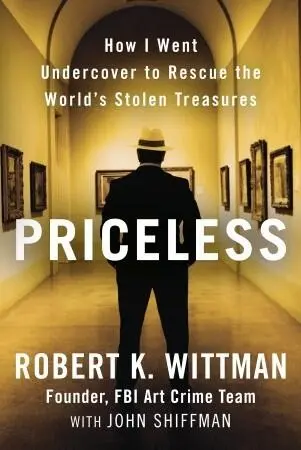
- Название:Priceless
- Автор:
- Издательство:Crown Publishers
- Жанр:
- Год:2010
- Город:New York
- ISBN:978-0-307-46149-0
- Рейтинг книги:3 / 5. Голосов: 1
-
Избранное:Добавить в избранное
- Отзывы:
-
Ваша оценка:
Priceless: краткое содержание, описание и аннотация
Предлагаем к чтению аннотацию, описание, краткое содержание или предисловие (зависит от того, что написал сам автор книги «Priceless»). Если вы не нашли необходимую информацию о книге — напишите в комментариях, мы постараемся отыскать её.
The London Times
In
Robert K. Wittman, the founder of the FBI’s Art Crime Team, pulls back the curtain on his remarkable career for the first time, offering a real-life international thriller to rival
.
Rising from humble roots as the son of an antique dealer, Wittman built a twenty-year career that was nothing short of extraordinary. He went undercover, usually unarmed, to catch art thieves, scammers, and black market traders in Paris and Philadelphia, Rio and Santa Fe, Miami and Madrid.
In this page-turning memoir, Wittman fascinates with the stories behind his recoveries of priceless art and antiquities: The golden armor of an ancient Peruvian warrior king. The Rodin sculpture that inspired the Impressionist movement. The headdress Geronimo wore at his final Pow-Wow. The rare Civil War battle flag carried into battle by one of the nation’s first African-American regiments.
The breadth of Wittman’s exploits is unmatched: He traveled the world to rescue paintings by Rockwell and Rembrandt, Pissarro, Monet and Picasso, often working undercover overseas at the whim of foreign governments. Closer to home, he recovered an original copy of the Bill of Rights and cracked the scam that rocked the PBS series By the FBI’s accounting, Wittman saved hundreds of millions of dollars worth of art and antiquities. He says the statistic isn’t important. After all, who’s to say what is worth more—a Rembrandt self-portrait or an American flag carried into battle? They're both priceless.
The art thieves and scammers Wittman caught run the gamut from rich to poor, smart to foolish, organized criminals to desperate loners. The smuggler who brought him a looted 6th-century treasure turned out to be a high-ranking diplomat. The appraiser who stole countless heirlooms from war heroes’ descendants was a slick, aristocratic con man. The museum janitor who made off with locks of George Washington's hair just wanted to make a few extra bucks, figuring no one would miss what he’d filched.
In his final case, Wittman called on every bit of knowledge and experience in his arsenal to take on his greatest challenge: working undercover to track the vicious criminals behind what might be the most audacious art theft of all.
Priceless — читать онлайн бесплатно полную книгу (весь текст) целиком
Ниже представлен текст книги, разбитый по страницам. Система сохранения места последней прочитанной страницы, позволяет с удобством читать онлайн бесплатно книгу «Priceless», без необходимости каждый раз заново искать на чём Вы остановились. Поставьте закладку, и сможете в любой момент перейти на страницу, на которой закончили чтение.
Интервал:
Закладка:
I didn’t enjoy reliving my own trauma, and I never publicly discussed the accident. But I volunteered to become the bureau’s EAP counselor in Philadelphia because I thought it was the best way I could give back to an agency that had refused to give up on me.
Although the work was fulfilling, there was a dark side I hadn’t considered—experiencing firsthand the shock that victims’ families suffer. When an agent died, the FBI often sent me to notify the family. At funerals, I was tasked to discreetly escort elderly and young family members. When the Washington, D.C., sniper killed a Philadelphia man, I had to physically restrain a child who erupted in fury when I arrived at his doorstep to deliver the sad news. After jobs like those, I started to see in the victims’ families the specter of Donna and our kids.
Witnessing so much death and heartbreak posed psychological risks for an undercover agent. Working undercover is a mental game and you can’t let yourself become distracted by fear or emotion. For many years, I volunteered for a program called C.O.P.S. Kids, part of Concerns of Police Survivors, and its participation in National Police Week in Washington, which culminates with a wreath-laying ceremony for fallen officers. One year, as the ceremony wound down, I saw a nineteen-year-old son in a wheelchair and his mother struggling up a hill toward the Washington Monument. I strolled over to help and we began chatting. The young man was a paraplegic, an accident victim. His older brother and father, both police officers, had died in the line of duty in one year. As we moved up the hill, the son suddenly grabbed my arm and began screaming and crying. “Never get hurt! Promise me you’ll never get hurt.” I held it together until the drive home. By the time I crossed the Maryland-Delaware state line, I started shaking and crying. I never returned to National Police Week. I couldn’t take it anymore. When I worked undercover, I couldn’t afford to have scenes like that floating in my head.
I arrived at Ground Zero late on the afternoon of September 12.
The FBI had sent me to counsel firefighters, police officers, agents, paramedics, soldiers—anyone who needed it. But when I first arrived, everyone was still busy pulling at the rubble, digging for survivors. So I joined the rescue. I stood in a bucket line, one hundred people long, passing dirt and debris from corners of the World Trade Center foundation.
Eight days later, when the rescue mission officially became a recovery effort and the FBI sent me home, I returned to suburbia. Within hours, I found myself on the soccer field, coaching Kristin and her fourth-grade girls’ team, the Green Hornets. I was wearing a new set of clothes, but I could still smell Ground Zero.
I remained in Philadelphia but did not leave 9/11 behind. Every few days for the next year, my FBI colleagues in New York sent me the effects of local victims found at Ground Zero—credit cards, wallets, jewelry, cell phones, driver’s licenses, anything that could be identified. As EAP coordinator, it was my job to return them to the next of kin.
NORMAN ROCKWELL, DEAD for twenty-three years, already was making a comeback when the terrorists struck.
The long-held sentiment by “serious” critics—that Rockwell was a mere illustrator, who painted nostalgic caricatures of an innocent, largely bygone America—began shifting in the late 1990s. In 1999, a retrospective of his work, seventy paintings from 1916 to 1969, began a three-year tour to heavy crowds and uncharacteristically rave reviews.
“I think you can put it down to trendy revisionism and opportunism,” Newsweek art critic Peter Plagens said at the time. “There is also a built-in hipness about liking Rockwell: It goes against the orthodoxy of Modernism…. The funny thing is, Rockwell wasn’t the cracker-barrel philosopher straight out of It’s a Wonderful Life we might imagine.”
That stereotype was based on Rockwell’s earlier work for Boys’ Life and the Saturday Evening Post —saccharine paintings of kids at soda fountains, families gathered around a Thanksgiving meal, Boy Scouts saluting the American flag, Rosie the Riveter and private Willie Gillis promoting the war effort against Germany and Japan. In the 1950s and 1960s, critics sniffed at Rockwell’s precise realism, labeling it banal. “Dalí is really Norman Rockwell’s twin brother kidnapped by Gypsies in babyhood,” the critic Vladimir Nabokov famously sneered. The term Rockwellesque became a pejorative.
The revisionist view that culminated with the 1999 retrospective was that Rockwell was misunderstood, both by critics and fans who wrongly presumed he represented all values conservative. Looking deeper, it turned out that Rockwell was a sly progressive. In an essay that accompanied the 1999 national tour, art critic Dave Hickey argued that Rockwell’s art in the fifties helped inspire the social revolutions that followed. He invoked one of the stolen paintings, Hasty Retreat , produced for a 1954 Brown & Bigelow calendar. It depicts two young bathers snagging their clothes, high-tailing it past a sign that says, “No Swimming!”
“Rockwell was one of the few creatures in American popular culture in the fifties who actually encouraged disobedience, willful disagreeableness and a tendency to break rules. I don’t know if we’d have had a lot of the sixties without the sort of benign permission of Rockwell’s images. There’s a wonderful painting of a girl with a black eye sitting outside the principal’s office, having gotten in a fight and obviously won. It’s not hard to imagine her a few years later burning her bra.”
After the September 11 attacks, as patriotism soared, so did Rockwell’s stock. He was one of America’s best-known artists, and a frightened nation found comfort in his well-known idealistic, nationalistic images. As part of a “United We Stand” campaign, advertisements of updated Rockwell images appeared in the New York Times . On Thanksgiving Day, the Tampa Tribune splashed across its front page a photo illustration based on Rockwell’s famous Freedom from Want , showing the matriarch of a large American family laying the turkey on the dinner table.
One of the three stolen Rockwell paintings became especially symbolic during that tumultuous post-terror time.
Painted for the Boy Scouts and Brown & Bigelow, The Spirit of ’76 was timed for the U.S. Bicentennial in 1976. The work, one of Rockwell’s last before dementia consumed him, is an homage to the famous nineteenth-century painting by Archibald McNeal Willard, in which a fife-and-drum corps from the Revolutionary War marches in front of the American flag. Willard’s work, originally known as Yankee Doodle , was painted for the Centennial Exposition of 1876 in Philadelphia. In Rockwell’s updated version, the fife-and-drum corps are Boy Scouts. And in the background is the unmistakable Manhattan skyline and the twin towers of the World Trade Center—a tiny detail that would later help keep our case alive.
After the September 11 attacks, many good cases, complicated investigations with years of work invested, fell by the wayside. Understandably, the recovery of stolen property, let alone stolen art, became a very low priority for the FBI in the fall of 2001. Like almost every agent on my squad and others, I was assigned to check out the hundreds of dubious and frantic calls, reports of terrorists, anthrax, the Taliban, and Middle Eastern-looking men lurking and plotting in Philadelphia neighborhoods. I did the job quietly and diligently, waiting for the right time to raise the Rockwell case.
My prosecutor partner, Hall, faced different priorities and a looming deadline. He received orders to report to his Navy unit by mid-December and to expect a yearlong deployment. Hall told me that if we didn’t fly to Brazil by early December, he wouldn’t get to go at all. In late October, he approached his immediate supervisors carefully. Though they’d approved the trip before 9/11, they’d never liked it. They were control freaks who thought the best ideas came from management, from the top down, not from the people doing the actual work. His supervisors also didn’t see how Hall could justify a five-thousand-mile flight to solve a case that wouldn’t conclude with an arrest. In their view, a prosecutor put criminals in prison; he didn’t travel the globe, rescuing stolen cultural property. So when Hall broached the subject again in October, Hall’s supervisors, citing new priorities since 9/11, said no. A trip to Rio was out of the question.
Читать дальшеИнтервал:
Закладка:
Похожие книги на «Priceless»
Представляем Вашему вниманию похожие книги на «Priceless» списком для выбора. Мы отобрали схожую по названию и смыслу литературу в надежде предоставить читателям больше вариантов отыскать новые, интересные, ещё непрочитанные произведения.










Обсуждение, отзывы о книге «Priceless» и просто собственные мнения читателей. Оставьте ваши комментарии, напишите, что Вы думаете о произведении, его смысле или главных героях. Укажите что конкретно понравилось, а что нет, и почему Вы так считаете.