Robert Wittman - Priceless
Здесь есть возможность читать онлайн «Robert Wittman - Priceless» весь текст электронной книги совершенно бесплатно (целиком полную версию без сокращений). В некоторых случаях можно слушать аудио, скачать через торрент в формате fb2 и присутствует краткое содержание. Город: New York, Год выпуска: 2010, ISBN: 2010, Издательство: Crown Publishers, Жанр: Биографии и Мемуары, на английском языке. Описание произведения, (предисловие) а так же отзывы посетителей доступны на портале библиотеки ЛибКат.
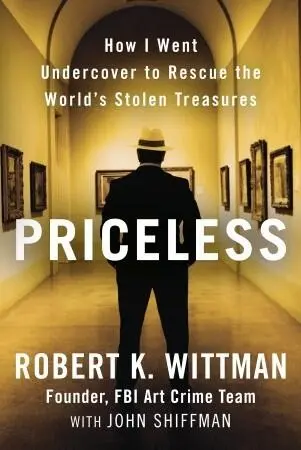
- Название:Priceless
- Автор:
- Издательство:Crown Publishers
- Жанр:
- Год:2010
- Город:New York
- ISBN:978-0-307-46149-0
- Рейтинг книги:3 / 5. Голосов: 1
-
Избранное:Добавить в избранное
- Отзывы:
-
Ваша оценка:
Priceless: краткое содержание, описание и аннотация
Предлагаем к чтению аннотацию, описание, краткое содержание или предисловие (зависит от того, что написал сам автор книги «Priceless»). Если вы не нашли необходимую информацию о книге — напишите в комментариях, мы постараемся отыскать её.
The London Times
In
Robert K. Wittman, the founder of the FBI’s Art Crime Team, pulls back the curtain on his remarkable career for the first time, offering a real-life international thriller to rival
.
Rising from humble roots as the son of an antique dealer, Wittman built a twenty-year career that was nothing short of extraordinary. He went undercover, usually unarmed, to catch art thieves, scammers, and black market traders in Paris and Philadelphia, Rio and Santa Fe, Miami and Madrid.
In this page-turning memoir, Wittman fascinates with the stories behind his recoveries of priceless art and antiquities: The golden armor of an ancient Peruvian warrior king. The Rodin sculpture that inspired the Impressionist movement. The headdress Geronimo wore at his final Pow-Wow. The rare Civil War battle flag carried into battle by one of the nation’s first African-American regiments.
The breadth of Wittman’s exploits is unmatched: He traveled the world to rescue paintings by Rockwell and Rembrandt, Pissarro, Monet and Picasso, often working undercover overseas at the whim of foreign governments. Closer to home, he recovered an original copy of the Bill of Rights and cracked the scam that rocked the PBS series By the FBI’s accounting, Wittman saved hundreds of millions of dollars worth of art and antiquities. He says the statistic isn’t important. After all, who’s to say what is worth more—a Rembrandt self-portrait or an American flag carried into battle? They're both priceless.
The art thieves and scammers Wittman caught run the gamut from rich to poor, smart to foolish, organized criminals to desperate loners. The smuggler who brought him a looted 6th-century treasure turned out to be a high-ranking diplomat. The appraiser who stole countless heirlooms from war heroes’ descendants was a slick, aristocratic con man. The museum janitor who made off with locks of George Washington's hair just wanted to make a few extra bucks, figuring no one would miss what he’d filched.
In his final case, Wittman called on every bit of knowledge and experience in his arsenal to take on his greatest challenge: working undercover to track the vicious criminals behind what might be the most audacious art theft of all.
Priceless — читать онлайн бесплатно полную книгу (весь текст) целиком
Ниже представлен текст книги, разбитый по страницам. Система сохранения места последней прочитанной страницы, позволяет с удобством читать онлайн бесплатно книгу «Priceless», без необходимости каждый раз заново искать на чём Вы остановились. Поставьте закладку, и сможете в любой момент перейти на страницу, на которой закончили чтение.
Интервал:
Закладка:
By the time I spoke with Mrs. Patterson in 1999, and after three years of Pritchard’s deceptions, she just wanted the truth. I’ve always found it’s just best to deliver bad news directly. So I told her what I’d learned from Pritchard’s records: Her husband’s collection wasn’t in any museum. Pritchard had sold it to two private Civil War dealers for $65,000. It was gone.
“My whole being has been violated and I have been emotionally raped,” the widow recalled.
Pritchard had to be stopped. He wasn’t just conning people out of money. He was stealing their heritage.
IN MARCH 2001, based on the evidence we presented to the grand jury, Pritchard and Juno were indicted on various federal charges, including defrauding the Wilson family and the Pickett family. The men faced as much as ten years in prison.
We were not finished. We had brought the initial indictment that March because the five-year statute of limitations was about to expire in the Wilson and Pickett cases. But we still had more time to bring a superseding indictment on charges related to the Zouave uniform, the Meade presentation pistol, and the Patterson family collection. We also weighed whether to charge Pritchard’s father for his role in the Hunt Confederate uniform scam. So far, I hadn’t interviewed the elder Pritchard.
I dreaded the confrontation. I’d known the elder Pritchard for more than a decade and had long respected him as a top man in the museum field. I’d visited him a dozen times at the Civil War Museum in Philadelphia to research cases and learn more about collecting. A well-thumbed copy of his three-volume treatise on Civil War weapons and uniforms sat on my desk at home.
Fortunately, I didn’t have to meet him face to face. The elder Pritchard was living in Memphis at the time, so I called him there. I made it clear that although he and I knew each other, this was an official FBI interview. I told him that we were going to charge his son with the Hunt uniform scam. I gave the father a choice: Cooperate on this one facet of the case or face a felony charge.
“Look, Russ,” I said. “Just tell me the truth and everything will go away.” In other words, you won’t be indicted. If he told us the truth, Goldman planned to exercise his prosecutorial discretion and leave him out of the next indictment. If he lied, Goldman planned to charge him.
“I’m sorry, Bob,” the elder Pritchard said. “I can’t help you.”
He couldn’t admit to me that he’d conspired with his son to swindle the Hunt family. I doubt this was because he wanted to protect his son. He knew it was too late for that. I think he couldn’t admit what he did because he knew it would ruin his reputation in the field.
I gave him one more chance. “Tell me what happened, Russ.”
“Bob, I can’t.”
“OK, but you’re going to go down.”
“I know. But I just can’t do it.”
Juno, on the other hand, played it smart. He knew we had a solid case against him, and he knew he could shave years off a prison term by pleading guilty and cooperating.
Two days after my conversation with the father, we filed the superseding indictment against both Pritchards.
Within a month, the Pritchard son and his attorney came to the FBI office in Philadelphia. He met with me, Goldman, and Heine to give a proffer statement, a private off-the-record confession, the prelude to a plea agreement.
Over two hours, Pritchard confessed to everything, and even dimed out his dad. Proffer sessions and confessions are incredibly stressful for defendants. They have to look their accusers in the eye—the very prosecutor and agents who’ve been hounding them for years, dragging their name into the newspaper, embarrassing their families, scandalizing their friends—and admit that yes, indeed, they did it. They did it all. Proffers are rarely pleasant and sometimes contentious. I’ve seen defendants leave a proffer session looking as if they’ve aged a couple of years. Pritchard? He didn’t look mussed at all.
When it was over, he walked over to shake Goldman’s hand, gripping the prosecutor’s elbow with his left hand, an old politician’s trick to keep the other man from pulling away.
“Mr. Goldman,” he said, “I want to thank you for bringing my act to an end. This is good for me. I’m glad you’re bringing these charges against me.”
Goldman raised his left eyebrow, broke away, and gave Pritchard a hard stare that said, “Don’t bullshit me.”
IN 2001, THE year Pritchard and Juno pleaded guilty, Harrisburg’s redbrick $50 million, sixty-five-thousand-square-foot National Civil War Museum celebrated its grand opening. It featured state-of-the-art displays and dioramas with genuine artifacts of war, including the kepi hat that Pickett wore at Gettysburg.
Like the Picketts, most families didn’t get their treasures back. The courts concluded that despite the frauds, the descendants no longer enjoyed legal title to the artifacts Pritchard had sold. The mayor of Harrisburg successfully argued that the city, too, was a victim of Pritchard and Juno, and that it was not required to return the items it acquired for its museum.
The Pritchard father would go to trial on the single charge related to the uniform scam, lose, and be sentenced to six months in a halfway house. Juno also got a few months in a halfway house. The Pritchard son would get a year and a day in prison and be ordered to pay $830,000 in restitution.
Despite the relatively light sentences, Goldman and I were thrilled with the outcome. The Antiques Roadshow investigation sent several important messages, and I couldn’t help but think of my father and all the other honest antiques dealers down on Howard Street in Baltimore, working to make a living on small margins. To them, the case demonstrated that someone cared, that someone was watching this unregulated industry—and that unscrupulous dealers faced public shame and possible imprisonment.
The public response was even greater than we’d hoped. In the collecting community, the Antiques Roadshow investigation represented such a watershed that one of the major trade publications printed the Pritchard indictment word for word. Surfing the wave of publicity the case brought, I received a torrent of tips that led to more important recoveries, including a Confederate regiment’s battle flag and a priceless sword presented to a Union hero of the great Monitor-Merrimack battle, missing since its theft from the U.S. Naval Academy in 1931. Goldman and I followed up the Antiques Roadshow prosecution with another indictment that shook the collectible world, charging two prominent Midwestern dealers with using fake appraisal documents to con a wealthy businessman into grossly overpaying for four antique firearms. One of the weapons in evidence was the world’s first Magnum revolver, a six-shot, .44-caliber Colt, the very handgun that Samuel Walker, the famed Texas Ranger, carried into his final, fatal battle against Mexican guerrillas.
But long before the Antiques Roadshow scandal wound toward its conclusion and Pritchard reported to prison, I was already turning my attention to my next case, my first international art crime investigation. Within months, I hoped, I’d be stalking stolen art in South America.
Chapter 13
A HOT HAND
Rio de Janeiro, 2001 .
IN A CABANA ON IPANEMA, ASSISTANT U.S. ATTORNEY David Hall and I sipped milk from coconut shells. Before us, Brazil’s trendiest beach buzzed under brilliant sunlight. Barefoot kids kicked up sand, playing volleyball with their feet. Rollerbladers in short shorts cruised the sidewalk. Bronzed hunks in Speedos preened, chatting up young ladies in thongs. The Latin pulse from a boom box dueled with the reggae beat from café speakers. At the opposite end of Guanabara Bay, a scarlet sun hovered over Sugar Loaf Mountain.
Читать дальшеИнтервал:
Закладка:
Похожие книги на «Priceless»
Представляем Вашему вниманию похожие книги на «Priceless» списком для выбора. Мы отобрали схожую по названию и смыслу литературу в надежде предоставить читателям больше вариантов отыскать новые, интересные, ещё непрочитанные произведения.











Обсуждение, отзывы о книге «Priceless» и просто собственные мнения читателей. Оставьте ваши комментарии, напишите, что Вы думаете о произведении, его смысле или главных героях. Укажите что конкретно понравилось, а что нет, и почему Вы так считаете.