Robert Wittman - Priceless
Здесь есть возможность читать онлайн «Robert Wittman - Priceless» весь текст электронной книги совершенно бесплатно (целиком полную версию без сокращений). В некоторых случаях можно слушать аудио, скачать через торрент в формате fb2 и присутствует краткое содержание. Город: New York, Год выпуска: 2010, ISBN: 2010, Издательство: Crown Publishers, Жанр: Биографии и Мемуары, на английском языке. Описание произведения, (предисловие) а так же отзывы посетителей доступны на портале библиотеки ЛибКат.
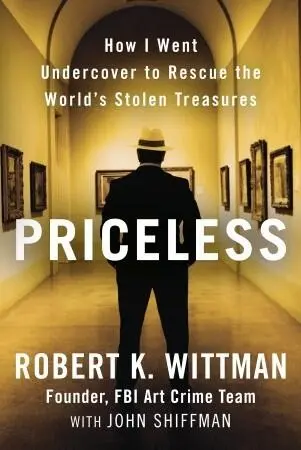
- Название:Priceless
- Автор:
- Издательство:Crown Publishers
- Жанр:
- Год:2010
- Город:New York
- ISBN:978-0-307-46149-0
- Рейтинг книги:3 / 5. Голосов: 1
-
Избранное:Добавить в избранное
- Отзывы:
-
Ваша оценка:
Priceless: краткое содержание, описание и аннотация
Предлагаем к чтению аннотацию, описание, краткое содержание или предисловие (зависит от того, что написал сам автор книги «Priceless»). Если вы не нашли необходимую информацию о книге — напишите в комментариях, мы постараемся отыскать её.
The London Times
In
Robert K. Wittman, the founder of the FBI’s Art Crime Team, pulls back the curtain on his remarkable career for the first time, offering a real-life international thriller to rival
.
Rising from humble roots as the son of an antique dealer, Wittman built a twenty-year career that was nothing short of extraordinary. He went undercover, usually unarmed, to catch art thieves, scammers, and black market traders in Paris and Philadelphia, Rio and Santa Fe, Miami and Madrid.
In this page-turning memoir, Wittman fascinates with the stories behind his recoveries of priceless art and antiquities: The golden armor of an ancient Peruvian warrior king. The Rodin sculpture that inspired the Impressionist movement. The headdress Geronimo wore at his final Pow-Wow. The rare Civil War battle flag carried into battle by one of the nation’s first African-American regiments.
The breadth of Wittman’s exploits is unmatched: He traveled the world to rescue paintings by Rockwell and Rembrandt, Pissarro, Monet and Picasso, often working undercover overseas at the whim of foreign governments. Closer to home, he recovered an original copy of the Bill of Rights and cracked the scam that rocked the PBS series By the FBI’s accounting, Wittman saved hundreds of millions of dollars worth of art and antiquities. He says the statistic isn’t important. After all, who’s to say what is worth more—a Rembrandt self-portrait or an American flag carried into battle? They're both priceless.
The art thieves and scammers Wittman caught run the gamut from rich to poor, smart to foolish, organized criminals to desperate loners. The smuggler who brought him a looted 6th-century treasure turned out to be a high-ranking diplomat. The appraiser who stole countless heirlooms from war heroes’ descendants was a slick, aristocratic con man. The museum janitor who made off with locks of George Washington's hair just wanted to make a few extra bucks, figuring no one would miss what he’d filched.
In his final case, Wittman called on every bit of knowledge and experience in his arsenal to take on his greatest challenge: working undercover to track the vicious criminals behind what might be the most audacious art theft of all.
Priceless — читать онлайн бесплатно полную книгу (весь текст) целиком
Ниже представлен текст книги, разбитый по страницам. Система сохранения места последней прочитанной страницы, позволяет с удобством читать онлайн бесплатно книгу «Priceless», без необходимости каждый раз заново искать на чём Вы остановились. Поставьте закладку, и сможете в любой момент перейти на страницу, на которой закончили чтение.
Интервал:
Закладка:
No, Wilson said.
Well, I’ll have to see it in person to give you an appraisal, Pritchard said. I’ll do it free of charge, just like I would on Antiques Roadshow , if you FedEx it to me. I’ll even send you the packaging. We do this all the time.
How can you afford to do this all the time at no charge?
The museums and collectors pay us for the appraisals if we sell them. Are you interested in selling the sword?
No, Wilson said. But I’ll be in touch.
Wilson called his mother, explained the offer of a free appraisal, and they agreed to send it to Pritchard. What did they have to lose? When Pritchard received the sword via FedEx, he called Wilson.
The sword is in pretty good shape, Pritchard said, but it needs some professional conservation. There may be some oxidation damage to the steel blade.
OK, Wilson said, how much is it worth?
Well, this sword is not uncommon, Pritchard said. It’s probably worth $7,000 to $8,000.
Hmm, how much will it cost to get it professionally conserved?
About $1,500. Maybe more. But there’s another option. I’m working with the City of Harrisburg, which is about to open a new Civil War Museum. This piece might make a nice addition. If you sell the sword to the museum, their conservators will restore it. They could feature the sword in the museum with a photograph of Major Wilson and a map showing the battles he fought in.
Wilson called back the next day and the two men struck a deal. The museum would buy the sword and include it in its collection. A month later, Pritchard sent Wilson a check for $7,950 drawn from the Pritchard/Juno business account, not from the museum or City of Harrisburg. Confused, Wilson called Pritchard.
Don’t worry, the broker said. We’re just the agent. You’ll be contacted by the museum soon enough.
Wilson cashed the check. It bounced.
Sorry about that, Pritchard said. Must have been an accounting error. I’ll send you a new check. By the way, the museum examined the sword and it’s in worse shape than I thought. You’re lucky the blade didn’t break off. They’ll have to do some heavy repairs before it can be displayed in the museum. But you know what? Good news! I’ll be touring with Antiques Roadshow at the Meadowlands in a few weeks. You should come!
The second check cleared and Wilson showed up at the TV taping to ask Pritchard about the progress of the sword conservation. Soon, Pritchard promised, soon. Over the next two years, every month or so, Wilson continued to call with the same question. Each time, he got the same answer.
When Wilson learned of Pickett’s lawsuit, he angrily confronted Juno and Pritchard. He demanded to know why the sword wasn’t displayed in the museum, as promised. Now Pritchard had a new answer: The museum ran out of money, so we sold it to a collector who’s thinking about starting a museum in the Poconos.
Wilson was apoplectic. He demanded to see records proving this, and he offered a ruse of his own to get them, saying that he needed the document for tax purposes.
OK, Pritchard said, but please understand. We have a lot going on and this was a small piece. I’m a good guy, really. Ask around. This Pickett lawsuit hassle is all a misunderstanding. After all, the Antiques Roadshow producers are sticking with us. That should tell you something. You know, it’s too bad we haven’t had time to become better friends.
Just send the documents, Wilson said.
As I later discovered, Pritchard never offered the sword to the Harrisburg museum. He let Juno use it as collateral for a $20,000 loan.
Pritchard and Juno pulled similar scams. Pritchard approached the descendants of Union general George Meade and offered to appraise a presentation firearm Meade received after the Battle of Gettysburg. This was an astonishing weapon—a mahogany-cased, .44-caliber Remington pistol with engraved ivory grips, silver-plated frame, and gold-washed cylinder and hammer. Pritchard told the family it was worth $180,000 and promised to place it in the Harrisburg museum. Three months after the Meades sold him the firearm, Pritchard sold it to a private collector for twice the price.
Once, while working with his father, Pritchard received from a Tennessee family an old Confederate uniform, one worn by their ancestor, Lieutenant Colonel William Hunt. The Pritchards falsely informed the family that the uniform was counterfeit and said that because it was worthless they’d donated it to a local charity. In reality, the Pritchards had sold it to a collector for $45,000.
The market for Civil War uniforms was so dirty that even Pritchard himself was once burned. He bought what he thought was a rare Union Zouave jacket, worn by a soldier in a New York regiment. With its ornate chevrons and puffed shoulder pads and a design based on the classic French Legion dress uniform, the Zouave would have been worth $25,000, if it had been authentic. It was not. It was a Belgian infantry jacket, worth only a few hundred dollars. Furious, Pritchard pulled a scam of his own to fix the problem. Using contacts at the Harrisburg museum, he slipped inside, removed the museum’s authentic Zouave jacket, and put the cheap Belgian jacket in its place.
The man was merciless. Pritchard once appeared unannounced at a nursing home to target a ninety-year-old woman said to possess great Confederate treasures. When he realized the lady was too infirm to talk, he slipped a nurse $100 to get a look at her file, and a phone number for her next of kin.
IT’S HARD TO quantify Pritchard’s individual acts of cruelty. But it would be difficult to top the emotional damage he inflicted on the Patterson family of Salisbury, Maryland.
Donald Patterson, a local businessman and active re-enactor, spent a lifetime collecting Civil War memorabilia with his middle-class family—his wife, Elaine; stepson, Robert; and two daughters, Robynn and Lorena. The family helped maintain Don Patterson’s wide-ranging collection of swords, rifles, pistols, uniforms, and knickknacks in a bedroom everyone affectionately called “the Museum.” The holdings included a rare Confederate overcoat, worth at least $50,000 to $100,000.
In a series of FBI interviews and letters to the government, family members described the role Don Patterson and the Museum played in their lives. “My whole life, since I was able to walk, I was with my father picking things out from old antique stores, things from the Civil War,” daughter Robynn wrote. “The Museum was just down the hall from my bedroom from fourth grade through high school,” stepson Robert recalled. “It was always there, always part of us. We didn’t fish, we didn’t play catch, we didn’t go camping—we collected irreplaceable pieces of history. In truth, almost my entire childhood was represented in the collection. My dreams, aspirations, my values came to be in large part because of my involvement with the collection.” The stepson made a career in the Army, rising to the rank of lieutenant colonel.
The Patterson family’s halcyon life shattered in late 1995, when Mr. Patterson killed himself, as well as his secret mistress. “As you can imagine, our whole family was absolutely devastated,” his widow said.
Like a vulture, Pritchard visited Salisbury just months after the murder-suicide. The nice man charmed the widow, driving her to pick up her disabled daughters from school, eating meals at the Patterson kitchen table, and assuring them that the artifacts from the Museum would be in better hands in a real Civil War museum. He told her about the new one rising near Gettysburg and presented letters and brochures from the City of Harrisburg, including one that promised a “Donald Patterson Memorial Collection” room. In 1996, one year after Don Patterson’s death, the family agreed to Pritchard’s plan. The nice man gave them $5,000, packed away the best of the collection, and drove it north. Shortly after he left, the widow noticed, it became harder to get him to return her calls. The betrayal was under way.
Читать дальшеИнтервал:
Закладка:
Похожие книги на «Priceless»
Представляем Вашему вниманию похожие книги на «Priceless» списком для выбора. Мы отобрали схожую по названию и смыслу литературу в надежде предоставить читателям больше вариантов отыскать новые, интересные, ещё непрочитанные произведения.










Обсуждение, отзывы о книге «Priceless» и просто собственные мнения читателей. Оставьте ваши комментарии, напишите, что Вы думаете о произведении, его смысле или главных героях. Укажите что конкретно понравилось, а что нет, и почему Вы так считаете.