Robert Wittman - Priceless
Здесь есть возможность читать онлайн «Robert Wittman - Priceless» весь текст электронной книги совершенно бесплатно (целиком полную версию без сокращений). В некоторых случаях можно слушать аудио, скачать через торрент в формате fb2 и присутствует краткое содержание. Город: New York, Год выпуска: 2010, ISBN: 2010, Издательство: Crown Publishers, Жанр: Биографии и Мемуары, на английском языке. Описание произведения, (предисловие) а так же отзывы посетителей доступны на портале библиотеки ЛибКат.
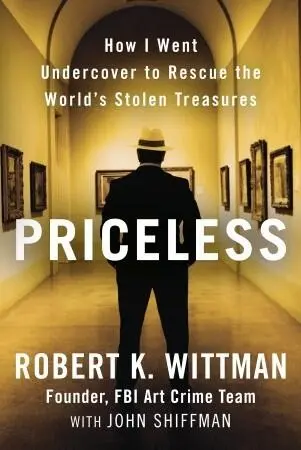
- Название:Priceless
- Автор:
- Издательство:Crown Publishers
- Жанр:
- Год:2010
- Город:New York
- ISBN:978-0-307-46149-0
- Рейтинг книги:3 / 5. Голосов: 1
-
Избранное:Добавить в избранное
- Отзывы:
-
Ваша оценка:
Priceless: краткое содержание, описание и аннотация
Предлагаем к чтению аннотацию, описание, краткое содержание или предисловие (зависит от того, что написал сам автор книги «Priceless»). Если вы не нашли необходимую информацию о книге — напишите в комментариях, мы постараемся отыскать её.
The London Times
In
Robert K. Wittman, the founder of the FBI’s Art Crime Team, pulls back the curtain on his remarkable career for the first time, offering a real-life international thriller to rival
.
Rising from humble roots as the son of an antique dealer, Wittman built a twenty-year career that was nothing short of extraordinary. He went undercover, usually unarmed, to catch art thieves, scammers, and black market traders in Paris and Philadelphia, Rio and Santa Fe, Miami and Madrid.
In this page-turning memoir, Wittman fascinates with the stories behind his recoveries of priceless art and antiquities: The golden armor of an ancient Peruvian warrior king. The Rodin sculpture that inspired the Impressionist movement. The headdress Geronimo wore at his final Pow-Wow. The rare Civil War battle flag carried into battle by one of the nation’s first African-American regiments.
The breadth of Wittman’s exploits is unmatched: He traveled the world to rescue paintings by Rockwell and Rembrandt, Pissarro, Monet and Picasso, often working undercover overseas at the whim of foreign governments. Closer to home, he recovered an original copy of the Bill of Rights and cracked the scam that rocked the PBS series By the FBI’s accounting, Wittman saved hundreds of millions of dollars worth of art and antiquities. He says the statistic isn’t important. After all, who’s to say what is worth more—a Rembrandt self-portrait or an American flag carried into battle? They're both priceless.
The art thieves and scammers Wittman caught run the gamut from rich to poor, smart to foolish, organized criminals to desperate loners. The smuggler who brought him a looted 6th-century treasure turned out to be a high-ranking diplomat. The appraiser who stole countless heirlooms from war heroes’ descendants was a slick, aristocratic con man. The museum janitor who made off with locks of George Washington's hair just wanted to make a few extra bucks, figuring no one would miss what he’d filched.
In his final case, Wittman called on every bit of knowledge and experience in his arsenal to take on his greatest challenge: working undercover to track the vicious criminals behind what might be the most audacious art theft of all.
Priceless — читать онлайн бесплатно полную книгу (весь текст) целиком
Ниже представлен текст книги, разбитый по страницам. Система сохранения места последней прочитанной страницы, позволяет с удобством читать онлайн бесплатно книгу «Priceless», без необходимости каждый раз заново искать на чём Вы остановились. Поставьте закладку, и сможете в любой момент перейти на страницу, на которой закончили чтение.
Интервал:
Закладка:
It was a Monday afternoon in early December, the heart of summer in South America. Blue skies, a pleasant breeze, seventy-five degrees. Back in Philadelphia, temperatures were falling and my FBI colleagues were bracing for a formal inspection by bureaucrats from Headquarters.
I swirled the straw in my coconut and dug my toes in the soft, yielding sand. After landing in Rio that morning following a ten-hour flight jammed shoulder to shoulder in coach, the stress was flowing out of me, down through my toes into that luxuriant sand. I felt well rested and invigorated by the beach scene. A deeply tanned, nearly nude couple pedaled by on a bike. I shook my head and raised the coconut in toast to my traveling partner.
The federal prosecutor hid behind his shades and Penn baseball cap, silent.
I said, “I can’t believe your bosses thought this was some sort of boondoggle.”
That drew a wry smile. And then a frown. “You know we’ve got a weak hand.”
I nodded. Hall was right. We held few cards.
We were in Rio to try to solve a cold case, one that had frustrated the FBI for more than two decades—the theft of $1.2 million worth of Norman Rockwell paintings stolen from a gallery in Minneapolis in 1978. It wasn’t a well-known art theft, but it was one that resonated with me. How could we fail to go after thieves who stole the works of an iconic American artist?
The U.S. government and the FBI routinely helped other nations retrieve stolen art and artifacts smuggled into our country. But the Rockwell case, if we pulled it off, would mark the rare repatriation of American artwork from a foreign country. We were only three months removed from the September 11 attacks, and we felt a special duty to recover these classic pieces of Americana. The most valuable of the stolen paintings, The Spirit of ’76 , depicted a fife-and-drum corps of multiracial Boy Scouts from northern New Jersey, marching with the Stars and Stripes, the faint image of Manhattan and the twin towers in the background.
Our target was a wealthy Brazilian art dealer who claimed that he’d purchased the paintings in Rio in the 1990s and therefore legally owned them under Brazilian law. The dealer was said to be politically connected and shrewd. Hall and I had spent two years working through diplomatic and legal channels to arrange a meeting with him, and that meeting was now set for Wednesday, in two days’ time.
We weren’t sure what to expect, largely because the United States and Brazil had recently ratified their first mutual legal-assistance treaty and our case would mark the inaugural joint criminal investigation between the two nations. There were a lot of uncertainties. We still didn’t know, for instance, if we would be allowed to directly question the Brazilian art dealer, and if so, whether he would be compelled to answer. In many countries, American prosecutors and FBI agents must put questions in writing or submit them to local magistrates for approval. I had also heard that it was not uncommon for witnesses in foreign countries to invoke the local equivalent of the Fifth Amendment and refuse to cooperate with American inquiries. If that happened here, we’d be screwed, and probably would be met with scorn by colleagues when we returned to Philadelphia tan but empty-handed.
I didn’t know how the week would play out, but I was quickly settling in for a good challenge, an away game with mysterious rules. I enjoyed the uncertainty of it all.
Hall was a seasoned advocate and a fun traveling companion, a friend. He and Goldman were the two prosecutors in Philadelphia who shared art crime cases—the three of us met at least once a week for lunch to strategize. Goldman had been busy with a drug trial and so Hall had drawn the Rockwell case. A bald, soft-spoken Yale grad of subtle intellect, Hall was also a commander in the Navy Reserves and held a black belt in karate. By nature and military and legal training, Hall needed rules of engagement and a clear strategy. He liked to enter a mission well armed, with a plan.
I turned to him as he fiddled with his coconut. “Stop worrying,” I said. “This is going to be fun.” I surveyed the beach scene again, my confidence building. “What we’ll have to do is treat this like a UC case, except we won’t be working undercover. We find out what the guy wants and see if we can give it to him. React to whatever he throws at us. Whatever we need to get it done, we’ll do. It’ll be great.”
THE ROCKWELL PAINTINGS were stolen on February 16, 1978, only hours after they were feted as the new star attractions at a Minneapolis gallery.
The party, at a gallery called Elayne’s in an affluent Twin Cities suburb, was well attended, despite the single-digit temperatures and a half foot of frozen snow on the ground. The owners, Elyane and Russell Lindberg and their daughter Bonnie, mingled with more than a hundred guests, sipping champagne and munching white sheet cake. Dozens of paintings for sale lined the walls, but the star attractions were a Renoir seascape and seven Norman Rockwell originals. The Lindbergs owned two of the Rockwells, a matching pair called Before the Date/Cowboy and Before the Date/Cowgirl . The two pieces were among the last of the artist’s works to grace the cover of the Saturday Evening Post . The five other Rockwell paintings were on loan, four of them from Brown & Bigelow, the Minnesota calendar company that had printed the Boy Scout calendars illustrated by the artist for more than a half a century.
The police report on the crime was sketchy: The party wound down around 10 p.m. The Lindbergs cleaned up, carefully activating the alarm and locking up. Then, at 12:50 a.m., a Pinkerton security guard making rounds discovered the back door to the gallery open, the deadbolt punched out, the phone and electrical lines severed. The distraught Lindbergs and police hustled to the crime scene to find the seven Rockwells and the Renoir gone. The invisible thieves left behind two clues: a pair of garbage bags and a size-ten footprint in the snow. Not much to go on.
The early days of the investigation were rich with mostly useless tips, with the public flooding Minneapolis police and FBI agents with leads. The primary focus fell on three unidentified white men said to have been acting oddly during a visit to the gallery on the day of the crime. The scruffy-looking trio hadn’t looked like art aficionados—at least, not your typical Norman Rockwell fans—and Russ Lindberg said he’d heard them argue in whispers over the value of the Renoir and Rockwell paintings. As the men left in a dirty white 1972 Chevy Impala hours before the reception, the suspicious gallery owner jotted down their license plate number. The FBI and police put out an all-points bulletin on the car. In a Teletype to headquarters a week later, an FBI agent reported little progress. “Whereabouts of current owner of vehicle negative to date, as it has been sold three times in the past month…. Investigation negative for any possible information.”
The FBI kept at it. Special agents from FBI divisions in Minneapolis, Los Angeles, Las Vegas, Chicago, Miami, New York, Philadelphia, and Detroit worked dozens of leads. They scoured prison phone records at Folsom State Prison in California, tracked a gang of burglars from New York City making their way west through northern states, and interrogated a Chicago-area burglar with a passion for stealing valuable postage stamps.
Over the next twenty years, the Rockwell heist drew intrigue, excitement, and dead ends. The Lindberg family fielded repeated calls from people who claimed to have the paintings. In the late 1970s, an undercover FBI agent and Elayne Lindberg flew to Miami to meet a Cuban art dealer who falsely claimed to know a Japanese diplomat willing to sell a few of the stolen paintings. In the 1980s, a Detroit man engaged in months of negotiations with prosecutors and FBI agents, then suddenly vanished. At one point, a Minneapolis man caused a few hours of hysteria and hope when he called Russell Lindberg, claiming he’d found one of the paintings. But when Lindberg showed up, he realized the man was a fool. What the man believed to be a Rockwell original was nothing more than a $10 canvas print.
Читать дальшеИнтервал:
Закладка:
Похожие книги на «Priceless»
Представляем Вашему вниманию похожие книги на «Priceless» списком для выбора. Мы отобрали схожую по названию и смыслу литературу в надежде предоставить читателям больше вариантов отыскать новые, интересные, ещё непрочитанные произведения.









Обсуждение, отзывы о книге «Priceless» и просто собственные мнения читателей. Оставьте ваши комментарии, напишите, что Вы думаете о произведении, его смысле или главных героях. Укажите что конкретно понравилось, а что нет, и почему Вы так считаете.