Robert Wittman - Priceless
Здесь есть возможность читать онлайн «Robert Wittman - Priceless» весь текст электронной книги совершенно бесплатно (целиком полную версию без сокращений). В некоторых случаях можно слушать аудио, скачать через торрент в формате fb2 и присутствует краткое содержание. Город: New York, Год выпуска: 2010, ISBN: 2010, Издательство: Crown Publishers, Жанр: Биографии и Мемуары, на английском языке. Описание произведения, (предисловие) а так же отзывы посетителей доступны на портале библиотеки ЛибКат.
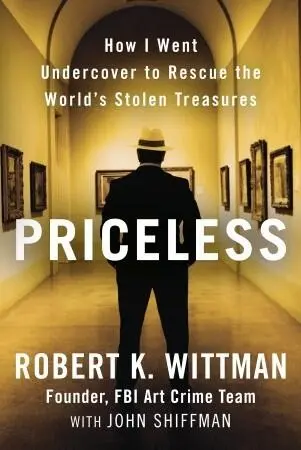
- Название:Priceless
- Автор:
- Издательство:Crown Publishers
- Жанр:
- Год:2010
- Город:New York
- ISBN:978-0-307-46149-0
- Рейтинг книги:3 / 5. Голосов: 1
-
Избранное:Добавить в избранное
- Отзывы:
-
Ваша оценка:
Priceless: краткое содержание, описание и аннотация
Предлагаем к чтению аннотацию, описание, краткое содержание или предисловие (зависит от того, что написал сам автор книги «Priceless»). Если вы не нашли необходимую информацию о книге — напишите в комментариях, мы постараемся отыскать её.
The London Times
In
Robert K. Wittman, the founder of the FBI’s Art Crime Team, pulls back the curtain on his remarkable career for the first time, offering a real-life international thriller to rival
.
Rising from humble roots as the son of an antique dealer, Wittman built a twenty-year career that was nothing short of extraordinary. He went undercover, usually unarmed, to catch art thieves, scammers, and black market traders in Paris and Philadelphia, Rio and Santa Fe, Miami and Madrid.
In this page-turning memoir, Wittman fascinates with the stories behind his recoveries of priceless art and antiquities: The golden armor of an ancient Peruvian warrior king. The Rodin sculpture that inspired the Impressionist movement. The headdress Geronimo wore at his final Pow-Wow. The rare Civil War battle flag carried into battle by one of the nation’s first African-American regiments.
The breadth of Wittman’s exploits is unmatched: He traveled the world to rescue paintings by Rockwell and Rembrandt, Pissarro, Monet and Picasso, often working undercover overseas at the whim of foreign governments. Closer to home, he recovered an original copy of the Bill of Rights and cracked the scam that rocked the PBS series By the FBI’s accounting, Wittman saved hundreds of millions of dollars worth of art and antiquities. He says the statistic isn’t important. After all, who’s to say what is worth more—a Rembrandt self-portrait or an American flag carried into battle? They're both priceless.
The art thieves and scammers Wittman caught run the gamut from rich to poor, smart to foolish, organized criminals to desperate loners. The smuggler who brought him a looted 6th-century treasure turned out to be a high-ranking diplomat. The appraiser who stole countless heirlooms from war heroes’ descendants was a slick, aristocratic con man. The museum janitor who made off with locks of George Washington's hair just wanted to make a few extra bucks, figuring no one would miss what he’d filched.
In his final case, Wittman called on every bit of knowledge and experience in his arsenal to take on his greatest challenge: working undercover to track the vicious criminals behind what might be the most audacious art theft of all.
Priceless — читать онлайн бесплатно полную книгу (весь текст) целиком
Ниже представлен текст книги, разбитый по страницам. Система сохранения места последней прочитанной страницы, позволяет с удобством читать онлайн бесплатно книгу «Priceless», без необходимости каждый раз заново искать на чём Вы остановились. Поставьте закладку, и сможете в любой момент перейти на страницу, на которой закончили чтение.
Интервал:
Закладка:
In North Carolina, the state’s copy of the Bill of Rights and Washington’s transmittal letter were immediately treated as historical documents, and a legislative clerk placed them in a strongbox. The records did not find a permanent home until 1796, when the state finished construction of the State House in Raleigh. North Carolina’s new capital, like Washington, D.C., was a planned city—ten square blocks that rose from a former plantation and were modeled after the cityscape in Philadelphia. Although the State House burned in 1831, aides hustled nearly all of the records out in time to save them. When North Carolina completed construction of a new three-story, cross-shaped granite State Capitol in 1840, it filed the most important historical documents in the offices of the secretary of state, treasurer, and State Library, and in alcoves next to the State Senate. Generally, these records were folded in half, bundle-wrapped in plain paper, secured with twine, and placed in pigeonhole cabinets with doors. According to the most likely account, the file containing the Bill of Rights was stored in the first-floor offices of the secretary of state, inside a vault, inside a locked box.
There the historic parchment remained, apparently undisturbed, until the final hours of the Civil War.
ON APRIL 12, 1865, three days after Lee surrendered to Grant and two days before Booth shot Lincoln, Sherman gathered 90,000 troops on the outskirts of North Carolina’s capital.
At midnight, Governor Zebulon B. Vance locked the Capitol doors and fled on horseback.
He left a letter for Sherman with the mayor: Promise not to sack and burn Raleigh, and Confederate troops will abandon the city. “The Capitol of the State with Libraries, Museum and most of the public records is also in your power,” the governor wrote to Sherman. “I can but entertain the hope that they may escape mutilation or destruction in as much as such evidence of learning and taste could advantage neither party in the prosecution of the war whether destroyed or preserved.” The Union troops who received the letter on the city’s outskirts made no promises, and the Confederates retreated anyway.
Sherman’s soldiers not only ignored the governor’s entreaties, they also violated their own rules of war. The occupying forces ran right over Army General Order 100, Articles 35, 36, and 45, as if they hadn’t heard about them, which they probably hadn’t. Issued by President Lincoln on April 24, 1863, these articles of war marked one of the first modern edicts protecting cultural heritage during conflict: “Classical works of art, libraries, scientific collections or precious instruments, such as astronomical telescopes, as well as hospitals, must be secured against all avoidable injury, even when they are constrained in fortified places whilst besieged or bombed… In no case shall they be sold or given away, if captured by the armies of the United States, nor shall they be privately appropriated or wantonly destroyed or injured…. All captures and booty belong, according to the modern law of war, primarily to the government of the captor.”
The tens of thousands of Union troops who streamed into Raleigh that day commandeered nearly every building, private or public. The Capitol itself did not fare well. Sherman’s troops ransacked the Legislative Records Room and soldiers scrawled graffiti on Capitol walls. The Union provost marshal occupied the governor’s two-suite office in the building, and hundreds, perhaps thousands, of troops wandered through the finest building in Raleigh, to attend meetings or simply sightsee. “The interior of the Capitol presented a scene of utmost confusion,” a soldier later recounted in an unofficial history of one Union regiment. “Bound legislative documents and maps lay strewn about the floor of the library. The museum rooms were in even worse plight.”
When North Carolina officials returned months later, they found a mess—and several of the state’s most cherished documents, including the Bill of Rights, were missing. A furious state treasurer complained fruitlessly to Washington: “This capture was rapacious and illegal, as I think, and consequently impolitic.”
The Bill of Rights, now a spoil of war, had begun a mysterious journey.
HISTORY IS LITTERED with tales of art stolen during wartime.
The Roman Empire famously looted spoils of war, but also was among the first to implement rules to protect cultural heritage: Roman armies were ordered to loot only spolia , routine war booty, not spoliatio , cultural artifacts such as art and religious objects.
During the Thirty Years’ War that engulfed Germany and much of Europe in the 1600s, Protestant and Catholic armies voraciously looted vanquished foes. Protestant troops led by the Swedish king Gustavus Adolphus raided Catholic churches and monasteries throughout Europe, cherry-picking the finest art to fill Stockholm’s castles and museums. Armies backed by the Catholic Church proudly brought trophies to Pope Gregory XV, including hundreds of books from the Protestants’ famed Palatine Library in Heidelberg. As Napoleon marched across Europe, and as Britain colonized portions of the Middle East and Asia, they took treasures to stock museums in Paris and London.
Adolf Hitler’s ferocious war machine ran protection for history’s most carefully plotted looting and destruction of Europe’s cultural heritage. When German forces began to march across Europe starting with the annexation of Austria in 1938, Hitler’s armies systematically confiscated the paintings and statues the Führer coveted and destroyed the art and cultural landmarks that celebrated the races he believed to be inferior. In Poland, Holland, Belgium, Italy, and Russia, Hitler’s armies seized tens of thousands of works, including pieces by Rembrandt, da Vinci, Raphael, and Michelangelo. The Nazis were not as successful in France. When they reached the Louvre, they found only empty frames. The French had evacuated thousands of pieces before the invasion; Mona Lisa was wrapped in red satin and secreted away in an ambulance to a remote château in the south of France. At the end of the war, Allied soldiers found forty tons of stolen works, stored in Alpine chalets or hidden deep inside Nazi salt mines.
Art suffered greatly during all of Europe’s post-colonial conflicts and civil wars. During the Khmer Rouge wars in the 1970s, thousands of Buddhist temples were destroyed and sculptures looted at Cambodia’s finest cultural institution, the Dépôt de la Conservation d’Angkor.
The plundering of cultural treasures in Iraq and Afghanistan demonstrates that the phenomenon continues well into this century. During the 2003 U.S. invasion of Iraq, looters ransacked unguarded museums and hundreds of priceless treasures were lost, many dating to Babylonian times. In Afghanistan from 1979 to 2001, three hostile forces—the Russians, the mujahideen rebels, and the Taliban—pilfered most of the nation’s best art and antiquities.
Art may suffer during wartime, but looted spoils are not necessarily lost forever.
One of my favorite such legends is a Philadelphia story: When the British invaded the American capital city in 1777, pushing the Continental Army back to Valley Forge, redcoat officers occupied Benjamin Franklin’s vacant house for many months. When Franklin, who’d been in France, returned, he saw that the British had stolen most of his valuables, including a cherished Franklin portrait that had hung over the mantel of a fireplace.
The painting would not be rescued until the early twentieth century, and only by a stroke of luck. An American ambassador to England happened to visit the home of a descendant of a redcoat commander and noticed the Franklin portrait hanging in the library. In 1906, after years of polite negotiation, the British presented the painting to President Teddy Roosevelt.
Читать дальшеИнтервал:
Закладка:
Похожие книги на «Priceless»
Представляем Вашему вниманию похожие книги на «Priceless» списком для выбора. Мы отобрали схожую по названию и смыслу литературу в надежде предоставить читателям больше вариантов отыскать новые, интересные, ещё непрочитанные произведения.










Обсуждение, отзывы о книге «Priceless» и просто собственные мнения читателей. Оставьте ваши комментарии, напишите, что Вы думаете о произведении, его смысле или главных героях. Укажите что конкретно понравилось, а что нет, и почему Вы так считаете.