Robert Wittman - Priceless
Здесь есть возможность читать онлайн «Robert Wittman - Priceless» весь текст электронной книги совершенно бесплатно (целиком полную версию без сокращений). В некоторых случаях можно слушать аудио, скачать через торрент в формате fb2 и присутствует краткое содержание. Город: New York, Год выпуска: 2010, ISBN: 2010, Издательство: Crown Publishers, Жанр: Биографии и Мемуары, на английском языке. Описание произведения, (предисловие) а так же отзывы посетителей доступны на портале библиотеки ЛибКат.
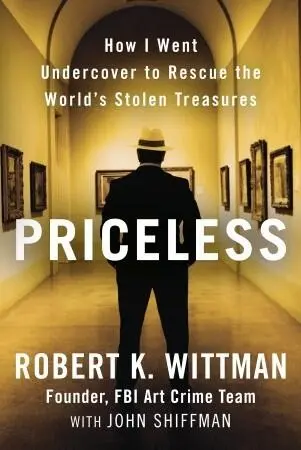
- Название:Priceless
- Автор:
- Издательство:Crown Publishers
- Жанр:
- Год:2010
- Город:New York
- ISBN:978-0-307-46149-0
- Рейтинг книги:3 / 5. Голосов: 1
-
Избранное:Добавить в избранное
- Отзывы:
-
Ваша оценка:
Priceless: краткое содержание, описание и аннотация
Предлагаем к чтению аннотацию, описание, краткое содержание или предисловие (зависит от того, что написал сам автор книги «Priceless»). Если вы не нашли необходимую информацию о книге — напишите в комментариях, мы постараемся отыскать её.
The London Times
In
Robert K. Wittman, the founder of the FBI’s Art Crime Team, pulls back the curtain on his remarkable career for the first time, offering a real-life international thriller to rival
.
Rising from humble roots as the son of an antique dealer, Wittman built a twenty-year career that was nothing short of extraordinary. He went undercover, usually unarmed, to catch art thieves, scammers, and black market traders in Paris and Philadelphia, Rio and Santa Fe, Miami and Madrid.
In this page-turning memoir, Wittman fascinates with the stories behind his recoveries of priceless art and antiquities: The golden armor of an ancient Peruvian warrior king. The Rodin sculpture that inspired the Impressionist movement. The headdress Geronimo wore at his final Pow-Wow. The rare Civil War battle flag carried into battle by one of the nation’s first African-American regiments.
The breadth of Wittman’s exploits is unmatched: He traveled the world to rescue paintings by Rockwell and Rembrandt, Pissarro, Monet and Picasso, often working undercover overseas at the whim of foreign governments. Closer to home, he recovered an original copy of the Bill of Rights and cracked the scam that rocked the PBS series By the FBI’s accounting, Wittman saved hundreds of millions of dollars worth of art and antiquities. He says the statistic isn’t important. After all, who’s to say what is worth more—a Rembrandt self-portrait or an American flag carried into battle? They're both priceless.
The art thieves and scammers Wittman caught run the gamut from rich to poor, smart to foolish, organized criminals to desperate loners. The smuggler who brought him a looted 6th-century treasure turned out to be a high-ranking diplomat. The appraiser who stole countless heirlooms from war heroes’ descendants was a slick, aristocratic con man. The museum janitor who made off with locks of George Washington's hair just wanted to make a few extra bucks, figuring no one would miss what he’d filched.
In his final case, Wittman called on every bit of knowledge and experience in his arsenal to take on his greatest challenge: working undercover to track the vicious criminals behind what might be the most audacious art theft of all.
Priceless — читать онлайн бесплатно полную книгу (весь текст) целиком
Ниже представлен текст книги, разбитый по страницам. Система сохранения места последней прочитанной страницы, позволяет с удобством читать онлайн бесплатно книгу «Priceless», без необходимости каждый раз заново искать на чём Вы остановились. Поставьте закладку, и сможете в любой момент перейти на страницу, на которой закончили чтение.
Интервал:
Закладка:
Kadhum believed that I was an American mobster, or at least some sort of art expert working for the mob. As a vouch, the father of one of his good friends had introduced us. The father, Kadhum believed, could be trusted because he’d hidden a stolen Renoir painting for their gang near Los Angeles for several years. But Kadhum remained wary, and for this reason I could not take the precautions I had taken in Madrid, insisting that I meet the bad guy with three “bodyguards.” On the Copenhagen job, I was working alone and unarmed.
The missing masterpiece was tiny, a four-by-eight-inch Rembrandt self-portrait painted in 1630 at age twenty-four. One of the few the artist crafted on gilded copper, the painting glowed as if backlit. Still, Self-Portrait remains a sober piece. Young Rembrandt wears a dark cloak, a brown beret, and a half-smile as inviting and mysterious as the Mona Lisa’s . Once a centerpiece of the collection at the Swedish National Museum in Stockholm, Self-Portrait had vanished five years earlier, during one of the largest and most spectacular art heists in history.
THE WELL-EXECUTED THEFT began three days before Christmas, 2000.
About a half hour before the 5 p.m. closing time, a gang of six, possibly eight, Middle Eastern men spread out across Stockholm. It was already dark, the winter Scandinavian sun having set by mid-afternoon; sub-freezing temperatures kept most roads and sidewalks slick with packed snow and ice. The museum lies at the end of a short peninsula accessible only by three central Stockholm streets, and the thieves used this to their advantage, creating a set of barriers to cut it off from the rest of the city. On the first of the three streets, a gang member set a parked Ford on fire, creating a scene that drew the police, the fire department, and dozens of curious residents. On the second street, a gang member set a Mazda afire, drawing more fire trucks. To block the third road, the thieves laid spiked tire strips. Along the river at the museum’s edge, two gang members quietly docked an orange fifteen-foot getaway boat.
A few minutes before closing, three men wearing hoodies—one carrying a machine gun, the others pistols—burst through the gallery’s double glass-door entrance. They ordered guards and patrons to the floor.
“Stay calm,” the man with the machine gun said in Swedish. “Stay quiet and you won’t be hurt.”
As one gunman held a handful of tourists, guards, and docents at bay, the others vaulted up the museum’s grand marble staircase to the second floor. The thieves turned right and pushed through a set of double doors, past marble sculptures and oil-on-canvas paintings. One headed straight for the Dutch Room and Rembrandt’s postcard-sized Self-Portrait . The other hit the French room and selected two Renoirs from 1878— Conversation with a Gardener and Young Parisian .
Each thief pulled clippers from his pocket, snipped wires holding the frames to the walls, and stuffed the paintings into large black duffel bags. The three paintings were among the smallest in the museum—and that made them among the easiest to carry away. Together, they were worth an estimated $40 million. The men scurried back down to the lobby, rejoined their colleague, and ran out the front door. The entire robbery took just two and a half minutes. The three men, each carrying a stolen treasure across the icy street, turned left and ran for the waterfront, where they met their moored boat and roared away. The police, stuck in traffic caused by the diversion, didn’t arrive until 5:35 p.m., a good half an hour after the thieves left the dock.
THE THEFT OF Self-Portrait and the Renoirs bruised not only the international art world, but also Swedish pride. The National Museum, a city landmark and model of Florentine and Venetian architecture that opened in 1866, held four centuries’ worth of European treasures, many of them collected by the enlightened King Gustav III.
The Swedish police began their investigation with one big clue: During the robbery, another boater saw the three thieves dart down the dock and jump into their getaway boat. Their hurry, particularly in such icy conditions, caught the boater’s curiosity. Quietly, the witness followed the getaway boat as it sped across the Norrström River and snaked into a canal about a mile away. He found the orange boat abandoned by a small dock, still rocking in its own wake.
The witness called police, and a picture of the boat was published in the next day’s newspapers. Within twenty-four hours, a man came forward to say he’d sold the orange boat for cash a few days earlier. The buyer had used a fake name but made the mistake of giving the seller his real cell phone number. Police traced the cell phone’s logs and this led them to a crew of small-time suburban crooks.
Using phone wiretaps and surveillance, Swedish police were able to identify most members of the gang. In a quick sweep, they arrested a native Swede, a Russian, a Bulgarian, and three Iraqi brothers. In a search, police found Polaroid pictures of the missing works—blackmail-style photographs of the paintings next to recent newspapers. They did not find the actual paintings. Although a Swedish court convicted one man and sentenced him to several years in prison, the paintings remained at large.
A year later, underworld sources in Sweden tipped police that someone seemed to be trying to sell one of the Renoirs on the black market. The police set up a sting in a Swedish coffee shop and recovered Conversation with a Gardener . From my base in Philadelphia, I was pleased to read of the arrest. But for the next four years, no one in law enforcement heard a word about the other Renoir or the Rembrandt.
Then, in March 2005, I got a call from the FBI art crime investigator in Los Angeles, Chris Calarco.
“I’m not sure what we have yet, or if this is anything, but I wanted to give you a heads-up,” he said. “A couple of guys on a wire out here heard something.”
“Yeah?”
“They think the subject might be trying to sell a Renoir.”
“What do we know about him?”
“Bulgarian. Here illegally since at least the 1990s. Moved here from Sweden, I think.”
Sweden. “I’ll be damned,” I muttered to myself, and then I asked Calarco, “Is the painting he’s trying to sell Young Parisian?”
Calarco said he would check and I filled him in on the 2000 Stockholm heist. He called back a week later. Yes, he said. It was Young Parisian . The target not only mentioned the painting by name, but he also seemed to speak regularly with a son still living in Stockholm. The target’s name was Igor Kostov, and he was suspected of dealing drugs and fencing stolen goods. He was sixty-six years old, an illegal East European immigrant living near Hollywood, worked at a pawnshop, and almost always wore a Members Only windbreaker that covered his sagging stomach. Kostov was a former boxer, an occupation confirmed by his flat nose and forehead scars.
On the wire, Kostov spoke in rapid-fire, staccato sentences laced with his thick Bulgarian accent, and the agents found his incessant bragging amusing. I asked Calarco to thank the agents for their patience on the wire, for being smart enough to recognize the clues that suddenly transformed their case from a run-of-the-mill drug investigation into an international art rescue.
This can’t be overstated. Most people don’t realize that working a wire is grunt work. Wiretaps can provide phenomenal tips and evidence, but the reality is that recording them is a tedious task, far less glamorous than portrayed in the movies or hour-long episodes of The Wire or The Sopranos . Wiretaps require hours, weeks, and often months of patience, waiting for calls, staring at a computer screen, typing notes, trying to string together snippets of conversations, interpreting code words, waiting for the bad guys to slip up and say something stupid. In the United States, unlike most other countries, the job is incredibly time-consuming because agents can’t simply record every call, then retrieve them all at the end of the day. To protect civil liberties, agents must listen to all calls live and record only those portions of a call that are relevant to the case. Thankfully, the case agents, Gary Bennett and Sean Sterle, had been paying attention when Kostov began talking about the Renoir.
Читать дальшеИнтервал:
Закладка:
Похожие книги на «Priceless»
Представляем Вашему вниманию похожие книги на «Priceless» списком для выбора. Мы отобрали схожую по названию и смыслу литературу в надежде предоставить читателям больше вариантов отыскать новые, интересные, ещё непрочитанные произведения.












Обсуждение, отзывы о книге «Priceless» и просто собственные мнения читателей. Оставьте ваши комментарии, напишите, что Вы думаете о произведении, его смысле или главных героях. Укажите что конкретно понравилось, а что нет, и почему Вы так считаете.