Robert Wittman - Priceless
Здесь есть возможность читать онлайн «Robert Wittman - Priceless» весь текст электронной книги совершенно бесплатно (целиком полную версию без сокращений). В некоторых случаях можно слушать аудио, скачать через торрент в формате fb2 и присутствует краткое содержание. Город: New York, Год выпуска: 2010, ISBN: 2010, Издательство: Crown Publishers, Жанр: Биографии и Мемуары, на английском языке. Описание произведения, (предисловие) а так же отзывы посетителей доступны на портале библиотеки ЛибКат.
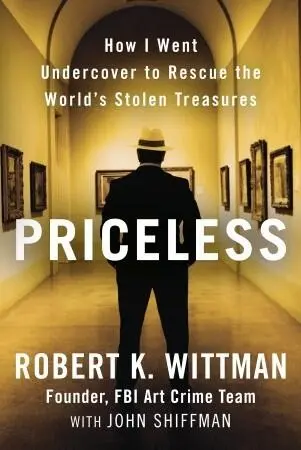
- Название:Priceless
- Автор:
- Издательство:Crown Publishers
- Жанр:
- Год:2010
- Город:New York
- ISBN:978-0-307-46149-0
- Рейтинг книги:3 / 5. Голосов: 1
-
Избранное:Добавить в избранное
- Отзывы:
-
Ваша оценка:
Priceless: краткое содержание, описание и аннотация
Предлагаем к чтению аннотацию, описание, краткое содержание или предисловие (зависит от того, что написал сам автор книги «Priceless»). Если вы не нашли необходимую информацию о книге — напишите в комментариях, мы постараемся отыскать её.
The London Times
In
Robert K. Wittman, the founder of the FBI’s Art Crime Team, pulls back the curtain on his remarkable career for the first time, offering a real-life international thriller to rival
.
Rising from humble roots as the son of an antique dealer, Wittman built a twenty-year career that was nothing short of extraordinary. He went undercover, usually unarmed, to catch art thieves, scammers, and black market traders in Paris and Philadelphia, Rio and Santa Fe, Miami and Madrid.
In this page-turning memoir, Wittman fascinates with the stories behind his recoveries of priceless art and antiquities: The golden armor of an ancient Peruvian warrior king. The Rodin sculpture that inspired the Impressionist movement. The headdress Geronimo wore at his final Pow-Wow. The rare Civil War battle flag carried into battle by one of the nation’s first African-American regiments.
The breadth of Wittman’s exploits is unmatched: He traveled the world to rescue paintings by Rockwell and Rembrandt, Pissarro, Monet and Picasso, often working undercover overseas at the whim of foreign governments. Closer to home, he recovered an original copy of the Bill of Rights and cracked the scam that rocked the PBS series By the FBI’s accounting, Wittman saved hundreds of millions of dollars worth of art and antiquities. He says the statistic isn’t important. After all, who’s to say what is worth more—a Rembrandt self-portrait or an American flag carried into battle? They're both priceless.
The art thieves and scammers Wittman caught run the gamut from rich to poor, smart to foolish, organized criminals to desperate loners. The smuggler who brought him a looted 6th-century treasure turned out to be a high-ranking diplomat. The appraiser who stole countless heirlooms from war heroes’ descendants was a slick, aristocratic con man. The museum janitor who made off with locks of George Washington's hair just wanted to make a few extra bucks, figuring no one would miss what he’d filched.
In his final case, Wittman called on every bit of knowledge and experience in his arsenal to take on his greatest challenge: working undercover to track the vicious criminals behind what might be the most audacious art theft of all.
Priceless — читать онлайн бесплатно полную книгу (весь текст) целиком
Ниже представлен текст книги, разбитый по страницам. Система сохранения места последней прочитанной страницы, позволяет с удобством читать онлайн бесплатно книгу «Priceless», без необходимости каждый раз заново искать на чём Вы остановились. Поставьте закладку, и сможете в любой момент перейти на страницу, на которой закончили чтение.
Интервал:
Закладка:
Sure enough, at the French-American meeting that afternoon, the SIAT chief followed Fred’s speech with one of his own: He unilaterally announced that he planned to insert a French undercover officer into the deal. I explained that Sunny would probably resist adding a fourth person to the deal. I even sketched out the triangle on a piece of paper and spelled out what Sunny had said: “It can only be the three of us.” The French SIAT chief replied that this was impossible. “There is a warrant for Laurenz in France,” he said, “and so he cannot come to France.” The SIAT chief added that he doubted I would be allowed to work undercover in France. The new French undercover law, he explained, was tricky.
“Sure, I understand,” I said, careful not to become engaged in an argument in front of such a large group. If what the SIAT chief said was true, it would mean that two thirds of our triangle—Laurenz and me—were barred from doing a deal in France. That sounded ominous.
The most encouraging news from the briefing came from the two supervisors running Pierre’s wiretap and surveillance groups. One said she was “ninety-nine percent sure” that the gang Sunny was speaking with held the Gardner paintings.
Pierre added, “On the phone calls, they talk in code to a person in Spain. But it’s easy to understand. They speak of getting apartments for someone named Bob. One they say is located on Vermeer Street. The other they say is on Rembrandt Street.”
“Do you know who Sunny is talking to?” someone asked.
“Yes,” the French surveillance supervisor said. “They are Corsicans, a group known to us.” [2] To protect the safety of certain individuals, references to this group are intentionally vague.
The French territory in the Mediterranean was infested with organized crime, and the national police officers were as unwelcome on Corsica as FBI agents are in Puerto Rico.
After the meeting broke up, Fred sauntered up to Pierre. I overheard the Boston supervisor again mention something about a gun and Pierre say, “I’m sorry, but…” I walked over to Pierre, pulling him aside to apologize.
“No problem,” Pierre said, and he lowered his voice. “I have my problems also. What my SIAT chief said about you not being able to work in France? Not true. But he is a boss and I cannot make him look bad in front of the Americans.”
I shook my head. Too many chefs. Too many FBI offices. Too many French law enforcement agencies. Too many competing interests. It didn’t bode well for such a complex undercover operation, one that would require speed, flexibility, creativity, and risk.
Pierre seemed to sense what I was thinking and said, “Like I say, in this case, we’re going to have a lot of managers; everyone wants a piece of the cake.”
WHEN WE RETURNED to the United States, the case agent in Boston, Geoff Kelly, put together the necessary paperwork for a major undercover investigation, a seven-page form called an FD-997. He set the value of the Gardner art at $500 million, summarized the FBI’s extensive efforts to recover it since 1990, and laid out the undercover plan for a sting in France.
Geoff also gave the case a name, Operation Masterpiece.
A FEW WEEKS after the Paris meeting, Laurenz called to tell me we’d be buying the paintings in Spain instead of France.
For me, the change of venue was fortuitous. I’d made plenty of friends in the Spanish police during the Madrid case—their cooperation would be virtually assured. The medal the Spanish government gave me hung in my den. The richest woman in Spain owed me a favor.
“Fine, no problem,” I told Laurenz. “I love Spain.”
“Sunny wants to know if you want the ‘big one’ or the ‘little one’ first.” I didn’t know if he meant the diminutive Vermeer, which was worth much more, or the gigantic Rembrandt, which was worth less.
“I want them both, so it doesn’t matter,” I said. “What are we talking about? Madrid? Barcelona? Couple of weeks?”
Laurenz said, “I let you know.”
I called Eric Ives in Washington and gave him the good news. We put together a plan to travel to Madrid in ten days’ time. On the eve of the trip, Eric arranged a conference call between all the FBI offices involved—Washington, Paris, Boston, Miami, Madrid, and Philadelphia. The call did not go well.
Fred began by announcing that the trip to Madrid was canceled, catching everyone except the FBI agents in Paris by surprise. This particularly embarrassed our agent in Madrid, because he’d already spent a lot of time with the Spanish police securing SWAT, surveillance, intelligence, and undercover support. The Boston supervisor cited unnamed “security issues” in Spain, suggesting that the police there were not trustworthy.
What’s more, Fred made it clear he was furious that I’d been making arrangements without clearing every detail with him. “There are communication issues here,” he said. “We’ve got to be careful not to leave people out of the loop.” Fred chastised me for directly contacting the FBI agent in Madrid. I reminded Fred that Eric had already obtained Headquarters’ approval for me to make the appropriate contacts in Spain—and that I knew our man in Madrid from the Koplowitz case. Fred didn’t care. “Not your job, Wittman. I’m in charge.”
I backed off for now. I didn’t care if these guys barked at me. Whatever it took to move forward.
But I knew we’d never recover the Gardner paintings if we operated by committee.
After the conference call, I needed some air. I began wandering around the office, and landed at the desk of my friend Special Agent Jerri Williams, a twenty-four-year veteran and the FBI’s spokesperson in Philadelphia. She’d replaced Linda Vizi, who’d retired.
“You don’t look too good,” Jerri said.
I told Jerri about the conference call.
She frowned. “It sounds like the kind of turf-war crap we get whenever we deal with other agencies, not inside the Bureau.” She was right. The major federal law-enforcement agencies—especially the FBI, DEA, IRS, ATF, and Immigration Customs Enforcement—almost always wrestled for control of joint investigations; the public would be surprised to learn how often different law enforcement agencies hid things from one other, or tried to squeeze each other out. Jerri said, “Not getting much help from headquarters?”
“I’m trying, but…”
“Yeah, well, you know Boston isn’t going to give up a case like this.”
My concern only grew in the weeks that followed, as I found myself spending a great deal of time juggling calls between Eric in Washington, Fred and Geoff Kelly in Boston, and the agents stationed at U.S. embassies in Europe. Since I needed to verify what Sunny and Laurenz were telling me, I kept in close contact with Pierre, whose art crime investigators were wiretapping their phones. We agreed to check in every Thursday morning. On one of those calls, he warned me that his French bosses weren’t happy that the case might be shifting to Spain. They would fiercely resist the move.
I didn’t bother to ask Pierre why the French would object. It was obvious. If the bust went down in Spain, the big press conference would be held in Madrid and all the accolades would go to the Spanish police, not the French.
PIERRE’S BOSSES NEEDN’T have worried.
Shortly after Sunny returned to Miami in late November 2006, Laurenz called to let me know that the plan had changed once again: Sunny was now offering all eleven Gardner paintings in France, not Spain.
“How much would you be willing to pay?” Laurenz asked.
“Thirty million,” I said. It was the standard black market price, five to ten percent of open market value.
“Cash?”
“If I buy them inside the U.S., yes,” I said. “Otherwise, wire transfer.”
Читать дальшеИнтервал:
Закладка:
Похожие книги на «Priceless»
Представляем Вашему вниманию похожие книги на «Priceless» списком для выбора. Мы отобрали схожую по названию и смыслу литературу в надежде предоставить читателям больше вариантов отыскать новые, интересные, ещё непрочитанные произведения.











Обсуждение, отзывы о книге «Priceless» и просто собственные мнения читателей. Оставьте ваши комментарии, напишите, что Вы думаете о произведении, его смысле или главных героях. Укажите что конкретно понравилось, а что нет, и почему Вы так считаете.