Robert Wittman - Priceless
Здесь есть возможность читать онлайн «Robert Wittman - Priceless» весь текст электронной книги совершенно бесплатно (целиком полную версию без сокращений). В некоторых случаях можно слушать аудио, скачать через торрент в формате fb2 и присутствует краткое содержание. Город: New York, Год выпуска: 2010, ISBN: 2010, Издательство: Crown Publishers, Жанр: Биографии и Мемуары, на английском языке. Описание произведения, (предисловие) а так же отзывы посетителей доступны на портале библиотеки ЛибКат.
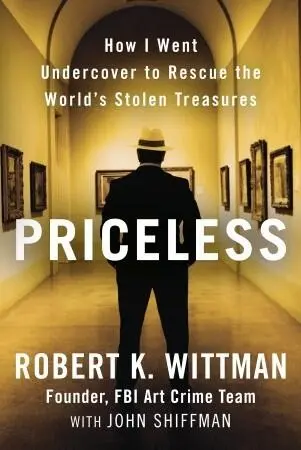
- Название:Priceless
- Автор:
- Издательство:Crown Publishers
- Жанр:
- Год:2010
- Город:New York
- ISBN:978-0-307-46149-0
- Рейтинг книги:3 / 5. Голосов: 1
-
Избранное:Добавить в избранное
- Отзывы:
-
Ваша оценка:
Priceless: краткое содержание, описание и аннотация
Предлагаем к чтению аннотацию, описание, краткое содержание или предисловие (зависит от того, что написал сам автор книги «Priceless»). Если вы не нашли необходимую информацию о книге — напишите в комментариях, мы постараемся отыскать её.
The London Times
In
Robert K. Wittman, the founder of the FBI’s Art Crime Team, pulls back the curtain on his remarkable career for the first time, offering a real-life international thriller to rival
.
Rising from humble roots as the son of an antique dealer, Wittman built a twenty-year career that was nothing short of extraordinary. He went undercover, usually unarmed, to catch art thieves, scammers, and black market traders in Paris and Philadelphia, Rio and Santa Fe, Miami and Madrid.
In this page-turning memoir, Wittman fascinates with the stories behind his recoveries of priceless art and antiquities: The golden armor of an ancient Peruvian warrior king. The Rodin sculpture that inspired the Impressionist movement. The headdress Geronimo wore at his final Pow-Wow. The rare Civil War battle flag carried into battle by one of the nation’s first African-American regiments.
The breadth of Wittman’s exploits is unmatched: He traveled the world to rescue paintings by Rockwell and Rembrandt, Pissarro, Monet and Picasso, often working undercover overseas at the whim of foreign governments. Closer to home, he recovered an original copy of the Bill of Rights and cracked the scam that rocked the PBS series By the FBI’s accounting, Wittman saved hundreds of millions of dollars worth of art and antiquities. He says the statistic isn’t important. After all, who’s to say what is worth more—a Rembrandt self-portrait or an American flag carried into battle? They're both priceless.
The art thieves and scammers Wittman caught run the gamut from rich to poor, smart to foolish, organized criminals to desperate loners. The smuggler who brought him a looted 6th-century treasure turned out to be a high-ranking diplomat. The appraiser who stole countless heirlooms from war heroes’ descendants was a slick, aristocratic con man. The museum janitor who made off with locks of George Washington's hair just wanted to make a few extra bucks, figuring no one would miss what he’d filched.
In his final case, Wittman called on every bit of knowledge and experience in his arsenal to take on his greatest challenge: working undercover to track the vicious criminals behind what might be the most audacious art theft of all.
Priceless — читать онлайн бесплатно полную книгу (весь текст) целиком
Ниже представлен текст книги, разбитый по страницам. Система сохранения места последней прочитанной страницы, позволяет с удобством читать онлайн бесплатно книгу «Priceless», без необходимости каждый раз заново искать на чём Вы остановились. Поставьте закладку, и сможете в любой момент перейти на страницу, на которой закончили чтение.
Интервал:
Закладка:
Laurenz asked if I could put together some financial statements to prove we were serious, that we had access to thirty million.
“Shouldn’t be a problem,” I replied.
“Magnifique,” Laurenz said. “If you can get the money and can get me into France, I think we can have the paintings in six days.”
This was, of course, extraordinary news. The money wouldn’t be a problem. Thirty million was just a number—a big number, yes, but ultimately just a number—money temporarily moved from one account to another. We weren’t talking about flash money, cash on the street. The $30 million would never leave the bank.
I let Pierre know. “I think we’re coming to France.” I ran through the latest details.
“Good, good,” Pierre said. “Do you think we’ll be able to use our undercover man?”
“Don’t know yet,” I said, dodging the question. “Any luck on waiving Laurenz’s warrant? Looks like we’re gonna need him in France.”
“Working on it, my friend, working on it.”
WHEN I FLEW into Charles de Gaulle for our second big American-French meeting in late November 2006, Pierre picked me up again. We were late and Pierre used his blue lights and siren to part the morning traffic.
On the ride downtown, Pierre let me know that counter forces were at work. “You missed the nice dinner we had last night—Geoff and Fred, and your boys from the embassy.”
What the hell? I was groggy from the overnight flight and figured I’d misunderstood. “Dinner?”
Pierre grinned. “Just games, my friend,” he said. “Office politics. They came a day early to see us without you. I think they are scared of you.”
Pierre caught my frown. “Don’t worry, we took them to a cheap place,” he joked. “Tonight, we will eat much better.”
Pierre dropped me at my hotel, but the room wasn’t ready. I showered in the fitness center, and when I came out I saw a welcome sight, Pierre chatting with Eric Ives from Washington. Eric, the art crime unit chief, was fuming because he had just learned that he, too, had been excluded from Fred’s secret American-French dinner.
The briefing convened in a stark conference room inside a modern Defense Ministry building. Pierre began with an overview and quickly turned to his surveillance chief. She reported that Sunny had been spotted meeting with known Corsican mobsters on a street corner in Marseilles and that in wiretapped conversations he spoke of “frames for Bob.”
We wrestled next with the thorny issue of how to get Laurenz inside France. The top French police official in the room insisted that the decade-old warrant against Laurenz for his financial crimes could not be lifted. The French warrant, he added, was valid in virtually every country in the European Union, so Laurenz couldn’t travel to Spain, either. But, the senior French official wondered aloud, what if we allowed Laurenz to enter France under a fake name with a fake U.S. passport? The Americans looked at each other. It was a possibility.
Afterward, I pulled Pierre aside. “Why did your bosses all of a sudden come up with a way to let Laurenz inside France?”
He replied with a small smile, “Because they worried that you were going to take the case to Spain. They want the arrests to be in Paris.”
Things finally seemed to be coming together. When I got back to my hotel, I called Laurenz and told him to be ready to fly to Paris on a few days’ notice. I wanted to move quickly, I said. My buyer was eager to get going. He had cashed investments to rustle up the $30 million and it was now sitting in the bank, not earning much interest, and while we dickered, he was losing money. Laurenz said sure, he was ready and eager to do the deal—so long as it didn’t interfere with his big ski vacation in Colorado.
“So maybe we do this in January, after the holidays?”
Stunned, I didn’t know how to react. So I simply said, “Where you headed, Vail?”
“Crested Butte. Just sold a complex there—kept a condo for myself.”
As I sat on the bed and digested the Laurenz conversation, rubbing my temples in bewilderment, an FBI agent from the embassy called. He said the bureaucrats were balking at the plan to furnish Laurenz with a fake U.S. passport. But the agent had come up with a new idea: What if we did the deal in Monaco? We could fly Laurenz from New York nonstop to Geneva, then charter a helicopter to fly him over French airspace to tiny Monaco, the independent principality on the Riviera. Since neither Switzerland nor Monaco belonged to the European Union, the French warrant wouldn’t apply.
Hmm, I thought. Not a bad idea, not bad at all.
WHILE WE WAITED for everyone in Paris, Boston, Washington, Marseilles, and Miami to resolve the administrative and political issues in the Gardner case, Eric and I planned a quick side trip—an undercover mission to rescue treasures stolen from Africa.
Our plane to Warsaw left early the next morning.
Chapter 23
A COWARD HAS NO SCAR
Warsaw, December 2006 .
IN ZIMBABWE, THEY HAVE A PROVERB, “A COWARD HAS no scar.”
When I received a tip that five national treasures stolen from a major Zimbabwe museum might be in Poland, Eric didn’t hesitate when I proposed an undercover mission to rescue them. He didn’t care that there was no American connection, or that we were in the midst of the Gardner case. Eric understood that it was the right thing to do, and that it would earn the FBI goodwill in two countries. Besides, the flight from Paris to Warsaw is just two hours and twenty minutes.
The Polish case was a model international investigation—completed in just three weeks, from initial tip to hotel sting, involving governments on three continents but minimal manpower and precious little paperwork. The longest meeting in the case was the hour-long briefing we held with the Polish SWAT team in Warsaw. They were the nicest group of bald-headed, bull-necked knuckle-draggers I’ve ever met. They even laughed at my jokes.
“The name of this case,” I said, “is Operation KBAS.”
“What’s KBAS?” someone asked.
“Keep Bob’s Ass Safe.”
One of the first things we all agreed on was a media blackout. Because of the Gardner case, I wanted to keep a low profile in Europe, and the Polish police hoped to prosecute the case without using an undercover FBI agent as a witness at trial. As I understood it, the Polish police planned to keep every trace of FBI involvement quiet. Publicly, at least, Eric and I were never there, and neither was my FBI colleague from Philadelphia, John Kitzinger.
Our target was a Polish man named Marian Dabuski. On the Internet, he’d advertised for sale three Zimbabwean headrests, or mutsagos , and two Makonde helmet masks. When an honest dealer in Denver saw the offer, he tipped me. The headrests were sculpted concave pedestals, about a foot long and six inches high, and used as a sort of hard pillow during religious ceremonies: A worshiper would lie on his back, his neck supported by a headrest, close his eyes, and enter a Zen-like state in which he’d try to communicate with the dead. The headrests dated to the twelfth century, were crafted by the nomads of Zimbabwe, Sudan, Uganda, Kenya, and Tanzania, and looked a lot like the priceless artifacts I’d viewed at the Musée du Quai Branly in Paris. One of the headrests Dabuski advertised online matched one stolen the previous year at the National Gallery of Zimbabwe in Harare. In that theft, a middle-aged white man who looked remarkably like Dabuski had walked into the museum during the day, ripped four headrests and two helmet masks from a museum wall, and run out the front door. A guard chased him into the street and cornered him, but as the two began to tussle, people in the Harare crowd mistook the black guard for the criminal and began to beat him. The white thief slipped away with his loot.
Читать дальшеИнтервал:
Закладка:
Похожие книги на «Priceless»
Представляем Вашему вниманию похожие книги на «Priceless» списком для выбора. Мы отобрали схожую по названию и смыслу литературу в надежде предоставить читателям больше вариантов отыскать новые, интересные, ещё непрочитанные произведения.









Обсуждение, отзывы о книге «Priceless» и просто собственные мнения читателей. Оставьте ваши комментарии, напишите, что Вы думаете о произведении, его смысле или главных героях. Укажите что конкретно понравилось, а что нет, и почему Вы так считаете.